Author: Zex PRwire

  • ChimpX AI Enters Final Presale Phase on AlphaMind, Strengthening Its BNB Chain–Powered Ecosystem

    The blockchain industry has reached a crossroads where scalability is no longer the only challenge; the true hurdle is now usability. As the BNB Chain ecosystem demonstrates remarkable resilience in early 2026—maintaining a market cap of over $90 billion despite wider market volatility—the launch of ChimpX AI’s Mojo SuperApp marks a pivotal moment for the network. By integrating AI-driven automation with the chain’s high-performance infrastructure, ChimpX AI is positioning itself as the primary gateway for retail users to enter the “Zero-Fee” era of decentralized finance.
    Building on a Titan: Why BNB Chain?

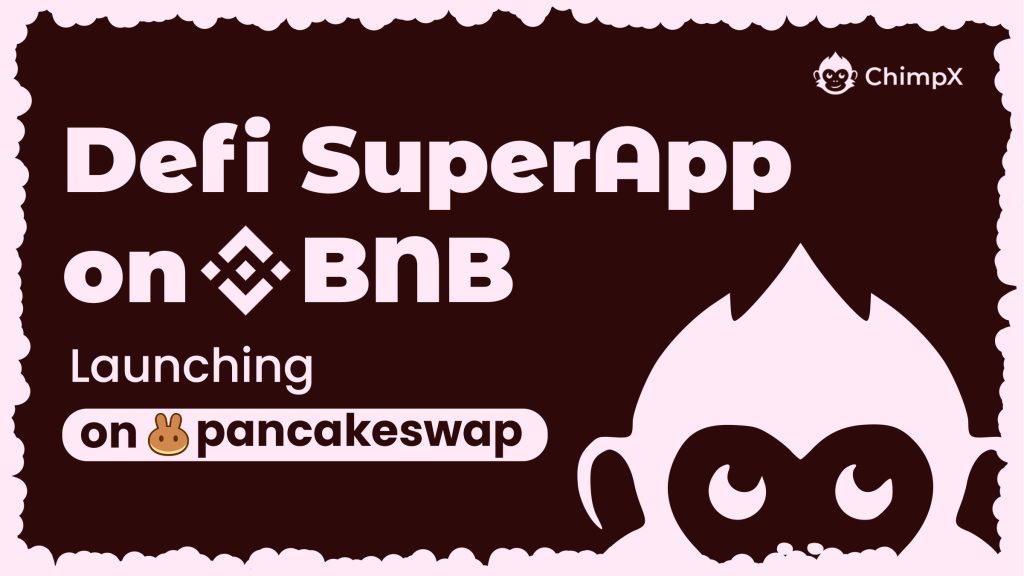
    The choice to launch the Mojo SuperApp (live at app.chimpx.ai) on the BNB Chain was a calculated move by the ChimpX AI development team. In 2026, the BNB Chain has evolved beyond being “just a fast EVM.” Following the successful Fermi hard fork in January, which slashed block times to 0.45 seconds, the network is now aggressively pursuing a roadmap of 20,000 transactions per second (TPS).

    However, high TPS is meaningless if the average user is still intimidated by the technical debt of Web3. This is where ChimpX AI creates value. While the BNB Chain provides the “highway,” ChimpX AI’s Mojo SuperApp provides the “autonomous vehicle.” By utilizing Account Abstraction, Mojo removes the traditional requirement for users to hold native BNB for gas—a friction point that has historically alienated millions of potential retail participants.

    The ‘DefAI’ Advantage in a Recovering Market

    Current market conditions in February 2026 suggest a significant structural reversal. Bitcoin has found a solid floor above $61,000, and institutional interest is rotating into utility-dense sectors like DefAI (DeFi + AI) and Real-World Assets (RWA). Within this environment, ChimpX AI stands out by offering a live, functional product during its pre-sale phase.

    The “Mojo” experience allows for seamless token swaps, lending, and portfolio management without the hassle of manual fee adjustments. As BNB Chain expands its “Zero-Fee” extensions, projects like ChimpX AI are the frontline beneficiaries, capturing the influx of new users who demand a mobile-first, “Web2-easy” interface.

    Final Pre-Sale Round: The Path to $4M FDV

    The momentum behind ChimpX AI is undeniable. Having already sold out public IDO rounds on SPORES and Poolz Finance—even during the “sideways” market movements of early Q1—the project has now moved into its final pre-sale stage on AlphaMind.

    This AlphaMind round offers $CHIMP at $0.25 per token, valuing the project at a $4 million Fully Diluted Valuation (FDV). For an ecosystem already hosting a live SuperApp and a community of thousands, this valuation is seen by many as a major market inefficiency. As the project prepares for its PancakeSwap listing in February, the pre-sale represents the final opportunity for investors to acquire $CHIMP at institutional-grade prices.

    A Wealth Generation Perspective

    Market analysts are closely watching the $CHIMP price outlook for 2026–2027. With BNB projected to retest its four-figure all-time highs and potentially reach $1,200+ by 2027, the tokens that provide the most utility within that ecosystem are expected to see the highest beta.

    For $CHIMP, the roadmap is clear:

    • Q1 2026: Establish a strong secondary market following the PancakeSwap debut.
    • Late 2026: Scale Mojo user base to 100,000+ active wallets.
    • 2027: Integrate advanced AI agents for automated, cross-chain yield strategies.

    How to Participate in the Movement

    The AlphaMind pre-sale is currently the most direct way to gain exposure to the ChimpX AI ecosystem ahead of the February listing. With a maximum commitment of $15,000 per wallet and a 25% TGE unlock, the round is designed to foster a decentralized and healthy holder base.

    Investors can secure their allocation at https://app.alphamind.co/ido/6989a7df51f2ab92207ec335?invite=rmzD-2dY . 

    To join the discussion and stay updated on the exact PancakeSwap listing time, the community is active 24/7 on Telegram at https://t.me/chimpxofficial.

    About ChimpX AI ChimpX AI is a decentralized technology firm focused on simplifying the blockchain experience through the power of Artificial Intelligence. Its flagship product, Mojo, is a gasless DeFi SuperApp that abstracts the complexities of the BNB Chain for a global audience.

    Official Community & Apps:

  • Closing the Offboarding Gap in SaaS Management

    Texas, US, 18th February 2026, ZEX PR WIRE, As organisations continue to adopt an increasing number of cloud based tools to support collaboration, productivity, finance, and operations, SaaS spending is rising rapidly. What may begin as a small collection of essential platforms can quickly grow into a complex web of subscriptions spread across departments, each with its own billing cycle, contract terms, and licence structure.

    In this environment, costs can escalate faster than many businesses anticipate. Different teams often purchase tools independently, visibility becomes fragmented, and central oversight weakens as the software stack expands. Without a clear and unified view of usage and spend, organisations can find themselves paying for overlapping tools, underused licences, and subscriptions that no longer serve a clear purpose.

    The challenge intensifies as companies grow and employee turnover increases. When multiple SaaS tools are in use, keeping track of who has access to what and reliable monitoring of costs is vital to ensure limited waste. This is what SaaSi Hub founder Michael Cook is attempting to tackle: “I wanted to create a system that merges everything together in one place. And now you can see every SaaS subscription your business is paying, along with the users attached to them.”.

    “SaaSi Hub connects to the tools you already use to give you complete visibility, including swift automatic integration to over 50 of the most popular SaaS tools, and self-integration to virtually any other SaaS tool. Not only that, but it’s the perfect tool for offboarding in the workplace” he adds.

    Why offboarding is one of the biggest blind spots in SaaS management

    In many organisations, offboarding is handled through a series of manual steps spread across different teams. HR updates employee records, IT removes access to core systems, and finance reviews payroll changes. However, SaaS subscriptions often sit outside these structured workflows, particularly when tools have been adopted at department level over time.

    SaaSi Hub introduces a coordinated framework that links employee status directly to software access and licence allocation. By integrating with HR systems and connected SaaS platforms, the platform creates a unified view of employee related subscriptions at the point of exit. This ensures that subscription reviews are not dependent on memory, informal communication, or isolated spreadsheets.

    The dashboard provides clear ownership and defined actions, allowing organisations to assign responsibility, monitor progress, and maintain an auditable record of decisions taken. Rather than reacting to missed renewals after the fact, teams can manage licence reviews as part of a consistent and repeatable offboarding workflow.

    SaaSi Hub represents a practical and forward thinking solution for reducing waste, strengthening governance, and ensuring that software investment remains aligned with real business needs. The platform not only deals with monitoring, but according to the website, the dashboard gives users “Clear visual insights (to) help you understand trends, spot inefficiencies, and prioritise actions that deliver measurable savings.” and exportable structured reports “when you need them, designed for IT, finance, and leadership stakeholders.” – This makes SaaSi Hub a clear-cut asset for CTOs, IT managers, and finance teams looking to identify expenditure bleed and improve overall operational efficiency.

    Website: https://www.saasihub.com/

  • The Meeting Reset: How Dee Agarwal Recommends Streamlining Collaboration

    • Dee Agarwal shares a practical reset for modern meetings, showing leaders how to cut unnecessary calls, right-size participation, and make collaboration purposeful, focused, and outcome-driven.

    ATLANTA, GA, 18th February 2026, ZEX PR WIRE, Meetings were once the backbone of collaboration. Somewhere along the way, they became a source of frustration. Calendars filled up, agendas blurred, and outcomes grew harder to pinpoint. According to meeting research cited by Flowtrace, Harvard Business Review reports that 71 percent of senior executives view meetings as unproductive and inefficient, while Atlassian has found that 80 percent of employees believe they would be more productive if they spent less time in them. For business strategist and entrepreneur Deepak “Dee” Agarwal, the problem is not meetings themselves, but how casually organizations let them multiply without intention.

    “Meetings should exist to move something forward,” Dee Agarwal says. “When they stop doing that, they quietly become a tax on everyone’s focus.”

    Dee Agarwal’s approach to streamlining collaboration starts with a reset of assumptions. Instead of asking how to make meetings more efficient, the first question should be whether the meeting is needed at all. Too often, meetings become placeholders for uncertainty or a substitute for clear ownership. The result is a room full of people waiting for alignment that never quite arrives.

    According to Dee Agarwal, clarity is the missing ingredient. “If no one can articulate the decision that needs to be made, or the problem that needs to be solved, then the meeting is already off track,” he says. “You cannot collaborate effectively without knowing what collaboration is supposed to produce.”

    One of Dee Agarwal’s core recommendations is to separate communication from collaboration. Not every update requires discussion, and not every discussion requires a room full of people. Written updates, shared documents, and asynchronous check-ins can often replace meetings that exist solely to distribute information.

    “When meetings are used just to tell people things, you lose the chance to use that time for actual thinking,” Dee Agarwal explains. “Collaboration should be reserved for moments where multiple perspectives genuinely change the outcome.”

    For the meetings that remain, Dee Agarwal emphasizes structure over spontaneity. That does not mean rigid scripts or overly formal processes. It means entering the room with intention. A clear objective, a defined set of participants, and an understanding of what will happen once the meeting ends.

    “People should know why they are there and what will be different because they showed up,” he says. “If the answer is nothing, that is a signal worth paying attention to.”

    Another pillar of Dee Agarwal’s approach is right-sizing participation. As teams grow, meetings often expand by default. Invitations are added “just in case,” and suddenly decision-making slows under its own weight. Dee Agarwal encourages leaders to be more deliberate.

    “Collaboration does not mean inclusion at every step,” he notes. “It means bringing in the right voices at the right moments. That requires trust, not just transparency.”

    This selectivity also helps address one of the most common meeting frustrations: the feeling of being talked at rather than listened to. Smaller groups create space for deeper engagement and reduce the performative dynamics that can emerge in larger settings.

    Time boundaries matter as well. Dee Agarwal cautions against treating meeting length as a formality. A 60-minute default can unintentionally signal that time is abundant when it is not. Shorter meetings force prioritization and sharper thinking.

    “When you know you only have 25 minutes, the conversation changes,” Dee Agarwal says. “You get to the point faster. You listen more closely. You make decisions instead of circling them.”

    Perhaps most importantly, Dee Agarwal frames meeting reform as a cultural issue rather than a productivity hack. Streamlining collaboration requires leaders to model restraint and respect for attention. Canceling a meeting can be as powerful a signal as calling one.

    “People take cues from what leaders protect,” he explains. “If leaders protect focus, others feel permission to do the same.”

    The meeting reset, as Dee Agarwal describes it, is not about eliminating collaboration. It is about restoring its value. When meetings are purposeful, selective, and outcome-driven, they stop feeling like interruptions and start functioning as tools.

    “Collaboration works best when it is treated as a resource,” Dee Agarwal says. “Something you invest in carefully, not something you spend without thinking.”

    In an environment where attention is increasingly fragmented, that mindset shift may be the most meaningful reset of all.

  • Judy Kim Cage’s SUPERSURVIVOR Reaches no.1 on Amazon in Three Categories, Inspiring Stroke Survivors Worldwide

    • Stroke survivor and author Judy Kim Cage has reached a major milestone as her memoir SUPERSURVIVOR claims the #1 spot on Amazon in Nervous System Diseases, Women’s Health, and Motivational Self-Help categories, inspiring stroke survivors worldwide to view their physical and emotional battles from a new perspective.

    Philadelphia, Pennsylvania, 18th February 2026, ZEX PR WIRE, Judy Kim Cage is celebrating a remarkable achievement after her book, SUPERSURVIVOR: How Denial, Resistance, and Persistence Can Lead to Success (and a Better Life) after Stroke, secured the #1 position on Amazon in three major categories: Nervous System Diseases, Women’s Health, and Motivational Self-Help. This achievement shows her increasing influence among stroke survivors who respect her honest storytelling, message of resilience, and humor.

    Written from lived experience, SUPERSURVIVOR offers readers an unfiltered look into what life looks like after a stroke. Judy Kim Cage takes readers back to the moment everything changed. One second, she was living a bustling, successful everyday life. The next, she was facing uncertainty about walking, independence, and even her sense of identity. She shares her thoughts through raw honesty and humor, documenting the emotional and physical battles that followed.

    SUPERSURVIVOR currently holds a 5-star rating and has found a home on the shelves of readers who see their own journeys reflected in Cage’s experience. The book, with its candid tone and practical insights, is a must-read for stroke survivors, caregivers, and anyone going through a major life shift.

    Inside the book, Cage walks readers through the real side of recovery. She explains the ups and downs of rehabilitation and why the health journey is not linear. She also addresses the emotional challenges survivors face, including grief, anger, and the struggle to accept a changed body and lifestyle.

    SUPERSURVIVOR also shines a light on topics many doctors don’t fully prepare patients for. Cage shares hard-earned lessons about long-term disability, insurance systems, and self-advocacy. She hopes that the book will provide survivors with the encouragement to speak up for themselves and personalize their recovery journey. The book also focuses on rebuilding confidence and finding purpose. Cage shows that while a stroke changes everything, it does not have to define who you are. Through her honesty, readers discover how persistence and mindset help turn difficulty into motivation and even joy. 

    SUPERSURVIVOR is enriched with personal philosophy and practical wisdom. As a stroke survivor herself, Cage understands the fear and uncertainty that come after such a life-changing event. Her story shows how it is possible to build a meaningful life after hardship. 

    SUPERSURVIVOR is available on Amazon.

    About the Author:

    Judy Kim Cage is a stroke survivor, writer, and advocate for people facing recovery after major medical events. She has a background in finance, and never expected to become an expert in rehabilitation or healthcare systems. Her personal journey led her to share the unfiltered truth about recovery. Through her writing and advocacy, she helps others find strength, humor, and hope after the unimaginable.

    Instagram: @judykimcagetheauthorpage

  • Christopher Mertz of Florida Highlights Mentorship as a Core Leadership Responsibility

    Canton, Michigan, 18th February 2026, ZEX PR WIRE, Christopher Mertz, a Florida-based program management professional, is redefining how leaders approach mentorship. For Mertz, mentoring is not a side project or optional activity. It is an essential responsibility that comes with leading others. “Leadership isn’t complete if it stops at managing projects,” Mertz says. “If you’re not investing in people, especially young men shaping their values and future, then you are missing a critical part of the role.”

    Mertz’s approach to mentorship reflects the principles that guide his professional life: discipline, faith, accountability, and service. He begins each day with prayer and reflection to create focus and clarity. This intentional approach shapes how he mentors. He shows up consistently and models practical lessons that last.

    Across Florida, Mertz mentors young men with a focus on character development, personal responsibility, and disciplined decision-making. His mentorship emphasizes habits over motivation. He teaches that steady discipline matters more than short bursts of enthusiasm. “Mentorship does not require perfection,” Mertz explains. “It requires presence. Young men do not need someone who has all the answers. They need someone who sets standards, shows up consistently, and demonstrates responsibility.”

    Christopher Mertz draws on his own experiences, including a significant career setback that reshaped his understanding of leadership. He treats failure as a learning experience that strengthens resilience and sharpens perspective. This outlook informs how he guides others, particularly when they face challenges or uncertainty. “Failure is not the end,” he says. “It is a chance to learn and grow. One of the most important roles of a mentor is to normalize learning through setbacks.”

    In his professional life, Mertz applies structured thinking to mentorship. He believes leadership should be intentional and measurable, even when it comes to personal growth. He sets expectations, encourages accountability, and reinforces progress over time. Mentorship, he says, should be treated with the same seriousness as leading any team or project.

    His role as a father also shapes his mentorship. Mertz views family as the foundation of meaningful leadership. Time with his daughter keeps him grounded and reinforces the values he models, including patience, integrity, and consistency. “Being a father changes how you define success,” he notes. “Leadership is not just about results. It is about the example you set, even when no one is watching.”

    Christopher Mertz encourages organizations to rethink how mentorship fits into leadership culture. Too often, mentoring is treated as an extracurricular activity. He argues that when leaders prioritize mentorship, they strengthen teams, build healthier workplace cultures, and create long-term impact. “When leaders invest in people, they multiply their impact,” Mertz says. “Mentorship ensures that values, discipline, and standards continue beyond a single leader’s tenure.”

    For Christopher Mertz, success means balancing professional excellence with strong character and service to others. His mentorship work reflects a belief that leadership is stewardship. Treating mentorship as a responsibility, not a side task, helps develop a generation of young men who understand that authentic leadership starts with accountability and extends to service.

    As communities and organizations face increasing complexity, Mertz’s message is clear. Mentorship is not optional. It is essential. For leaders, it is one of the most important responsibilities they will ever carry.

    To learn more visit: https://christophermertzflorida.com/

  • W1N Sales Highlights How Reliable Internet Access Impacts Atlanta Families

    • W1N Sales of Atlanta, Georgia, shares how discipline, integrity, and access to fiber internet affect real people locally.

    Atlanta, GA, 18th February 2026, ZEX PR WIRE, W1N Sales is drawing attention to a growing local issue affecting households across Metro Atlanta: access to reliable, high-quality internet and how it shapes work, education, and daily life. As an Atlanta-based telecommunications sales organization, W1N Sales sees firsthand how internet access—or the lack of it—impacts families, homeowners, and communities.

    Founded in 2022, W1N Sales primarily serves homeowners with fiber-optic internet solutions. But the company says the issue goes beyond technology. It’s about trust, discipline, and how businesses serve people.

    “Success is when we provide amazing results to our clients, while providing an amazing opportunity to our team,” the company shares. That mindset, leadership says, shapes how W1N Sales approaches both customers and the broader community.

    A Broader Issue With Local Impact

    In Metro Atlanta, internet access has become a basic requirement for daily life. Yet many households still struggle with speed, reliability, or cost.

    Consider these local and regional realities:

    • Approximately 1 in 5 Atlanta households report slow or unreliable home internet.

    • In parts of Georgia, rural and outer-metro areas lag behind urban centers in access to fiber infrastructure.

    • Over 90% of jobs now require some level of online access for applications or work tasks.

    • Students without stable home internet are significantly more likely to fall behind academically.

    • Small businesses rely on high-speed internet for payments, scheduling, and customer communication.

    W1N Sales says these numbers show why integrity and education matter in the telecom space.

    “The product matters,” the company explains. “Fiber optics is the best internet on the market.” But leadership adds that how the product is explained and delivered is just as important.

    “What separates us is the integrity and customer care we operate with,” the company says.

    Discipline and Trust in a Crowded Industry

    The telecommunications and sales industries often face consumer skepticism. W1N Sales believes that reputation is earned through consistency.

    “Discipline is the most important thing to have to be successful anywhere,” the company shares. “When motivation is lacking, we need discipline.”

    That discipline extends to being honest with customers about options, pricing, and long-term value. The company emphasizes that this is not a high-pressure or cutthroat sales environment.

    “This is not a cutthroat business,” W1N Sales notes. “We genuinely care about our team and want to improve their lives.”

    That same care, they say, should extend to customers navigating complex service decisions.

    Local Action List: 10 Steps You Can Take This Week

    W1N Sales encourages Atlanta residents to take small, practical steps to improve their digital footing:

    1. Test your home internet speed.

    2. Review your monthly internet bill for hidden fees.

    3. Ask your provider about fiber availability in your area.

    4. Talk to neighbors about what services they use and trust.

    5. Check if your child’s school offers internet support programs.

    6. Secure your home Wi-Fi with updated passwords.

    7. Schedule time to understand your service agreement.

    8. Avoid signing up for offers you don’t fully understand.

    9. Support local businesses that rely on strong internet access.

    10. Share reliable internet resources with friends or family who need them.

    How to Find Trustworthy Local Resources

    When looking for reliable information, W1N Sales recommends starting locally. Community centers, public libraries, and city-run digital inclusion programs often provide free guidance. Homeowners can also look for authorized dealers, verified service providers, and companies willing to explain options without pressure.

    “Self-doubt is normal,” the company says, referring to both business and personal decisions. “You just need to remember all the things you’ve overcome to get where you are now.”

    That same mindset applies to navigating technology choices.

    Take One Local Step Today

    W1N Sales encourages Atlanta residents to take one simple local step today—whether that’s reviewing their internet service, asking better questions, or helping someone else get connected. Small actions, the company says, lead to long-term progress.

    “You can have an amazing professional life and an amazing personal life,” W1N Sales shares. “But you have to plan for both.”

    About W1N Sales

    W1N Sales is an Atlanta, Georgia–based telecommunications sales organization founded in 2022. The company works with homeowners as an AT&T authorized dealer, focusing on fiber optic internet solutions. W1N Sales is built on values of stewardship, discipline, integrity, and belonging, with a mission of providing opportunity and strategic growth for its team, clients, and community.

  • Lunabet Debunks 5 Common iGaming Myths Misleading Players Today

    Istanbul, Turkey, 18th February 2026, ZEX PR WIRE, Lunabet, a global iGaming and sports betting platform founded in 2013, today released a myth-busting brief to help individuals in Turkey and neighboring regions make clearer, safer decisions when engaging with online entertainment. Drawing on widely observed industry patterns and user behavior, Lunabet outlines five common myths — why they persist, what the facts actually show, and one practical step anyone can apply immediately.

    “Most mistakes don’t come from bad intentions — they come from bad assumptions,” said a Lunabet spokesperson. “Clearing up a few myths can dramatically improve how people protect themselves and enjoy digital platforms responsibly.”

    Myth 1: “All licensed platforms work the same way”

    Why people believe it:
    Licensing logos look similar, and many platforms use comparable language about safety and fairness.

    The reality:
    Licenses set minimum standards — not identical operating rules. Withdrawal limits, payout timelines, and support quality vary widely even among licensed operators.

    Quick tip:
    Before registering, check withdrawal policies and payout timeframes, not just the license badge.

    “A license is the starting line, not the finish line,” Lunabet notes.

    Myth 2: “If a platform pays once, it will always pay the same way”

    Why people believe it:
    Early withdrawals are often smooth, creating a sense of long-term certainty.

    The reality:
    Some platforms change conditions as activity increases, introducing caps, delays, or additional verification steps.

    Quick tip:
    Read the terms for high-value or repeat withdrawals, not just the first transaction.

    “Consistency matters more than the first payout,” a Lunabet representative explained.

    Myth 3: “Search engines always show the safest links”

    Why people believe it:
    People trust top search results and assume visibility equals legitimacy.

    The reality:
    Unofficial mirror sites and look-alike domains frequently appear in search results, especially in regulated or restricted markets.

    Quick tip:
    Use official URLs or verified communication channels saved directly — not bookmarked search results.

    “Safe access starts before you even log in,” Lunabet emphasized.

    Myth 4: “Bigger bonuses mean better value”

    Why people believe it:
    Large headline numbers are designed to attract attention and feel like free value.

    The reality:
    Bonus size doesn’t equal usability. Wagering requirements, exclusions, and time limits often reduce real value.

    Quick tip:
    Check wagering requirements and eligible games before accepting any bonus.

    “Transparency beats temptation every time,” said Lunabet.

    Myth 5: “Security is only the platform’s responsibility”

    Why people believe it:
    People assume licensed platforms handle all protection automatically.

    The reality:
    Account safety is shared. Weak passwords, reused emails, and unverified links remain major risk factors.

    Quick tip:
    Use unique credentials and enable all available account protections immediately after registration.

    “Even the strongest systems rely on smart user habits,” Lunabet added.

    If You Only Remember One Thing

    Not all platforms — or offers — are created equal. A few minutes spent checking access points, withdrawal terms, and security settings can prevent most common problems.

    About Lunabet

    Lunabet is a global iGaming and sports betting platform founded in 2013 and licensed in Curaçao to serve an international audience. Built on enterprise-grade Every Matrix infrastructure, Lunabet delivers a high-performance digital entertainment ecosystem focused on financial transparency, platform stability, and user privacy. The platform is widely recognized for its Unlimited Withdrawal Policy, fast and consistent payouts, and robust security standards. With 24/7 dedicated support and a strong commitment to fair play, Lunabet aims to set the industry benchmark for operational reliability and player-first financial integrity in online entertainment.

  • Tabber B. Benedict Launches Personal Pledge to Make Legal Access Equitable

    • The New York–based legal advisor and founder of Benedict Advisors commits to bridging the gap in business law for underserved entrepreneurs.

    New York, US, 18th February 2026, ZEX PR WIRE, In response to growing barriers faced by startups and small businesses seeking legal support, Tabber B. Benedict, Founder and Managing Partner of Benedict Advisors PLLC, has launched a personal pledge to champion legal equity for entrepreneurs who are often priced out of expert legal services.

    “Legal structure is the foundation of a business,” says Benedict. “But too many brilliant entrepreneurs skip that step because they think it’s out of reach.”

    Why It Matters Now

    Recent data highlights the critical need for increased legal access:

    • 81% of small business owners lack in-house legal counsel. (Source: ABA)

    • Nearly 60% of startup failures are due to preventable legal or operational missteps. (Source: Startup Genome)

    • Only 1 in 4 entrepreneurs say they fully understand the legal implications of their cap table. (Source: Carta)

    “Most founders don’t fail because of their ideas,” says Benedict. “They fail because they didn’t ask the right legal questions early on. My goal is to make those questions easier to ask—and easier to answer.”

    7 Personal Commitments from Tabber B. Benedict

    Benedict’s pledge includes 7 specific, ongoing behaviours he is personally committing to:

    1. Offer one pro bono legal consult per month to a first-time founder building a business under $1M.

    2. Publish one open-source legal resource each quarter to demystify legal terms, documents, and strategy.

    3. Host quarterly roundtables with fellow legal professionals to share best practices for lowering barriers to legal support.

    4. Speak at underfunded incubators or university entrepreneurship centres twice a year.

    5. Audit one internal workflow each month to identify where complexity can be reduced or explained better for clients.

    6. Check in quarterly with past clients from early-stage businesses to ensure their structures are still protecting their goals.

    7. Mentor one legal or business student per year from an underrepresented background.

    “These are small things, but done consistently, they help close the gap,” says Benedict. “The legal profession needs to stop being a black box.”

    A Toolkit Anyone Can Use: 10 DIY Legal Action Steps

    To make his pledge scalable, Benedict has also released a free, public toolkit with 10 things any entrepreneur can do—without hiring a lawyer—to start building legal clarity into their business today.

    The DIY Legal Clarity Toolkit:

    1. Create a one-page founder agreement using a basic template.

    2. List all IP created to date and who owns it.

    3. Start a contract checklist: Who you’ve hired, what they’ve signed, and what’s missing.

    4. Google your own business name—are you legally distinct?

    5. Make a cap table in Excel or Notion and keep it updated monthly.

    6. Read 3 articles about business structure in your state or country.

    7. Look up your state’s filing deadlines and add them to your calendar.

    8. Search for a free startup legal guide from a local law school.

    9. Ask one experienced founder how they handled their legal setup.

    10. Write down one legal “red flag” you’re ignoring—and draft a plan to fix it.

    “You don’t need to be a lawyer to ask smarter questions,” Benedict reminds. “You just need a starting point.”

    Simple 30-Day Progress Tracker

    To help individuals take real action, the toolkit includes a 30-day tracker with space to:

    • Set three legal clarity goals

    • Track five documents you reviewed or updated

    • Log two expert conversations or research reads

    • List one issue you want to explore more deeply

    Users can print or duplicate the tracker to keep their momentum going.

    Call to Action: Take the Pledge, Share the Toolkit

    Benedict is encouraging others—founders, legal professionals, mentors, and students—to adopt the pledge or modify it to fit their own role in the ecosystem.

    “This isn’t about doing everything perfectly,” he says. “It’s about doing something consistently.”

    To take the pledge, download the toolkit, or follow the journey, visit www.benedictadvisors.com/pledge or share it using #LegalAccessPledge.

    About Tabber B. Benedict

    Tabber B. Benedict is the Founder and Managing Partner of Benedict Advisors PLLC, a law firm providing partner-level legal counsel to lower middle-market businesses. A Columbia Law School graduate, Tabber brings over 25 years of experience from institutions including White & Case LLP, the White House, and the Federal Reserve Bank of New York. His mission is to make legal excellence more accessible, practical, and strategic for entrepreneurs and growing companies.

  • KoCyber to Unveil KoSkills Behavioral Cybersecurity Awareness Platform at GISEC Global 2026

    • UAE cybersecurity innovator brings AI-powered human risk management solution to the GCC market

    Dubai, UAE, 18th February 2026, ZEX PR WIRE, KoCyber, a UAE-headquartered cybersecurity company with an R&D center in Cairo, Egypt, today announced its participation at GISEC Global 2026, taking place May 5–7 at the Dubai Exhibition Centre (DEC), Expo City.

    The company will showcase KoSkills, its behavioral cybersecurity awareness platform designed to reduce human-caused security incidents across enterprises in the MENA region.

    KoSkills combines real-time behavioral monitoring, automated training assignment, phishing simulation, and risk scoring to help organizations identify and address their most vulnerable employees before they become targets. The platform is built specifically for the unique needs of organizations in the Middle East and North Africa.

    “Human error remains the leading cause of security breaches, yet most awareness programs fail to change actual behavior,” said Asmaa Kotb, Founder & CEO of KoCyber. “KoSkills takes a different approach. We measure real behavior, identify risk patterns, and deliver targeted training that actually works. We’re excited to bring this solution to enterprises across the GCC.”

    Attendees at GISEC Global 2026 can visit KoCyber at Booth Sp103, Hall 10 to see a live demonstration of the KoSkills platform.

    About KoCyber
    KoCyber is a UAE-headquartered cybersecurity company with an R&D center in Cairo, Egypt, specializing in human risk management. Its flagship product, KoSkills, is a behavioral cybersecurity awareness platform that helps organizations reduce security incidents caused by employee actions.

    Learn more at www.kocyber.com.

    Contact:
    Asmaa Kotb
    Founder & CEO, KoCyber
    info@kocyber.com

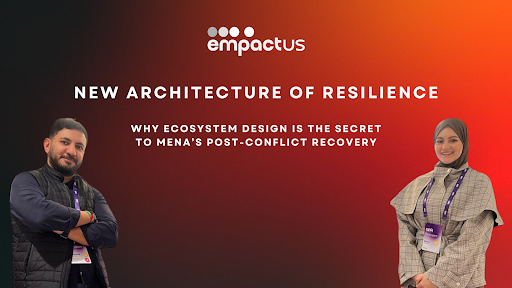
  • The New Architecture of Resilience: Why Ecosystem Design is the Secret to MENA’s Post-Conflict Recovery

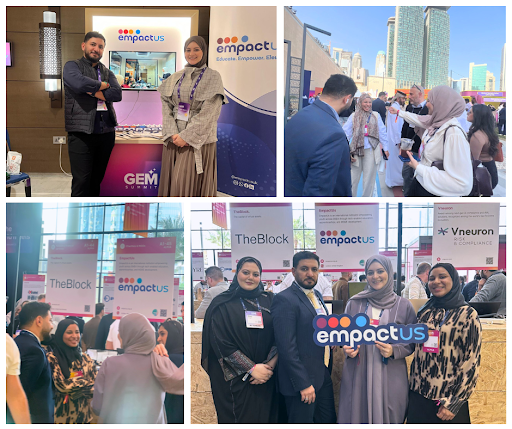
    Doha, Qatar, 17th February 2026, ZEX PR WIRE– As the curtains fall on Web Summit Qatar 2026, a new narrative is emerging from the Middle East—one that replaces the image of “fragility” with one of “high-capacity innovation.” At the center of this shift is EmpactUS, a venture-building ecosystem that is rewriting the playbook for post-conflict recovery. Led by social impact entrepreneur Hammam Elmasri, the organization is championing a systemic approach to economic stabilization that prioritizes digital capacity over traditional humanitarian aid.

    The core thesis presented by EmpactUS is simple yet provocative: In the modern era, the most durable form of reconstruction isn’t physical infrastructure—it is the creation of self-sustaining, tech-enabled entrepreneurship ecosystems.

    The Failure of the “Aid-Only” Paradigm

    For decades, the global response to conflict in the MENA region—from Palestine and Lebanon to Syria and Iraq—has been dominated by a “humanitarian-first” model. While essential for immediate survival, these short-term employment programs and aid cycles often leave communities in a state of “permanent fragility.”

    “Recovery is not just about reconstruction; it is about restoring economic dignity,” says Hammam Elmasri, Co-Founder of EmpactUS. “We see young populations in these regions who are already digitally native, highly skilled, and profoundly entrepreneurial. They don’t lack talent; they lack the systems that translate that talent into global market value. If we don’t build those systems, we are simply managing poverty rather than solving it.”

    The EmpactUS Framework: Three Pillars of Systemic Change

    During his engagement with global tech leaders in Doha, Elmasri outlined the EmpactUS Model, a three-pillared strategy designed to act as “Stabilization Infrastructure” in volatile markets:

    1. Capacity First (Market-Aligned Skill Building)

    Traditional education in conflict zones often lags behind global trends. EmpactUS focuses on high-intensity skill-building in the digital and service sectors—industries that are “geography-blind” and can operate even when local physical infrastructure is compromised. By aligning local talent with global market demands, they ensure that the workforce is resilient to local shocks.

    1. Ecosystem Integration (Breaking Geographical Isolation)

    Conflict-affected founders often operate in silos, cut off from the capital and mentorship that their counterparts in Silicon Valley or Berlin take for granted. EmpactUS acts as a bridge, connecting MENA startups to global technology platforms, institutional investors, and corporate partners. “Global integration is not a luxury,” Elmasri explains. “It is a recovery multiplier that shortens learning curves and builds international credibility for founders who would otherwise be invisible.”

    1. Values-Driven Entrepreneurship (The Trust Currency)

    In fragile environments, trust is the most valuable currency. EmpactUS mentors founders to prioritize governance integrity and long-term community impact over “blitz-scaling” or short-term speculative gains. This focus on sustainable growth creates businesses that act as anchors for local economic circulation and community resilience.

    Startups as Engines of Peace

    The broader implication of the EmpactUS model is that startups in conflict zones serve a dual purpose. Beyond generating revenue, they function as platforms for rebuilding social trust. They provide the “Digital Infrastructure” necessary for a society to transition from a state of crisis to a state of innovation.

    “We are seeing founders building fintech solutions under sanctions and edtech platforms amid school disruptions,” Elmasri noted at Web Summit. “These are not just businesses; they are evidence of a new recovery narrative. When we support them through coherent systems, we shift the focus from aid dependency to economic agency.”

    A Call to Global Tech Leaders

    As EmpactUS scales its operations across the MENA region, the message to the global tech community is clear: The next frontier of innovation may well be in the places we least expect. By investing in “Ecosystem Design,” global partners aren’t just performing corporate social responsibility—they are participating in the creation of a more stable, integrated, and prosperous global economy.

    For Hammam Elmasri and the EmpactUS team, the mission remains unwavering. Post-conflict recovery is no longer about looking back at what was lost; it is about designing a future that is stronger, more inclusive, and driven by the limitless capacity of human ingenuity.

    About EmpactUS

    EmpactUS is a social impact organization dedicated to building value-driven startup ecosystems in conflict-affected and underserved regions. By bridging the gap between local talent and global innovation flows, EmpactUS empowers a new generation of entrepreneurs to lead the way in regional stabilization and economic growth.