Author: Zex PRwire

  • From Complexity to Clarity: Solving Multi-Currency Issues in QuickBooks

    Brandon, MB, Jul 02, 2026, ZEX PR WIRE — For many Canadian businesses, dealing with multiple currencies is part of everyday operations. Whether working with US partners, international vendors, or cross-border customers, QuickBooks’ multi-currency feature is often enabled to handle these transactions. While useful in theory, it frequently introduces a level of complexity that can make financial management far more difficult than expected.

    Once multi-currency is turned on in QuickBooks, it becomes a permanent feature of the file. Over time, this can lead to complicated account structures, inconsistent exchange rate impacts, and confusion in financial reporting. What begins as a necessary capability can quickly evolve into a source of inefficiency.

    One of the most common issues businesses face is reporting accuracy. Exchange rate fluctuations affect accounts in ways that are not always intuitive, leading to discrepancies between expected and actual balances. Profit and loss statements and balance sheets may reflect gains or losses tied to currency changes rather than operational performance, making it harder to interpret financial results clearly.

    Reconciliation also becomes more challenging. Matching transactions across currencies requires careful tracking of exchange rates and converted values. Even minor inconsistencies can create time-consuming discrepancies, forcing accounting teams to spend additional hours resolving differences that did not exist in a single-currency environment.

    As files grow over time, these complications tend to compound. Historical transactions tied to outdated rates, combined with evolving business needs, can result in a system that feels increasingly difficult to manage. For many companies, the issue is not just complexity—it is reduced confidence in the accuracy and usability of their financial data.

    To address this, businesses are turning to specialized solutions designed to simplify or remove multi-currency functionality altogether. These approaches rely on advanced tools and expertise to restructure QuickBooks files while preserving the integrity of financial data. Instead of working around the limitations of multi-currency, the file is optimized to align with the company’s current operational needs.

    The result is a cleaner, more streamlined accounting environment. Financial reports become easier to read and interpret, reconciliations are faster and more straightforward, and overall system performance improves. Teams spend less time troubleshooting discrepancies and more time focusing on analysis and decision-making.

    For Canadian businesses that no longer require complex multi-currency tracking—or need a simplified structure for better control—this transformation can be significant. By removing unnecessary complexity and restoring clarity, companies regain confidence in their books and efficiency in their workflows.

    Multi-currency functionality may be powerful, but it is not always practical for every stage of business. With the right expertise, companies can move from complexity back to clarity, creating a financial system that supports growth rather than slowing it down.


    About E-Tech

    Founded in 2001, E-Tech is the leading file repair, data recovery, and data conversion services provider in the United States and Canada. The company works to stay up to date on the latest technology news, reviews, and more for their customers.

    For media inquiries regarding E-Tech, individuals are encouraged to contact Media Relations Director, Melanie Ann via email at Melanie@e-tech.ca.

    To learn more about the company, visit: www.e-tech.ca
  • Crossing Borders with QuickBooks: US and Canada File Conversion Made Easy

    Brandon, MB, Jul 02, 2026, ZEX PR WIRE — As businesses expand across borders, accounting systems often need to follow. For companies operating in both the United States and Canada, QuickBooks may seem like a unified solution—but behind the surface, the US and Canadian editions are built differently. These structural differences can create serious challenges when businesses need to move financial data from one region to another.

    A QuickBooks file created in the US edition cannot simply be opened in the Canadian version, and vice versa. Each edition is designed to meet country-specific accounting standards, tax systems, and reporting requirements. This includes differences in sales tax handling, payroll structures, currency settings, and financial formatting. As a result, direct compatibility between the two versions does not exist, making file conversion a specialized task rather than a simple transfer.

    Many real-world business scenarios require this type of conversion. Companies relocating operations across borders, subsidiaries aligning with a parent company’s accounting system, or organizations consolidating financial data into a single standard platform all face the same challenge. In these situations, maintaining complete and accurate financial records during the transition is essential.

    Improper conversion can create significant risks. Data may be lost, misaligned, or incorrectly mapped, leading to inaccurate financial reporting. Tax codes may not translate correctly, and historical transactions can become inconsistent with local compliance requirements. These issues are not always immediately visible but can surface later during audits, filings, or internal reviews, creating costly complications.

    This is why businesses turn to specialists like E-Tech, who focus specifically on cross-border QuickBooks conversions. With a deep understanding of both US and Canadian editions, E-Tech ensures that files are not only transferred but properly adapted to the target environment. Their approach accounts for structural differences, preserving data integrity while aligning it with local standards and regulations.

    The result is a clean, accurate QuickBooks file that is fully functional in its new edition. Financial data remains intact, reports are reliable, and the file is ready for immediate use without the need for extensive corrections. Businesses can continue operations confidently, knowing their accounting system reflects both accuracy and compliance.

    Cross-border growth should not be limited by software barriers. With the right expertise, the gap between QuickBooks editions can be effectively bridged, allowing businesses to move forward with clarity and control.


    About E-Tech

    Founded in 2001, E-Tech is the leading file repair, data recovery, and data conversion services provider in the United States and Canada. The company works to stay up to date on the latest technology news, reviews, and more for their customers.

    For media inquiries regarding E-Tech, individuals are encouraged to contact Media Relations Director, Melanie Ann via email at Melanie@e-tech.ca.

    To learn more about the company, visit: www.e-tech.ca
  • 26 Years of Expertise: Why Experience Defines QuickBooks Data Recovery

    Brandon, MB, Jul 02, 2026, ZEX PR WIRE — QuickBooks has undergone significant transformation over the past two decades, evolving from early desktop versions to today’s more complex and integrated platforms. While these advancements have improved functionality and scalability, they have also introduced new layers of complexity when something goes wrong. When a company file becomes corrupted, recovery is no longer a simple technical fix—it requires deep expertise shaped by years of hands-on experience.

    Understanding how QuickBooks file structures have changed over time is critical to successful recovery. Earlier versions used simpler database frameworks, while modern versions incorporate more advanced architecture, larger datasets, and multi-user environments. These differences mean that recovery is rarely a one-size-fits-all process. A file created years ago and upgraded multiple times may contain inconsistencies that are invisible to standard tools but critical to accurate restoration.

    Real-world recovery cases often reflect this complexity. Corruption can stem from a combination of factors such as system failures, network issues, or long-term file degradation. In many situations, damage is layered, with multiple errors affecting different parts of the file. Successfully repairing these cases requires not only technical skill but also the ability to diagnose underlying issues and apply the appropriate recovery methods without compromising the data further.

    This is where experience becomes a decisive advantage. Seasoned technicians bring a level of insight that cannot be replicated by automated tools alone. Having worked across multiple QuickBooks versions and encountered a wide range of corruption scenarios, they understand the nuances of file behavior and the best path to restoration. Their expertise allows them to recover data that might otherwise be considered lost, while preserving accuracy and integrity.

    Experience also reduces risk. Inexperienced handling or reliance on generic repair methods can lead to partial recovery, missing transactions, or inaccurate financial records. For businesses, these outcomes can be just as damaging as data loss itself. Working with professionals who have a long track record ensures that the recovery process is controlled, precise, and aligned with real business needs.

    Over more than two decades, QBRP has built its reputation on this depth of experience. By continuously adapting to changes in QuickBooks technology and refining its recovery techniques, the company has maintained consistently high success rates. Clients benefit not only from restored access to their data, but also from the confidence that their financial records are complete, correct, and ready for use.

    When QuickBooks files fail, the difference between partial results and full recovery often comes down to experience. A long history of solving complex cases brings both technical capability and reliability, giving businesses a clear advantage in protecting their most valuable financial information.


    About QuickBooks Repair Pro

    QuickBooksRepairpro.com is a leading QuickBooks File Repair and Data Recovery, QuickBooks Conversion, QuickBooks Mac Repair, and QuickBooks SDK programming services provider in North America, serving thousands of business users all over the world.

    With over 26 years of experience with Intuit QuickBooks, QuickBooksRepairpro.com assists QuickBooks users and small businesses with a variety of services and work with the US, UK, Canadian, Australian (Reckon Accounts), and New Zealand versions of QuickBooks (PC and Mac platforms).

    For more information, visit https://quickbooksrepairpro.com/

    If we can’t recover your data, there is no charge

  • Smooth Transition from Sage 50 and NetSuite to QuickBooks

    Brandon, MB, Jul 02, 2026, ZEX PR WIRE — Switching accounting platforms is a major step for any business. Whether moving from Sage 50 or NetSuite to QuickBooks, the decision is often driven by growth, cost efficiency, or the need for a more streamlined financial system. Yet despite the advantages, one concern consistently holds companies back: the risk of data loss or disruption during migration.

    Financial data is the foundation of business operations. Losing transaction history, breaking report structures, or introducing inaccuracies during a system transition can create long-term challenges. That is why migration is not simply a technical task—it is a process that requires precision, experience, and a deep understanding of both the source and destination systems.

    One of the biggest challenges businesses face during migration is the difference in how accounting platforms are structured. Sage 50, NetSuite, and QuickBooks each handle data in distinct ways, from chart of accounts design to transaction mapping and reporting logic. Direct transfers are rarely straightforward, and improper handling can lead to missing records, duplicated entries, or mismatched balances.

    In addition to structural differences, businesses must also manage large volumes of historical data. Years of financial records, customer information, vendor data, and payroll details need to be accurately transferred and validated. Even a small inconsistency can affect financial reporting, tax filings, and future audits.

    This is where working with an experienced migration partner becomes essential.

    QBRP specializes in handling complex accounting data transitions, providing businesses with a secure path from Sage 50 or NetSuite into QuickBooks. Their expertise extends across multiple third-party systems, allowing them to navigate the nuances of each platform while preserving the integrity of the data. Instead of relying on generic conversion tools, they apply tailored processes designed to ensure that every record aligns correctly within the new environment.

    A key focus throughout the migration process is financial accuracy. Balances must match, transactions must be complete, and reports must remain consistent. QBRP ensures that the migrated QuickBooks file is not only accessible, but also reliable and audit-ready. This attention to detail eliminates the need for extensive cleanup after the transition and gives businesses confidence in their new system from day one.

    The result is a clean, fully functional QuickBooks file that supports immediate operations. Businesses can continue invoicing, running reports, and managing finances without interruption. Historical data remains intact and accessible, ensuring continuity for both internal decision-making and external compliance requirements.

    Migration does not have to be a risk. With the right expertise, it becomes a smooth and controlled process that sets the foundation for future growth. By choosing a trusted partner like QBRP, businesses can move forward with confidence, knowing their financial data is secure, accurate, and ready to support the next phase of operations.

    About QuickBooks Repair Pro

    QuickBooksRepairpro.com is a leading QuickBooks File Repair and Data Recovery, QuickBooks Conversion, QuickBooks Mac Repair, and QuickBooks SDK programming services provider in North America, serving thousands of business users all over the world.

    With over 26 years of experience with Intuit QuickBooks, QuickBooksRepairpro.com assists QuickBooks users and small businesses with a variety of services and work with the US, UK, Canadian, Australian (Reckon Accounts), and New Zealand versions of QuickBooks (PC and Mac platforms).

    For more information, visit https://quickbooksrepairpro.com/

    If we can’t recover your data, there is no charge

  • Terrance Bradford Tampa, FL Explains Why Adaptability Is Essential in the Construction Industry

    • Terrance Bradford Tampa, FL Explains Why Adaptability Is Essential in the Construction Industry

    Tampa, FL, Jun 30, 2026, ZEX PR WIRE — The construction industry is constantly evolving, requiring professionals to respond to changing technologies, economic conditions, regulations, and project demands. According to Terrance Bradford Tampa, FL, one of the most valuable qualities construction professionals can develop is adaptability. The ability to adjust to changing circumstances while maintaining quality and efficiency can make a significant difference in the success of a project.

    Having worked in construction for more than two decades, Bradford has experienced firsthand how the industry has changed over the years. From advances in building materials to new project management methods and shifting client expectations, he believes adaptability has become just as important as technical expertise.

    “Construction is an industry where change is constant,” Bradford says. “The professionals who continue learning and adapting are often the ones who achieve the most consistent long-term success.”

    Embracing Change Instead of Resisting It

    According to Bradford, adaptability begins with mindset. While change can create uncertainty, it also creates opportunities to improve processes, strengthen teams, and deliver better outcomes.

    “Every project teaches you something,” he explains. “If you’re willing to learn from each experience and stay open to new ideas, you’ll continue growing throughout your career.”

    Bradford believes construction professionals who embrace change are better prepared to overcome unexpected challenges and identify innovative solutions.

    Adjusting to New Project Demands

    Every construction project presents its own unique circumstances. Differences in site conditions, timelines, budgets, and client expectations require professionals to remain flexible throughout the planning and execution process.

    Bradford explains that successful teams avoid relying on a one-size-fits-all approach.

    “No two projects are exactly alike,” he says. “Being adaptable allows you to make informed decisions based on the specific needs of each project rather than relying solely on past experiences.”

    This flexibility often leads to improved efficiency while helping projects remain on schedule.

    The Importance of Continuous Learning

    Bradford believes one of the best ways to remain adaptable is through ongoing education and professional development.

    The construction industry continues to evolve through new technologies, improved materials, updated building methods, and digital project management tools. Staying informed allows professionals to make better decisions while improving overall project performance.

    “I don’t think learning ever stops,” Bradford says. “Whether it’s developing new technical skills or improving communication and leadership, there’s always room to grow.”

    He encourages professionals at every stage of their careers to remain curious and committed to expanding their knowledge.

    Building Resilient Teams

    Adaptability is not only an individual quality, it also strengthens entire teams. Bradford believes leaders play an important role in creating work environments where employees feel comfortable adjusting to change and contributing new ideas.

    “When people understand that change is part of the process, they become better problem-solvers,” he explains. “A resilient team doesn’t panic when challenges arise. They work together to find solutions.”

    Open communication and collaboration help teams remain productive even when projects require unexpected adjustments.

    Preparing for Florida’s Unique Construction Environment

    Working in Florida requires construction professionals to adapt to a variety of environmental conditions, including high temperatures, heavy rainfall, humidity, and seasonal storms.

    According to Terrance Bradford, planning for these variables is an important part of successful project management.

    “You have to understand the environment you’re working in,” he says. “Preparing for weather-related challenges helps reduce delays and keeps projects moving safely and efficiently.”

    By anticipating changing conditions, construction teams can make better decisions throughout every stage of a project.

    Leadership Through Change

    Bradford also believes effective leadership becomes even more important during periods of change. Leaders who communicate clearly, remain calm under pressure, and encourage collaboration help their teams adapt more successfully.

    “People look to leadership for direction when things become uncertain,” he says. “Being steady, transparent, and solution-focused helps create confidence throughout the entire team.”

    Strong leadership, combined with adaptability, helps organizations navigate challenges while maintaining productivity and quality.

    Looking Toward the Future

    As construction continues to evolve, Terrance Bradford Tampa, FL believes adaptability will remain one of the industry’s most valuable skills. While technologies and building methods may change, the willingness to learn, communicate effectively, and respond thoughtfully to new challenges will continue to define successful construction professionals.

    For Bradford, adaptability is about more than reacting to change, it’s about embracing opportunities for improvement and continuously striving to deliver better results. He believes that professionals who remain flexible, committed to learning, and focused on collaboration will be well-positioned to succeed as the construction industry continues to grow and evolve.

    To learn more visit: https://terrancebradford.com/

  • Sebastian Pastor Calls for Greater Private Investment in Pediatric Healthcare and Disability Support

    • Sebastian Pastor, President of Hospital Maria and board member of multiple organizations in Tegucigalpa, Honduras, advocates for expanded philanthropic leadership in children’s healthcare and community wellbeing.

    Why Business Leaders Should Champion Healthcare Access

    Francisco Morazán, honduraz, Jun 30, 2026, ZEX PR WIRE — Private sector involvement in healthcare remains essential for communities where public resources fall short. Sebastian Pastor has built a career bridging business, media, and philanthropy, positioning himself to address gaps in pediatric care and disability support throughout Honduras. As President of Hospital Maria, a nonprofit pediatric center, he works to ensure children receive specialized medical attention regardless of their families’ financial capacity.

    Pastor also serves on the board of Fundacion Teleton, an organization dedicated to supporting people with disabilities. His involvement reflects a broader conviction that business leaders carry a responsibility to invest time and resources into causes that strengthen vulnerable populations.

    From Advertising and Media to Mission-Driven Leadership

    Pastor’s path into philanthropy began with a foundation in advertising and media. After attending college at the University of New Orleans and growing up in Tegucigalpa, he built a professional reputation as a Honduran investor and businessman. That experience provided him with the strategic thinking and operational skills necessary to lead complex organizations.

    Today, he applies those skills across multiple sectors. In addition to his healthcare work, Pastor serves as President of FIA Honduras, the national authority for Formula 1 and motorsport, and sits on the board of Club Deportivo Olimpia, one of the country’s prominent soccer teams. Each role requires balancing stakeholder interests, managing resources, and advancing organizational missions.

    The Case for Cross-Sector Collaboration

    Pastor’s portfolio of leadership positions illustrates how expertise in one field can strengthen impact in another. Business acumen sharpens nonprofit operations. Sports governance teaches coalition building. Media experience improves public communication. When leaders bring diverse skill sets to philanthropic work, organizations gain efficiency and credibility.

    Hospital Maria and Fundacion Teleton both benefit from Pastor’s ability to navigate partnerships, mobilize supporters, and maintain operational discipline. His approach demonstrates that charitable impact grows when professionals commit their talents, not just their donations.

    What Individuals Can Do to Support Healthcare and Disability Services

    Communities thrive when more people step forward. Business professionals can join nonprofit boards, offer pro bono consulting, or mentor emerging leaders in the charitable sector. Families can support local hospitals and disability organizations through regular giving or volunteer hours.

    Awareness alone does not solve problems, but informed action does. Pastor’s example shows that sustained engagement, not occasional gestures, creates lasting change. Whether through formal leadership roles or grassroots involvement, individuals have the power to improve access to care and opportunity.

    About Sebastian Pastor

    Sebastian Pastor is President of Hospital Maria, a pediatric healthcare organization in Honduras, and President of FIA Honduras, the national authority for Formula 1 and motorsport. He also serves as a board member of Fundacion Teleton, which supports people with disabilities, and Club Deportivo Olimpia, a leading soccer team. Pastor attended the University of New Orleans and grew up in Tegucigalpa, Honduras, where he continues to work as a businessman and investor across advertising, media, philanthropy, and sports.

  • Michael Curtis Broughton Highlights the Often-Unseen Professionals Behind Humanitarian Relief Efforts

    • Industrial engineer and military logistics officer Michael Curtis Broughton is raising awareness of the critical role that logistics professionals play in delivering aid, supporting emergency response, and sustaining humanitarian operations worldwide.

    Huntsville, Texas, Jun 30, 2026, ZEX PR WIRE — When people think about humanitarian missions, disaster response, or military operations, they often picture frontline personnel, rescue teams, and medical workers. Far less attention is given to the logistics professionals responsible for moving food, water, medical supplies, equipment, and personnel to the people who need them most.

    Michael Curtis Broughton, an industrial engineer and military logistics officer, is working to change that.

    Drawing on years of experience in military operations and logistics planning, Broughton is encouraging greater recognition of the role logistics professionals play in supporting humanitarian relief efforts and emergency response operations worldwide.

    “People rarely see the logistics side of a mission,” said Broughton. “They see supplies arrive. They see aid delivered. What they don’t see is the planning, coordination, transportation, and execution that make those outcomes possible.”

    According to the United Nations Office for the Coordination of Humanitarian Affairs (OCHA), more than 300 million people worldwide require humanitarian assistance each year. Delivering aid to affected populations often depends on complex logistics networks operating in difficult environments, including remote regions, conflict zones, and disaster-stricken communities.

    Broughton’s own experience reinforced the importance of those systems.

    Beginning his military career as an infantryman, he served in active combat environments where sustaining personnel and maintaining operational readiness depended on effective logistics support. Over time, his responsibilities expanded into logistics and transportation operations, where he gained firsthand insight into the critical role supply chains play in mission success.

    “One of the lessons I learned early is that logistics isn’t a support function—it’s a mission function,” Broughton said. “When supplies don’t arrive, operations stop. When resources can’t reach people, lives can be put at risk.”

    One example of logistics’ impact can be seen in humanitarian airdrop operations. Advanced systems such as the Joint Precision Airdrop System (JPADS) have helped military and humanitarian organizations deliver food, water, and emergency supplies into areas that would otherwise be inaccessible due to terrain, conflict, or infrastructure damage.

    “Precision delivery systems changed what was possible,” said Broughton. “You could reach people in places where traditional transportation methods weren’t available. That’s not just about technology. It’s about helping people when they have no other options.”

    Industry experts estimate that logistics costs account for approximately 8–10 percent of global GDP, highlighting the scale and importance of transportation and supply chain networks worldwide. During emergencies, the ability to move resources quickly and efficiently often determines how effectively organizations can respond.

    Broughton believes that increased public understanding of logistics can benefit both humanitarian organizations and future workforce development.

    “There are thousands of professionals working behind the scenes every day to keep supply chains moving,” he said. “Many of them will never be recognized publicly, but their work has a direct impact on communities, businesses, and emergency response efforts.”

    As global supply chains face increasing pressure from natural disasters, geopolitical instability, and growing demand, Broughton hopes more attention will be given to the people responsible for keeping critical systems operational.

    “Good logistics is often invisible,” he said. “If everything is working, most people never think about it. But when a crisis happens, logistics becomes one of the most important functions in the world.”

    Call to Action

    Individuals interested in supporting humanitarian and emergency response efforts can learn more about how supply chains operate, support organizations involved in disaster relief, and explore educational pathways in logistics, transportation, engineering, and operations management. Greater awareness of these professions can help strengthen the systems communities rely on during times of crisis.

    About Michael Curtis Broughton

    Michael Curtis Broughton is an industrial engineer, military logistics officer, researcher, and operations professional based in Texas. His career spans military service, logistics operations, industrial engineering, and supply chain management. He has contributed to logistics planning, transportation systems, distribution center operations, and academic research focused on improving operational performance. Through his work, Broughton advocates for practical, execution-focused approaches to logistics and greater recognition of the professionals who keep critical systems moving.

  • Architecting Indonesia’s Sovereign and Scalable AI Future: Inside the $10.9 Billion Tech Shift.

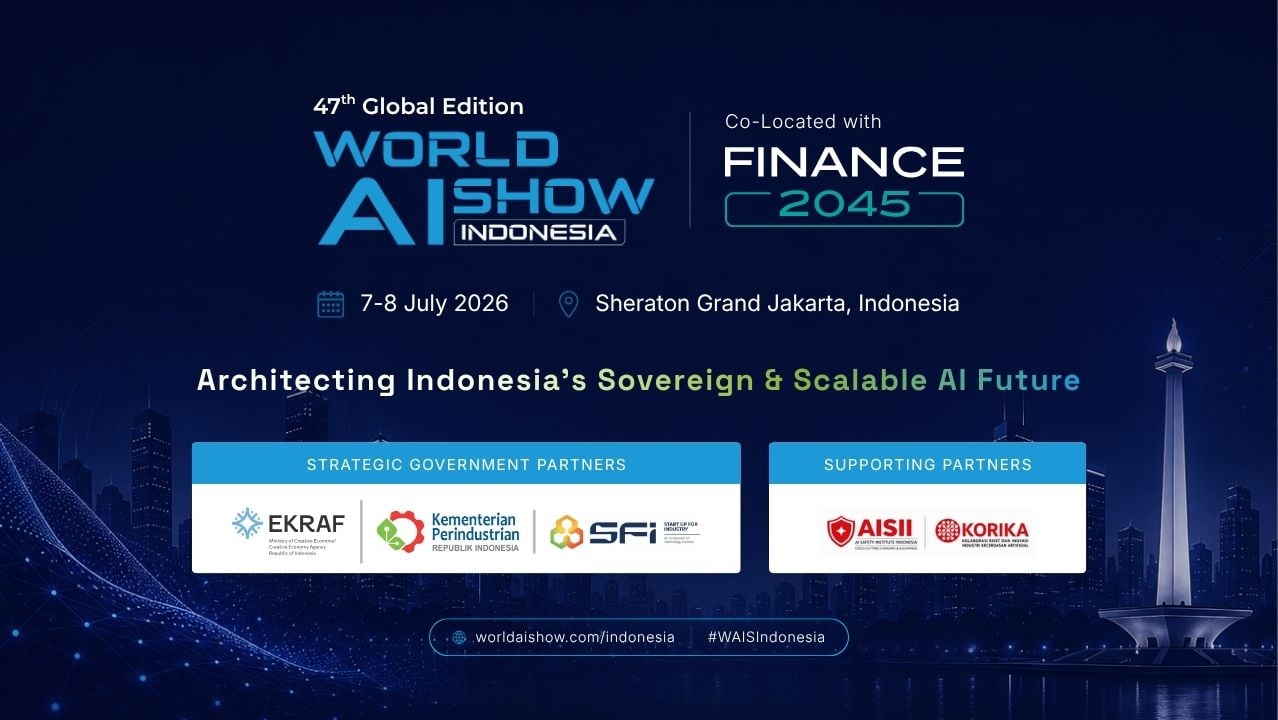
    Jakarta, Indonesia, 30th June 2026, ZEX PR WIRE — As intelligent systems rapidly transition from corporate experimentation into core operational infrastructure, a critical question faces the nation’s business elite: who will control the infrastructure behind Indonesia’s projected $10.9 billion AI expansion? The window for enterprises to secure market dominance before national digital policies lock into place is closing fast.

    To address this massive technological shift, global deal facilitator firm Trescon has announced it will host the 47th global edition of the World AI Show in Jakarta (proudly co-located with Finance 2045) on 7–8 July 2026. Running under the central theme of “Architecting Indonesia’s Sovereign & Scalable AI Future,” this high-stakes summit serves as a premier collaborative platform to move automation from isolated pilots into large-scale commercial production.

    Unprecedented Institutional and Industry Support

    The upcoming summit has secured exceptional institutional endorsement, bridging the gap between state regulatory frameworks and private sector execution. The event is officially supported by Strategic Government Partners, including the Ministry of Industry | Startup For Industry (SFI) and the Ministry of Creative Economy, alongside key industry bodies AISII and KORIKA.

    Voices Shaping the Future To deliver precise deployment blueprints, a stellar roster of the nation’s top tech authorities will take the stage. The top 13 visionary speakers leading the strategic discourse include:

    1. E. Prof. Dr. Pratikno – Coordinating Minister of Human Development and Culture, Republic of Indonesia

    2. Vivi Yulaswati – Deputy for Economic Affairs and Digital Transformation, BAPPENAS

    3. Muhammad Neil El Himam – Deputy for Digital and Technology Creativity, Ministry of Creative Economy (EKRAF)

    4. Hammam Riza – President, KORIKA – Collaborative Research and Industrial Innovation in AI

    5. Wempi Saputra – Executive Director, The World Bank

    6. Arie Purwanto – Deputy Director of Data Science and Governance, Badan Pemeriksa Keuangan (BPK)

    7. Sujala Pant – Resident Representative, UNDP Indonesia

    8. Eryk Pratama – Vice Chairman of Standing Committee for AI and PDP, Indonesian Chamber of Commerce and Industry (KADIN)

    9. Budi Setiawan -Acting Director, Small & Medium Metal, Machinery, Electronics & Transport Industries, Ministry of Industry of the Republic of Indonesia

    10. Mark Jefferson GO –Chief Strategy, Research and Development Officer,PT Erajaya Swasembada,TBK

    11. Ajar Edi – Senior Vice President, Regulatory & Government Affairs, PT Indosat TBK

    12. Charles Budiman– Chief Digital Banking Officer, P.T Bank Maybank Indonesia

    13. Andri Qiantori – Chief Technology Officer, LinkAja

    AI is rapidly becoming a strategic enabler for Indonesia’s economic growth, public service transformation, and digital sovereignty. With strong momentum across sectors, AI has the potential to significantly boost productivity, inclusion, and innovation. However, this acceleration must be balanced with robust governance, particularly in areas of data protection, cybersecurity, and ethical AI deployment. Indonesia’s regulatory landscape, including the Personal Data Protection Law, provides an important foundation, but operationalizing responsible AI at scale remains a key challenge. Moving forward, success will depend on aligning investment, talent development, and governance frameworks to ensure AI is deployed securely, ethically, and in a way that builds long-term public trust.– Eryk Pratama Vice Chairman of Standing Committee for AI and PDP Indonesian Chamber of Commerce and Industry (KADIN)

    AI is rapidly transforming Indonesia’s digital economy by enabling businesses to scale faster, make smarter decisions, and deliver more personalized customer experiences. From improving logistics and travel platforms to advancing financial inclusion and public services, AI is becoming a key driver of productivity and innovation. As adoption grows, the focus must shift toward responsible AI, ensuring data governance, talent development, and ethical use, so Indonesia can fully realize its potential as a leading AI-powered economy in Southeast Asia. – Dr. Irvan Bastian Arief VP of Technology GRAND, Data and AI tiket.com

    Rather than focusing on theoretical future concepts, the journalistic agenda targets immediate, real-world integration bottlenecks, computing infrastructure readiness, and inference cost optimization. The strategic dialogue will flow across four critical thematic pillars: AI Infrastructure & Data Foundations, Generative AI & Automation, Responsible & Trusted AI Ecosystems, and Intelligent Industries & Smart Infrastructure.

    This strategic alignment is further strengthened by a coalition of global technology leaders and enterprise innovators who are actively funding the next phase of digital growth.

    Strategic Government Partners: EKRAF (Ministry of Creative Economy); Kementerian Perindustrian Republik Indonesia (Ministry of Industry)

    Supporting Partners: KORIKA | AISII

    Lead Sponsor: DATADOG

    Platinum Sponsor: Magure

    Gold Sponsors: Zoom; UCloud Global; PT ASIX INDONESIA CERDAS; Redis; Akamai

    Silver Sponsors: Alibaba Cloud | Indonet; Datalabs | Google Cloud

    Bronze Sponsors: PingCap TiDB; Primary Guard

    CXO Boardroom Partners: DATADOG; Zoom; Redis; Aerospike.

    Exhibitors: Sharp Peak Consulting; PT Helios Informatika;FanRuan Software; Xtremax; Ingram Micro; Mekari; IPInfraIOT ;Jatis Mobile ;InfraLoka.

    Association Partners: KADIN JAKARTA; APDI; Starfindo; Britcham Indonesia; ISACA Indonesia; KUMPUL; Telkom University; ADIGSI; Indonesia AI Society; Block 71 Indonesia

    These partnerships ensure that attending corporate buyers and international technology providers can seamlessly integrate their sales pipelines with the country’s broader industrial roadmap.

    Secure Your Market Position With exhibition floor space strictly curated and a high volume of enterprise buyers locked in for pre-qualified B2B matchmaking sessions, remaining opportunities are being finalized rapidly. For organizations looking to anchor their presence in Southeast Asia’s largest digital economy, the final window to secure commercial positioning is open now.

    • Want to attend? Network with the region’s top tech leaders and benchmark your operations.

    • Want to showcase your brand? Secure your floor space and access exclusive B2B matchmaking with active enterprise buyers.

    CLAIM YOUR FREE DELEGATE PASS: click here
    ENQUIRE FOR SPONSORSHIP ACCESS : click here

    Media Contact:
     Reeha Haris
    PR & Media Executive
    E: reeha@tresconglobal.com

    About World AI Show

    World AI Show is a global conference series by Trescon that brings together enterprise leaders, policymakers, and technology providers to drive real-world AI adoption. With 45+ editions across key markets like Indonesia, Malaysia, Singapore, and KSA, the platform focuses on enterprise use cases, infrastructure, governance, and measurable business outcomes, connecting decision-makers with the partners and solutions needed to scale AI.

  • Lisa Doverspike on Why Stewardship Matters

    San Francisco, CA, 29th June 2026, ZEX PR WIRE, Early in her career, Lisa Doverspike noticed that the leaders who left the strongest impression were rarely focused on personal recognition. They were focused on building strong organizations, developing talented people, and creating opportunities that would continue to generate value long after a particular project or initiative was complete.

    That observation helped shape her view of leadership and continues to influence her approach today.

    Throughout her career working with family enterprises, investments, commercial real estate, and philanthropic initiatives, she has embraced a philosophy grounded in stewardship. For her, stewardship reflects a commitment to creating lasting value, developing future leaders, and strengthening organizations for the long term.

    A Long-Term Perspective

    Stewardship begins with a long-term outlook.

    Every decision contributes to the future of an organization. Leaders help shape culture, create opportunities, and influence the experiences of the people they serve. A stewardship mindset encourages thoughtful decisions that support both present success and future growth.

    For Lisa, some of the most meaningful achievements are the ones that continue creating value years after they were initiated.

    Investing in People

    Organizations are ultimately built by people.

    Throughout her career, Lisa has seen how mentorship, encouragement, and professional development can influence an individual’s confidence and growth. Watching emerging leaders develop new skills, take on greater responsibility, and help others succeed has been one of the most rewarding aspects of leadership.

    Investing in people strengthens organizations and creates opportunities that extend far beyond any single role or project.

    Building Organizations That Endure

    Stewardship also involves creating structures that support long-term success.

    Governance, succession planning, leadership development, and knowledge sharing all contribute to continuity and resilience. These efforts help organizations remain strong while adapting to changing circumstances and opportunities.

    A commitment to stewardship encourages leaders to think about the future and to build organizations that continue to serve others over time.

    Creating Meaningful Impact

    Organizations have the ability to create value not only for stakeholders, but also for employees, families, and communities.

    When leaders approach their responsibilities with care, integrity, and a long-term perspective, they create positive outcomes that extend well beyond the walls of the organization.

    For Lisa Doverspike, stewardship represents a commitment to contribution, continuity, and service. It is a leadership philosophy centered on creating opportunities, developing people, and building organizations that continue to make a meaningful impact for generations to come.

  • Kelly Bacot, an Early Childhood Educator, Warns of the Danger of Raising Children Who Trust Machines More Than Humans

    San Francisco, CA, 29th June 2026, ZEX PR WIRE, As artificial intelligence becomes increasingly embedded in classrooms and homes, educators are raising concerns about how early exposure is shaping children’s understanding of trust. Kelly Bacot, an experienced early childhood educator and highly rated tutor, warns that children may come to place greater trust in machines than in human judgment if AI is introduced without clear boundaries and intentional instruction.

    Bacot notes that AI tools are being rapidly integrated into early learning environments. These tools include adaptive learning platforms, automated feedback systems, and digital tutoring programs. While she supports technology as a supplement to learning, she emphasizes that it should not replace human interaction or human authority in the classroom.

    She adds that young children are especially vulnerable to over-trusting systems that respond quickly and confidently. AI systems often provide instant answers without hesitation. Bacot explains that this can create a perception of certainty that does not always reflect accuracy. She cautions that children may begin to equate speed and confidence with truth.

    According to Bacot, early childhood is a critical stage in development. Children are still learning how to interpret authority and build social understanding. During this stage, they rely heavily on teachers and caregivers to shape their understanding of truth, emotion, and decision-making. She warns that introducing AI without guidance may blur the line between human judgment and machine output.

    She further notes that learning is not only about receiving information. It is also about interaction, questioning, and emotional connection. These elements are central to classroom development and cannot be replicated by automated systems. Bacot emphasizes that human interaction remains essential for building empathy, communication skills, and resilience.

    Education experts supporting this view argue that overreliance on AI tools could reduce opportunities for children to engage in discussion and collaborative problem-solving. These experiences are important for developing critical thinking and interpersonal trust. Bacot adds that children learn not just from answers, but from the process of reaching them with others.

    Another concern raised is the long-term impact on critical thinking. Bacot explains that children who become accustomed to accepting machine-generated responses without questioning them may struggle later in life when evaluating information in more complex environments. She notes that distinguishing between human insight and automated output is becoming an essential life skill.

    Bacot is not calling for the removal of technology from classrooms. Instead, she advocates for a structured approach that teaches children how to use AI responsibly. She supports early instruction in what she describes as digital discernment. This includes teaching children that AI systems can make mistakes and that they do not think or feel like humans do.

    She also stresses the importance of keeping human-centered learning at the core of early education. Activities such as storytelling, group play, and guided discussion help children build emotional intelligence and social awareness. Bacot notes that these experiences are foundational and should not be displaced by screen-based instruction.

    Public education systems, she argues, are well-positioned to balance innovation with foundational learning. However, she cautions that without clear policy direction and proper teacher preparation, schools may unintentionally lean too heavily on automated tools in the name of efficiency.

    Bacot adds that efficiency should never come at the expense of human development. She emphasizes that education is not only about academic performance but also about shaping how children relate to others and interpret the world around them.

    As AI continues to evolve, Bacot calls for a deliberate and measured approach to its use in early education. She encourages educators and policymakers to prioritize human relationships in the learning process. According to her, the central challenge is not whether children will use AI, but whether they will continue to trust and value human understanding as they grow. To learn more about Kelly Bacot, visit: https://www.linkedin.com/in/kelly-bacot-3b4240144/