Author: Zex PRwire

  • Sharjah International Conservation Forum for Arabian Biodiversity (SICFAB) Discusses Seabird Rescue and the Risks of Invasive Species

    Sharjah, UAE, 6th February 2026, The 25th edition of the Sharjah International Forum for Arabian Biodiversity (SICFAB), organized by the Sharjah Environment and Protected Areas Authority (EPAA) held at Sharjah Safari and running until 5 February, continues to tackle priority environmental issues in the Arabian Peninsula. The forum brings together around 180 experts, researchers, and veterinarians from Arab countries, alongside international scientific and research institutions.
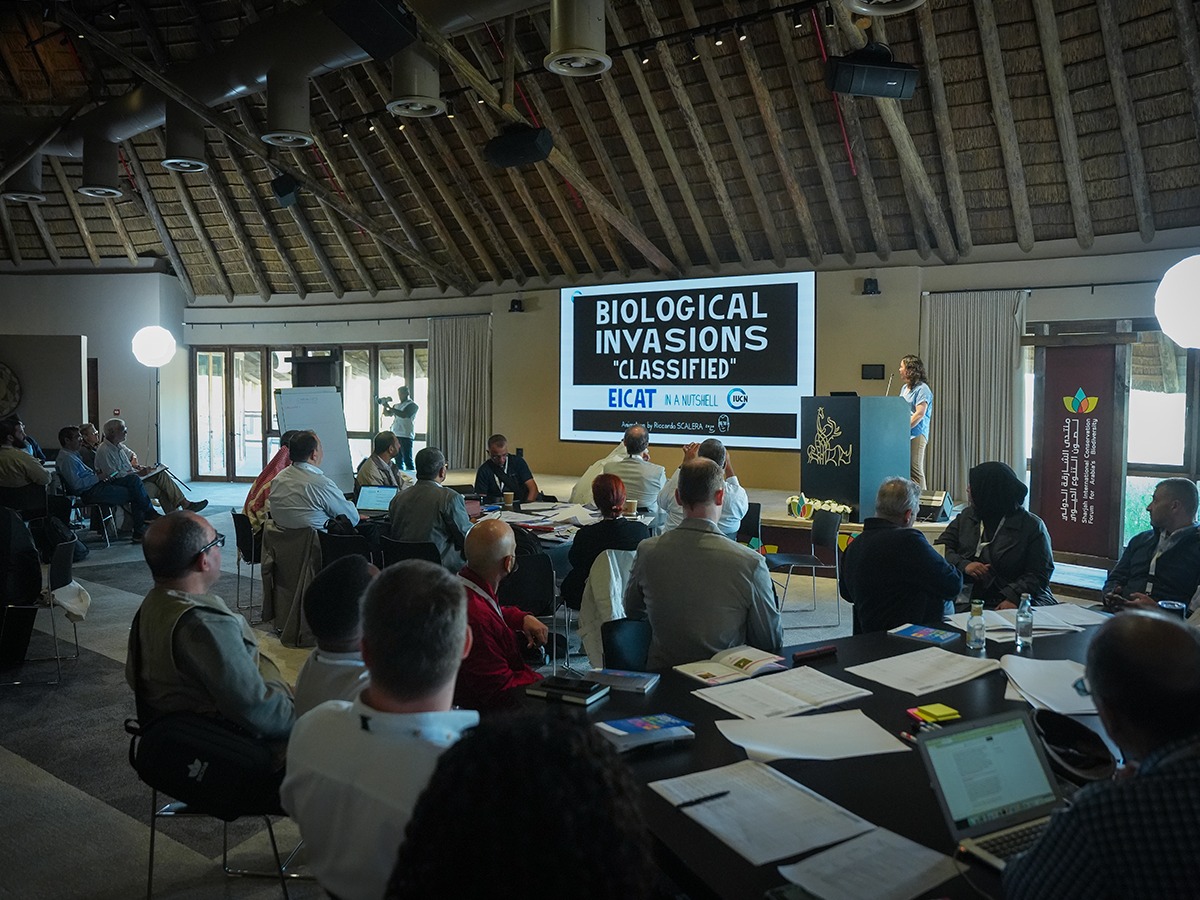
     Sharjah International Conservation Forum for Arabian Biodiversity

    Seabird Rescue at the Forefront of Discussions

    Forum sessions highlighted the health challenges associated with rescuing and rehabilitating seabirds. Specialists presented field experiences in handling cases involving cormorants and seagulls during a session titled “Clinical, Therapeutic, and Pathological Insights from Rehabilitated Cormorants”, delivered by Dr. Miceala Shocklee and Dr. Daniela Dink. The session emphasized that emaciation is a major health issue that impairs birds’ ability to forage, increasing their susceptibility to injuries and predation. It also noted that the impact of internal parasites is exacerbated when combined with poor body condition.

    Discussions also addressed common injuries caused by human activities, such as the ingestion of fishing hooks, soft tissue injuries, and external parasites. Experts stressed the importance of accurate diagnosis and appropriate therapeutic intervention to ensure successful recovery and safe release back into their natural habitats.

    Necropsy as a Scientific Tool for Understanding Seabird Mortality

    A session titled “Pathological Insights from Rescued Seagulls”, presented by Dr. Sara Zavala, Dr. Shamma AlEissaee, and Dr. Nina Gianelli, discussed the pathological dimensions of seabird mortality cases. The session emphasized the importance of necropsy as a fundamental scientific tool for understanding the causes of death, both direct and underlying. Findings revealed that kidney diseases are among the most prominent health issues and, in some cases, may lead to severe neurological complications.

    Initial Assessment and Rehabilitation Key to Successful Releases

    Translating this science into effective practice was the focus of a major panel discussion titled “Triage, Stabilisation, Rehabilitation, Post Release, Outcomes/Monitoring”, featuring Dr. Tres Clarke and Dr. David Roberts. The discussion addressed operational challenges facing seabird rescue centers. These included the high costs of long-term care, the need for precise criteria to determine birds’ readiness for release, and the importance of post-release monitoring using appropriate tracking methods.

    EICAT Assessments and Red Lists for Biodiversity Conservation

    A workshop on “Conducting EICAT Assessments to Determine the Environmental Impact of Invasive Species” highlighted the importance of unified scientific methodologies for classifying the impacts of invasive species and strengthening environmental databases to help guide decision-makers in prioritizing control measures.

    Separately, discussions on the IUCN Red List of Threatened Species underscored the pivotal role of scientific classification and Red Lists in documenting biodiversity, assessing extinction risks, and supporting the establishment of protected areas and environmental rehabilitation programs.

    Strategic Planning to Combat Biological Invasions

    Applying this science to effective practice was highlighted as the next critical step. A workshop titled “Facilitating Strategic Planning for Decision-Makers” explored measuring invasive species’ impacts and classifying them into defined environmental categories, which contributes to more effective resource allocation and the restoration of ecological balance in affected ecosystems.

    Invasive Ants as a Threat to Native Species

    The specific menace of invasive ants was unpacked by Dr. Mustafa Sharaf, a researcher in entomology at the Sharjah Desert Park Wildlife Museum. He outlined their high capacity for biological invasion due to human activities. Invasive ants can threaten native and endemic species, disrupt populations, and, in worst-case scenarios, lead to extinctions. Some species may also act as indirect transmitters for pathogens, particularly in sensitive environments such as hospitals and homes. Presenters shared global examples of invasive ants causing economic losses worth hundreds of billions of dollars due to impacts on agriculture and ecosystems. Experts also highlighted the red palm weevil as one of the most dangerous invasive species in the Arab region, causing significant economic and environmental damage.

    Regional and International Cooperation for Biodiversity Protection

    In the forum’s closing discussions, participants emphasized the need to strengthen regional and international cooperation, exchange scientific expertise, and engage local communities and volunteers in early reporting of environmental cases. They highlighted the development of unified scientific databases as a fundamental pillar for protecting coastal and terrestrial ecosystems, supporting the Sustainable Development Goals, and conserving the natural heritage of the Arabian Peninsula.

  • Sharjah International Conservation Forum for Arabian Biodiversity (SICFAB) Discusses Seabird Rescue and the Risks of Invasive Species

    Sharjah, UAE, 6th February 2026, The 25th edition of the Sharjah International Forum for Arabian Biodiversity (SICFAB), organized by the Sharjah Environment and Protected Areas Authority (EPAA) held at Sharjah Safari and running until 5 February, continues to tackle priority environmental issues in the Arabian Peninsula. The forum brings together around 180 experts, researchers, and veterinarians from Arab countries, alongside international scientific and research institutions.

     Sharjah International Conservation Forum for Arabian Biodiversity

    Seabird Rescue at the Forefront of Discussions

    Forum sessions highlighted the health challenges associated with rescuing and rehabilitating seabirds. Specialists presented field experiences in handling cases involving cormorants and seagulls during a session titled “Clinical, Therapeutic, and Pathological Insights from Rehabilitated Cormorants”, delivered by Dr. Miceala Shocklee and Dr. Daniela Dink. The session emphasized that emaciation is a major health issue that impairs birds’ ability to forage, increasing their susceptibility to injuries and predation. It also noted that the impact of internal parasites is exacerbated when combined with poor body condition.

    Discussions also addressed common injuries caused by human activities, such as the ingestion of fishing hooks, soft tissue injuries, and external parasites. Experts stressed the importance of accurate diagnosis and appropriate therapeutic intervention to ensure successful recovery and safe release back into their natural habitats.

    Necropsy as a Scientific Tool for Understanding Seabird Mortality

    A session titled “Pathological Insights from Rescued Seagulls”, presented by Dr. Sara Zavala, Dr. Shamma AlEissaee, and Dr. Nina Gianelli, discussed the pathological dimensions of seabird mortality cases. The session emphasized the importance of necropsy as a fundamental scientific tool for understanding the causes of death, both direct and underlying. Findings revealed that kidney diseases are among the most prominent health issues and, in some cases, may lead to severe neurological complications.

    Initial Assessment and Rehabilitation Key to Successful Releases

    Translating this science into effective practice was the focus of a major panel discussion titled “Triage, Stabilisation, Rehabilitation, Post Release, Outcomes/Monitoring”, featuring Dr. Tres Clarke and Dr. David Roberts. The discussion addressed operational challenges facing seabird rescue centers. These included the high costs of long-term care, the need for precise criteria to determine birds’ readiness for release, and the importance of post-release monitoring using appropriate tracking methods.

    EICAT Assessments and Red Lists for Biodiversity Conservation

    A workshop on “Conducting EICAT Assessments to Determine the Environmental Impact of Invasive Species” highlighted the importance of unified scientific methodologies for classifying the impacts of invasive species and strengthening environmental databases to help guide decision-makers in prioritizing control measures.

    Separately, discussions on the IUCN Red List of Threatened Species underscored the pivotal role of scientific classification and Red Lists in documenting biodiversity, assessing extinction risks, and supporting the establishment of protected areas and environmental rehabilitation programs.

    Strategic Planning to Combat Biological Invasions

    Applying this science to effective practice was highlighted as the next critical step. A workshop titled “Facilitating Strategic Planning for Decision-Makers” explored measuring invasive species’ impacts and classifying them into defined environmental categories, which contributes to more effective resource allocation and the restoration of ecological balance in affected ecosystems.

    Invasive Ants as a Threat to Native Species

    The specific menace of invasive ants was unpacked by Dr. Mustafa Sharaf, a researcher in entomology at the Sharjah Desert Park Wildlife Museum. He outlined their high capacity for biological invasion due to human activities. Invasive ants can threaten native and endemic species, disrupt populations, and, in worst-case scenarios, lead to extinctions. Some species may also act as indirect transmitters for pathogens, particularly in sensitive environments such as hospitals and homes. Presenters shared global examples of invasive ants causing economic losses worth hundreds of billions of dollars due to impacts on agriculture and ecosystems. Experts also highlighted the red palm weevil as one of the most dangerous invasive species in the Arab region, causing significant economic and environmental damage.

    Regional and International Cooperation for Biodiversity Protection

    In the forum’s closing discussions, participants emphasized the need to strengthen regional and international cooperation, exchange scientific expertise, and engage local communities and volunteers in early reporting of environmental cases. They highlighted the development of unified scientific databases as a fundamental pillar for protecting coastal and terrestrial ecosystems, supporting the Sustainable Development Goals, and conserving the natural heritage of the Arabian Peninsula.

  • Sharjah International Conservation Forum for Arabian Biodiversity (SICFAB) Discusses Seabird Rescue and the Risks of Invasive Species

    Sharjah, UAE, 6th February 2026, The 25th edition of the Sharjah International Forum for Arabian Biodiversity (SICFAB), organized by the Sharjah Environment and Protected Areas Authority (EPAA) held at Sharjah Safari and running until 5 February, continues to tackle priority environmental issues in the Arabian Peninsula. The forum brings together around 180 experts, researchers, and veterinarians from Arab countries, alongside international scientific and research institutions.

     Sharjah International Conservation Forum for Arabian Biodiversity

    Seabird Rescue at the Forefront of Discussions

    Forum sessions highlighted the health challenges associated with rescuing and rehabilitating seabirds. Specialists presented field experiences in handling cases involving cormorants and seagulls during a session titled “Clinical, Therapeutic, and Pathological Insights from Rehabilitated Cormorants”, delivered by Dr. Miceala Shocklee and Dr. Daniela Dink. The session emphasized that emaciation is a major health issue that impairs birds’ ability to forage, increasing their susceptibility to injuries and predation. It also noted that the impact of internal parasites is exacerbated when combined with poor body condition.

    Discussions also addressed common injuries caused by human activities, such as the ingestion of fishing hooks, soft tissue injuries, and external parasites. Experts stressed the importance of accurate diagnosis and appropriate therapeutic intervention to ensure successful recovery and safe release back into their natural habitats.

    Necropsy as a Scientific Tool for Understanding Seabird Mortality

    A session titled “Pathological Insights from Rescued Seagulls”, presented by Dr. Sara Zavala, Dr. Shamma AlEissaee, and Dr. Nina Gianelli, discussed the pathological dimensions of seabird mortality cases. The session emphasized the importance of necropsy as a fundamental scientific tool for understanding the causes of death, both direct and underlying. Findings revealed that kidney diseases are among the most prominent health issues and, in some cases, may lead to severe neurological complications.

    Initial Assessment and Rehabilitation Key to Successful Releases

    Translating this science into effective practice was the focus of a major panel discussion titled “Triage, Stabilisation, Rehabilitation, Post Release, Outcomes/Monitoring”, featuring Dr. Tres Clarke and Dr. David Roberts. The discussion addressed operational challenges facing seabird rescue centers. These included the high costs of long-term care, the need for precise criteria to determine birds’ readiness for release, and the importance of post-release monitoring using appropriate tracking methods.

    EICAT Assessments and Red Lists for Biodiversity Conservation

    A workshop on “Conducting EICAT Assessments to Determine the Environmental Impact of Invasive Species” highlighted the importance of unified scientific methodologies for classifying the impacts of invasive species and strengthening environmental databases to help guide decision-makers in prioritizing control measures.

    Separately, discussions on the IUCN Red List of Threatened Species underscored the pivotal role of scientific classification and Red Lists in documenting biodiversity, assessing extinction risks, and supporting the establishment of protected areas and environmental rehabilitation programs.

    Strategic Planning to Combat Biological Invasions

    Applying this science to effective practice was highlighted as the next critical step. A workshop titled “Facilitating Strategic Planning for Decision-Makers” explored measuring invasive species’ impacts and classifying them into defined environmental categories, which contributes to more effective resource allocation and the restoration of ecological balance in affected ecosystems.

    Invasive Ants as a Threat to Native Species

    The specific menace of invasive ants was unpacked by Dr. Mustafa Sharaf, a researcher in entomology at the Sharjah Desert Park Wildlife Museum. He outlined their high capacity for biological invasion due to human activities. Invasive ants can threaten native and endemic species, disrupt populations, and, in worst-case scenarios, lead to extinctions. Some species may also act as indirect transmitters for pathogens, particularly in sensitive environments such as hospitals and homes. Presenters shared global examples of invasive ants causing economic losses worth hundreds of billions of dollars due to impacts on agriculture and ecosystems. Experts also highlighted the red palm weevil as one of the most dangerous invasive species in the Arab region, causing significant economic and environmental damage.

    Regional and International Cooperation for Biodiversity Protection

    In the forum’s closing discussions, participants emphasized the need to strengthen regional and international cooperation, exchange scientific expertise, and engage local communities and volunteers in early reporting of environmental cases. They highlighted the development of unified scientific databases as a fundamental pillar for protecting coastal and terrestrial ecosystems, supporting the Sustainable Development Goals, and conserving the natural heritage of the Arabian Peninsula.

  • Long Lake Camp for the Arts Leads the Way in Digital Detox for Teens Through Immersive Fine Arts and Music

    • A Creative Summer Without Screens Helps Teens Rebuild Confidence, Friendships, and Emotional Well-Being in 2026.

    Dobbs Ferry, NY, 6th February 2026, ZEX PR WIRE, Many families worry about how much time teens spend on screens, especially during the summer months when school routines disappear, and social media fills the gap. Long Lake Camp for the Arts offers a powerful alternative in 2026 by creating a space where teens step away from constant phone use and reconnect through creativity, friendship, and real-world community.

    As concerns about teen stress, isolation, and digital overload continue to rise, parents increasingly seek environments that support emotional well-being through meaningful experiences. Long Lake Camp for the Arts helps teens unplug from daily distractions and immerse themselves in music, theater, fine arts, and collaborative creative programs that encourage confidence and connection.

    Located in the Adirondacks at 83 Long Lake Camp Way, Long Lake, NY 12847, Long Lake Camp for the Arts provides a summer setting where teens focus on making, performing, and building friendships instead of scrolling. Families also connect year-round through the camp’s winter office at 199 Washington Avenue, Dobbs Ferry, NY 10522, close to the largest enrollment area surrounding New York City.

    Campers enjoy a unique experience built around 100% self-choice, with expert guidance and care from experienced staff. Teens design their own creative journey each day, whether they want to explore theater, join music programs, develop visual art skills, or collaborate with peers in group performances and showcases. The camp welcomes both beginners and experienced artists, and no audition is needed to join.

    “Our goal is simple,” said a Long Lake Camp for the Arts representative. “We want teens to feel confident, supported, and fully present. When they step away from phones and into a creative community, they discover how strong and capable they really are.”

    Long Lake Camp for the Arts offers both three-week and six-week sessions for Summer 2026, giving families flexible options while providing teens enough time to build lasting friendships and meaningful growth.

    3-Week Sessions ($7,600)
    June 28 to July 19, 2026
    July 20 to August 9, 2026
    August 10 to August 30, 2026

    6-Week Sessions ($14,200)
    June 28 to August 19, 2026
    July 20 to August 30, 2026

    Through immersive creative programs, teens engage in daily rehearsals, group projects, mentorship, and performances that strengthen self-esteem and reduce the emotional strain that often comes with constant online comparison.

    Families searching for a summer experience that balances creativity, independence, and mental wellness continue to choose Long Lake Camp for the Arts as a trusted destination for personal growth and lifelong memories.

    To learn more, request a brochure or explore enrollment options for Summer 2026 at Long Lake Camp for the Arts.

    About Long Lake Camp for the Arts

    Long Lake Camp for the Arts is a renowned summer sleepaway camp in New York that gives teens and children the freedom to explore the performing arts, fine arts, and music in a supportive and inspiring environment. Located in the Adirondacks, the camp offers a unique blend of theater, musical performances, visual arts, and creative enrichment alongside outdoor fun and lifelong friendships.

    Campers enjoy 100% self-choice programming with expert guidance, allowing each teen to build confidence, develop skills, and thrive as part of a warm, creative community. Long Lake Camp for the Arts welcomes both beginners and experienced artists, with no audition needed to join.

    For Summer 2026, the camp offers three-week and six-week sessions designed to provide meaningful growth, connection, and unforgettable creative experiences.

    Contact Information:

    Address: 199 Washington Avenue, Dobbs Ferry, NY 10522
    Websitehttps://www.longlakecamp.com/

  • Tamar Toledano Weighs In on the “SaaSpocalypse” as AI Agents Shake the Software Industry

    Canton, Michigan, 6th February 2026, ZEX PR WIRE, Tamar Toledano, a Silicon Valley-based technology consultant and investor known for guiding companies through major technology shifts, is urging business leaders to slow down and think clearly amid what markets are now calling the “SaaSpocalypse.” The term emerged after Anthropic released its Claude Cowork plugins on January 30, 2026, a launch that sent shockwaves through public markets and erased an estimated $285 billion in value across software and enterprise technology stocks.

    The source of the panic is not hype alone. Anthropic introduced 11 open-source Cowork plugins that allow Claude to complete complex, end-to-end workflows autonomously. These include legal document analysis, financial modelling, CRM management, sales operations, and large-scale data analysis. Tasks that once required entire SaaS platforms, implementation teams, and long onboarding cycles can now be handled by an AI agent operating across tools with minimal human input.

    For investors and executives alike, the implications felt immediate. Shares of companies long considered untouchable pillars of enterprise software faced intense pressure as fears grew that AI agents could bypass traditional SaaS interfaces altogether. The concern is not that software will disappear overnight, but that the value stack is shifting faster than expected.

    According to Tamar Toledano, the market reaction reflects fear of structural change rather than a sudden collapse of fundamentals. “What we are seeing is not the end of SaaS,” she explains. “It is the end of SaaS as we have known it for the last twenty years. That distinction matters.”

    Toledano points out that Cowork plugins challenge a core assumption of enterprise software: that users must adapt to rigid platforms. AI agents invert that relationship. Instead of humans learning systems, the system learns the human’s intent and executes tasks across environments. This raises hard questions for companies built around seat licenses, dashboards, and long-term contracts.

    She notes that legal teams reviewing contracts, finance teams building models, or sales teams updating CRMs may no longer need separate tools for each function. An AI agent can orchestrate these tasks end to end, reducing friction and cost. That efficiency is precisely what investors fear will compress margins across the software sector.

    Still, Toledano cautions against equating disruption with destruction. “Every major platform shift creates panic before it creates clarity,” she says. “Cloud computing, mobile, and open-source software all triggered similar reactions. The winners were not those who denied the shift, but those who adapted early.”

    From her perspective, SaaS companies are at a crossroads. Tools that rely solely on being a system of record are most exposed. In contrast, platforms that own proprietary data, regulatory trust, or deeply embedded workflows still have leverage. The question is whether those companies can reposition themselves as AI-native infrastructure rather than static software vendors.

    Toledano also emphasizes the significance of Cowork plugins being open source. This lowers barriers to entry and accelerates experimentation. Startups can now build highly specialized agents without recreating full platforms. For incumbents, that means competition may come from unexpected places, not just well-funded rivals.

    For enterprise buyers, the moment presents opportunity alongside risk. AI agents promise speed and cost savings, but they also introduce governance, security, and accountability challenges. “Autonomy without oversight is not innovation,” Toledano warns. “Enterprises still need frameworks for trust, compliance, and decision ownership.”

    She believes the next phase of the market will reward companies that combine AI agents with strong operational guardrails. Rather than replacing humans, successful implementations will elevate teams by removing repetitive work and improving decision quality.

    As markets digest the shock, Toledano expects volatility to continue. However, she views the so-called SaaSpocalypse as a reset. “This is a reallocation of value, not its disappearance,” she says. “Capital will flow toward companies that understand how AI agents reshape workflows, pricing models, and customer relationships.”

    For leaders navigating this moment, her advice is direct. Do not chase headlines or retreat into denial. Assess where AI can genuinely replace friction, where human judgment remains essential, and how business models must evolve. “The future belongs to organizations that design for intelligence, not just software,” Toledano concludes.

    To learn more visit: https://tamartoledano.com/

  • Strategic Stewardship: Lisa Doverspike on Financial Leadership in Digital Infrastructure

    Canton, Michigan, 6th February 2026, ZEX PR WIRE, As digital infrastructure continues to expand, the difference between organizations that endure and those that overextend is rarely about scale alone. More often, it comes down to financial stewardship — the discipline behind how growth is structured, paced, and sustained.

    The infrastructure landscape is capital-intensive and unforgiving. Demand is strong, pressure to expand is constant, and mistakes are expensive. Growth pursued without structural discipline quickly becomes a liability. Navigating this environment requires leadership that understands not only capital markets, but how financial decisions translate into operational durability.

    Lisa Doverspike brings that perspective to her work as a chief financial leader overseeing complex, infrastructure-heavy operations.

    Where Capital Strategy Meets Operations

    Lisa Doverspike does not approach financial leadership through a short-term lens. While quarterly performance matters, her focus is shaped by more than 30 years working in strategic transactions, portfolio growth, and long-term capital planning.

    Her experience spans operating businesses and investment environments, giving her a practical understanding of how capital structure, liquidity, and governance decisions affect organizations over time. That background informs a leadership style grounded in patience, resilience, and adaptability — qualities that matter deeply in infrastructure-driven businesses.

    Rather than chasing growth for its own sake, she emphasizes:
    • Patient capital structured to support long operating horizons
    • Asset resilience, treating infrastructure as a business system rather than a technical asset
    • Strategic agility that preserves flexibility as markets evolve

    Managing Scale Without Compromising Stability

    Scaling infrastructure requires more than accounting expertise. It requires foresight — an understanding of how financial decisions today constrain or enable options years down the line.

    Growth is guided by disciplined underwriting, conservative leverage, and an emphasis on flexibility. Projects are evaluated not only for immediate returns, but for performance under stress and impact on the broader balance sheet.

    A Multi-Disciplinary Leadership Lens

    Effective financial leadership in complex environments requires more than technical fluency. Doverspike’s academic background combines formal training in taxation and capital strategy with deep study of organizational dynamics.

    This allows her to navigate sophisticated financial structures while remaining attentive to the human systems that execute them. Teams, incentives, and accountability all influence whether strategy succeeds in practice.

    Perspective Beyond the Boardroom

    Lisa Doverspike’s approach to risk, patience, and judgment is reinforced outside of work as well.

    A long-standing interest in history and genealogy reflects an appreciation for continuity and legacy. Her family’s roots trace back to the Mayflower, reinforcing a respect for long-term stewardship and the responsibility that comes with carrying something forward across generations.

    In professional terms, this perspective translates into building systems meant to last — not simply to perform in favorable conditions.

    Conclusion

    As digital infrastructure grows more complex and capital requirements increase, success depends on leaders who balance growth with restraint and opportunity with discipline.

    Doverspike’s work reflects a belief that financial leadership is itself a form of infrastructure — largely unseen, but essential. When capital is structured thoughtfully and governed with clarity, organizations gain stability, flexibility, and endurance.

    To learn more visithttps://lisa-doverspike.com/

  • Gabriel Lopez of GL Construction of Madison Launches Clarity and Quality Pledge

    Wisconsin, US, 6th February 2026, ZEX PR WIRE, GL Construction of Madison, founded by Gabriel Lopez, has announced the launch of a new Personal Clarity & Quality Pledge, a public commitment aimed at addressing a timely issue in construction: unclear communication and fragmented decision-making that often lead to long-term building failures.

    The pledge is rooted in Lopez’s nearly two decades of experience across commercial and residential construction and draws directly from themes shared in his recent career interview.

    “Most issues don’t start on the roof,” Lopez said. “They start before the job begins, when nothing is explained properly.”

    Why the Pledge Matters Now

    Construction-related complaints continue to be a major issue nationwide. According to the U.S. Federal Trade Commission, home improvement and construction consistently rank among the top consumer complaint categories each year. In the Midwest, exterior failures are especially costly. Industry data shows that water intrusion and roofing-related issues are among the leading causes of residential structural damage, worsened by freeze–thaw cycles and heavy snowfall.

    “When exterior systems fail, everything behind them pays the price,” Lopez said. “Buildings behave as systems, whether people plan for that or not.”

    The Personal Clarity & Quality Pledge

    Through this pledge, Lopez is committing to seven concrete behaviours in his own work:

    1. Explain every project scope in plain language before work begins
    2. Treat roofing, siding, framing, and gutters as one connected system
    3. Set expectations early and document them clearly
    4. Communicate delays or changes as soon as they arise
    5. Refuse shortcuts that trade long-term durability for speed
    6. Apply the same standards to small projects as large ones
    7. Hold consistency as a daily discipline, not a marketing claim

    “Construction doesn’t need hype,” Lopez said. “It needs consistency.”

    A Do-It-Yourself Toolkit for Property Owners

    GL Construction of Madison is also releasing a free, public toolkit to help individuals raise standards on their own—without paying for services:

    10 Actions Anyone Can Take

    1. Write down questions before speaking to any contractor
    2. Ask how exterior components work together
    3. Request timelines in writing
    4. Clarify who is responsible for each task
    5. Keep a simple project notebook
    6. Ask for explanations, not just answers
    7. Review more than one public reputation source
    8. Document conversations with follow-up notes
    9. Learn basic signs of exterior wear
    10. Expect clarity, not urgency

    “You don’t need to be an expert,” Lopez said. “You just need to ask questions and expect straight answers.”

    30-Day Progress Tracker

    Week 1: Learn basic exterior system terms
    Week 2: Review current property conditions
    Week 3: Practise asking clearer questions
    Week 4: Document and reflect on decisions made

    “Shortcuts always show up later,” Lopez said. “They never disappear.”

    Call to Action

    GL Construction of Madison invites property owners, builders, and industry peers to take the Clarity & Quality Pledge, use the DIY toolkit, and share it with others who want better outcomes from construction projects.

    “Better buildings come from better conversations,” Lopez said. “That’s something everyone can take responsibility for.”

    To read the full interview, visit the website here.

    About GL Construction of Madison

    GL Construction of Madison is a Wisconsin-based construction company founded in 2006 by Gabriel Lopez. The company specialises in roofing, siding, framing, and gutter work across residential, commercial, and new-build projects. Drawing on a background in commercial construction, GL Construction of Madison is known for its disciplined, systems-based approach, clear communication, and commitment to long-term quality.

  • Akram Alhamidi Launches a Personal Pledge for Daily Accountability

    Mississippi, US, 6th February 2026, ZEX PR WIREAkram Alhamidi, an entrepreneur based in Petal, Mississippi, today announced a new personal pledge focused on daily accountability and showing up with consistency. The pledge reflects Alhamidi’s long-held belief that progress comes from simple habits done well, not big promises or shortcuts.

    “I didn’t want to wait around,” Alhamidi says. “I wanted to build something real.”
    That mindset now anchors a public commitment to responsible action in everyday work and life.

    The pledge is rooted in lessons Alhamidi has repeated throughout his career.
    “Doing the small things right every day adds up,” he says.
    “When people know what to expect from you, things run better.”
    “You don’t learn everything before you start. You learn by starting.”
    “If something doesn’t work, you fix it and move on.”

    Together, those ideas form the reason behind the pledge.

    Why This Pledge Matters Right Now

    Daily accountability is under pressure. Recent data shows why:

    • The average person loses 2+ hours per day to distraction and poor planning.
    • 82% of adults report feeling overwhelmed by daily responsibilities.
    • Inconsistent routines increase error rates by up to 40% in fast-moving environments.
    • People who set daily priorities are 33% more likely to complete important tasks.

    “These aren’t motivation problems,” Alhamidi says. “They’re consistency problems.”

    Akram Alhamidi’s 7 Personal Commitments

    As part of the pledge, Alhamidi is committing to these concrete behaviors:

    1. Start each day by identifying three priorities and finishing at least one.
    2. Stay present in daily responsibilities instead of delegating blindly.
    3. Address small problems immediately before they grow.
    4. Communicate expectations clearly and consistently.
    5. Review each day and note one lesson learned.
    6. Make decisions based on clarity, not urgency.
    7. Reset weekly to avoid burnout and maintain balance.

    “Leadership isn’t about distance,” Alhamidi says. “You have to be present.”

    Do-It-Yourself Accountability Toolkit

    Anyone can use this pledge without paying for tools or services. Here are 10 free actions individuals can take today:

    1. Write down three priorities each morning.
    2. Turn off notifications for one focused hour.
    3. Set a 15-minute daily review timer.
    4. Fix one small issue you’ve been avoiding.
    5. Clarify expectations in one conversation.
    6. End the day by listing one win.
    7. Block time for rest without guilt.
    8. Stop multitasking during key tasks.
    9. Ask, “What actually matters today?”
    10. Repeat tomorrow without overthinking.

    “Business can take over if you let it,” Alhamidi says. “You still need time to reset.”

    30-Day Progress Tracker (Simple Version)

    Use this quick tracker to stay consistent:

    • Daily: Did I identify priorities? Yes / No
    • Daily: Did I finish one important task? Yes / No
    • Weekly: What worked this week?
    • Weekly: What didn’t?
    • Day 30: What habits stayed?

    “If something doesn’t work, you fix it and move on,” Alhamidi says.

    Take the Pledge

    Akram Alhamidi invites individuals to take the Daily Accountability Pledge, use the toolkit, and share it with others who want more clarity and follow-through.

    Start today.
    Keep it simple.
    Show up tomorrow.

    To read the full interview, visit the website here.

    About Akram Alhamidi

    Akram Alhamidi is an entrepreneur based in Petal, Mississippi. After graduating high school in 2020, he chose an early path of ownership and responsibility. His work and leadership philosophy center on consistency, presence, and learning by doing.

  • Amadeus Acquires Bitte to Power Private, Deterministic and Self-Improving Trading Agents

    Strategic acquisition combines Bitte’s proven trading agent platform and developer ecosystem with Amadeus Protocol’s private, deterministic infrastructure.

    Tortola, BVI, 4th February 2026, ZEX PR WIRE, Amadeus Protocol, the AI-native Layer 1 for private, deterministic, self-improving agents, today announced the strategic acquisition of Bitte.ai (formerly Bitte Protocol / Mintbase) for $1.7 million paid in $AMA. The deal unifies Amadeus’ approach to developing infrastructure for private and deterministic agents, with Bitte’s battle-tested agentic trading product, user base and integrations.

    Bitte brings a live, multi-chain network of 24,164 unique users, 2.85M+ messages across 344k+ chats, and 16,703 registered agents. The majority of these users are EVM-native, directly aligning with Amadeus’ initial go-to-market focus on prediction markets, DEXs and exchanges.

    Amadeus is a high-performance Layer 1 that combines Useful Proof of Work (uPoW), turning mining into useful AI computation, with a deterministic agent runtime, on-chain learning history and Trusted Execution Environments (TEEs)-backed privacy pools. Together, these enable agents that are replayable, auditable, and privately executed at the base layer.

    Since 2018, the Bitte (formerly Mintbase) team has been at the forefront of practical application development, pioneering digital asset solutions before the technology reached mainstream adoption. Their engineering pedigree includes groundbreaking implementations at major industry events such as NFT.NYC and Berlin Blockchain Week.

    Bitte has spent years building consumer-facing Web3 applications and, more recently, agentic trading flows on top of DEXs and on-chain venues. With the acquisition, those ideas are being rebuilt as protocol-native agents on Amadeus.

    “Bitte proved that users want to interact with agents to manage trades and build investment strategies,” said Leslie Kivit, Co-Founder of Amadeus. “We have now combined Bitte’s product, data and integrator network with Amadeus’ private and deterministic agent runtime. Every user on Amadeus will be able to run their own autonomous self-improving agent through simple text commands on every chain. For partners like exchanges and prediction markets, we offer an embedded agent that makes complex features accessible through natural conversation.”

    The integration focuses on three key pillars:

    1. Unified Interface: Bitte’s workflow engine, UX components and lessons from 2.8M+ historical agent messages will be integrated into Amadeus.

    2. Amadeus Trading Fabric: Bitte’s existing exchange and DeFi connectors will plug into Amadeus as venue adapters, feeding a unified, CRDT-style orderbook. High-value Bitte agents will be re-implemented as deterministic agents with on-chain learning histories.

    3. Community: Bitte’s partners, developers, and users will transition to the Amadeus ecosystem. The Agent Launchpad is live from today on bitte.ai. Additional agents and features will be released over the coming weeks. To accelerate adoption, Amadeus is waiving all deployment and usage fees for agents. Partners including decentralized exchanges and prediction markets can integrate Amadeus agents at no cost. 

    Effective immediately, all Bitte assets, intellectual property, and technology platforms will be integrated into Amadeus Protocol’s broader innovation portfolio. The Amadeus team thanks the Bitte community, early supporters, and partners who made this milestone possible.

    About Amadeus Protocol: Amadeus Protocol is the privacy settlement layer for agents. The network combines verifiable agent execution with privacy-preserving infrastructure, enabling agents that learn, adapt, and execute across multiple chains.

    About Bitte.ai: Bitte.ai is an AI agent platform enabling users to deploy trading strategies through natural language. Since 2018, the team has built consumer blockchain applications serving artists, creators, and traders.

    www.ama.one
    info@ama.one
    https://x.com/amadeusprotocol

  • BikesDirect Strengthens Its Role as the Leading Factory-Direct Bicycle Source in 2026

    • Industry-Leading Value, Transparent Pricing, and Expanded Selection Continue to Set Bikesdirect Apart as Rider Demand Grows Nationwide

    Jacksonville, FL, 4th February 2026, ZEX PR WIRE, As cycling continues its steady evolution from niche hobby to mainstream lifestyle choice, Bikesdirect is reinforcing its position in 2026 as the leading destination for factory-direct bicycles, offering riders nationwide unmatched value, selection, and transparency at a time when affordability and performance matter more than ever.

    With growing interest in cycling for fitness, commuting, recreation, and exploration, consumers are increasingly scrutinizing how and where they buy their bikes. In that landscape, Bikesdirect’s direct-to-consumer model—cutting out traditional retail markups while delivering performance-focused designs—has emerged as a defining advantage. The company’s continued growth reflects a broader shift in consumer expectations: riders want quality without inflated pricing, clarity without gimmicks, and access to bikes that fit real-world riding needs.

    “Cycling has changed, and so has the way people shop for bikes,” said a Bikesdirect spokesperson. “Riders are more informed than ever. They understand components, geometry, and value. Our role is to meet that knowledge with honesty, consistency, and factory-direct pricing that makes sense.”

    At the core of Bikesdirect’s success is a straightforward approach that has remained consistent even as the industry has evolved. By working directly with manufacturers and eliminating layers of distribution, Bikesdirect delivers bicycles that would typically carry significantly higher price tags in traditional retail environments.

    This model has proven especially relevant in recent years, as rising costs across shipping, materials, and retail overhead have pushed bike prices higher industrywide. While many retailers have struggled to balance price increases with customer expectations, Bikesdirect’s factory-direct structure has allowed the company to maintain competitive pricing without sacrificing component quality or ride performance.

    The result is a catalog that spans nearly every riding category—from road and gravel to mountain, hybrid, cruiser, electric, and youth bikes—while remaining accessible to both first-time buyers and experienced cyclists seeking performance upgrades.

    Industry observers note that this approach has positioned Bikesdirect as a value benchmark rather than a discount outlet. The company’s bikes are not built to chase trends or inflate feature lists but to deliver functional performance aligned with how people actually ride.

    In 2026, the cycling audience is more diverse than ever. Riders are not defined solely by racing ambitions or trail intensity. Many are commuters seeking efficiency, fitness riders prioritizing comfort, families introducing children to cycling, or adventure-minded cyclists exploring mixed terrain at their own pace.

    Bikesdirect’s product strategy reflects that diversity. Hybrid bikes continue to attract riders looking for flexibility across pavement and paths. Gravel bikes are drawing those interested in endurance and exploration without the rigidity of traditional road cycling. Mountain bikes remain a cornerstone for off-road enthusiasts, while cruisers appeal to riders who value simplicity and comfort. Electric bikes have expanded access further, allowing more people to ride longer and more frequently.

    According to Bikesdirect, one of the defining trends of 2026 is the decline of one-size-fits-all retail sales. Riders increasingly seek bikes that match their lifestyle rather than forcing their lifestyle to fit a bike.

    “We’re seeing customers who know exactly how they want to ride,” the spokesperson said. “They don’t want to be upsold into something they don’t need. They want a bike that fits their use case, their budget, and their long-term goals.”

    Beyond pricing, Bikesdirect has leaned heavily into transparency as a core differentiator. Each product listing emphasizes detailed specifications, component breakdowns, geometry insights, and clear explanations of what riders are getting for their investment.

    In an industry where marketing language can sometimes obscure meaningful differences between models, Bikesdirect has found that clarity builds trust. Customers can compare bikes based on real performance indicators rather than vague branding tiers.

    Customer feedback suggests that this transparency reduces purchase anxiety, especially for riders who may not have access to a local specialty shop or prefer to research independently before buying.

    As online shopping continues to dominate consumer behavior, Bikesdirect’s emphasis on education and clear communication has become a critical part of its value proposition.

    The cycling industry has experienced significant volatility in recent years, from supply chain disruptions to shifting demand cycles. Throughout those fluctuations, Bikesdirect has focused on consistency—maintaining reliable product availability, straightforward policies, and predictable pricing structures.

    This stability has resonated with riders frustrated by sudden price changes, limited stock, or unclear product positioning elsewhere in the market. For many customers, Bikesdirect represents a dependable option in an otherwise fragmented retail environment.

    Industry analysts point to this consistency as a key reason the brand continues to attract repeat buyers. Riders who purchase their first bike through Bikesdirect often return later for upgrades, accessories, or additional bikes for family members.

    Bikesdirect’s reputation has been shaped not by short-term promotions but by long-term customer relationships. Thousands of verified customer testimonials highlight experiences ranging from first-time bike ownership to multi-bike households built entirely through Bikesdirect purchases.

    These testimonials frequently cite value, build quality, and reliability as deciding factors. Many riders report that their bikes exceeded expectations based on price alone, reinforcing the idea that factory-direct does not mean compromised performance.

    The company’s ongoing focus on post-purchase support and clear documentation further contributes to customer confidence, particularly for riders assembling bikes at home or making component adjustments independently.

    Cycling in 2026 is less about strict categories and more about adaptability. Riders expect their bikes to handle multiple scenarios, from weekday errands to weekend adventures. Bikesdirect’s lineup reflects that reality by emphasizing versatile geometries, practical component choices, and designs that prioritize ride comfort alongside efficiency.

    Rather than chasing extremes, the company’s approach aligns with how most people actually use their bikes. This philosophy has helped Bikesdirect stay relevant as cycling culture shifts away from exclusivity and toward accessibility.

    “Cycling should feel welcoming, not intimidating,” the spokesperson said. “Too often, riders feel pressured to overspend or choose bikes that don’t match how they actually ride. Our goal is to remove those barriers by offering honest options, clear information, and factory-direct value. When people feel confident about their purchase, they ride more often, enjoy it more, and stay connected to cycling long term.”

    As Bikesdirect moves further into 2026, the company plans to continue refining its product offerings while maintaining the principles that have defined its growth. That includes expanding selections where rider demand is strongest, improving educational resources, and preserving the factory-direct pricing model that has become its hallmark.

    While the broader cycling industry continues to adapt to economic pressures and changing consumer habits, Bikesdirect remains focused on delivering tangible value rather than marketing promises.

    The company believes that its role in the cycling ecosystem is not to compete with local bike culture but to complement it—providing access, affordability, and choice for riders who want control over how they buy and ride.

    Cyclists looking for performance-driven bikes without inflated retail pricing can explore Bikesdirect’s full factory-direct lineup by visiting Bikesdirect.com. With transparent specifications, rider-focused designs, and pricing built around real value, Bikesdirect continues to make cycling more accessible in 2026 and beyond.

    About Bikesdirect

    Bikesdirect is a leading online retailer of factory-direct bicycles, offering a wide range of road, gravel, mountain, hybrid, cruiser, electric, and youth bikes. By eliminating traditional retail markups, Bikesdirect delivers high-quality bicycles at competitive prices to riders across the United States. The company is committed to transparency, value, and helping cyclists find bikes that match their lifestyle and riding goals.

    Contact Information

    Website: https://bikesdirect.com/

    Contact: https://www.bikesdirect.com/contact.htm