Author: Zex PRwire

  • Slotozilla Highlights Q2 2026 Partnership Growth and Bonus Expansion

    Philadelphia, Pennsylvania, August 25th, 2026, ZEX PR WIRE, Slotozilla has continued to build momentum throughout Quarter 2 of 2026, strengthening its position as an international iGaming affiliate platform. During the quarter, the company expanded its partner network, introduced a wide selection of new casino bonuses, and increased its presence across key global markets.

    Expanding Bonus Selection for Players

    A major focus during Q2 2026 was the continued development and expansion of Slotozilla’s bonus catalog. The platform added 158 new bonuses during the quarter, with 138 of these offers now live and available to players.

    Most partners contributed comparable numbers of welcome bonuses and no deposit bonuses, providing players with a balance of appealing new customer offers and low-risk options. This approach enables Slotozilla’s partners to expand their customer base while rewarding those who already have accounts.

    Partner Welcome Bonuses No Deposit Bonuses Total
    Aura Partners 7 7 14
    Ice Aff 3 5 8
    Wildwin Affiliates 4 4 8
    BetFury Affiliates 3 3 7*
    Gemified Partners 4 3 7
    79affiliates 6 0 6
    Tssspartners 2 4 6
    Revenue Players 5 0 5

    *Includes 1 seasonal holiday bonus

    Beyond the leading contributors mentioned above, Slotozilla also received support from a broad range of partners, including Affiliate Drinks, Coin Partners, Gamespot Partners, Lussurio, Totem Partners, Moneycow, Qzino, Arcane Affiliates and many other industry collaborators.

    International Partnerships Continue to Grow

    In a global market where many affiliate networks are struggling with ever-tightening regulations and decreasing levels of disposable income, Slotozilla bucks the trend. Whereas many organizations are contracting, with some even folding, Slotozilla continues to expand overseas.

    A representative from Slotozilla commented, “We’re really excited to have continued forming partnerships across both established and emerging markets. This emphasis on expansion has served to strengthen Slotozilla’s position within the iGaming sector.”

    Canada remained the strongest-performing market during the quarter, with 28 new bonuses made available to players. Meanwhile, Australia (17 bonuses), the United Kingdom (17 bonuses) and the DACH region (Germany, Austria and Switzerland; 11 bonuses) also performed well. Spain (10 bonuses), Poland (10 bonuses), France (9 bonuses), Portugal (9 bonuses), Mexico (6 bonuses) and the United States (6 bonuses) all contributed significantly to Slotozilla’s wider international growth.

    About Slotozilla

    Slotozilla is an independent iGaming affiliate platform. It has been providing players with trusted casino reviews, bonus comparisons, slot information and more since 2013, steadily expanding into its current global position. Readers can learn more at Slotozilla.com.

  • Singapore-Based One Good Card Helps Businesses Transform Networking Into Measurable Sales Opportunities

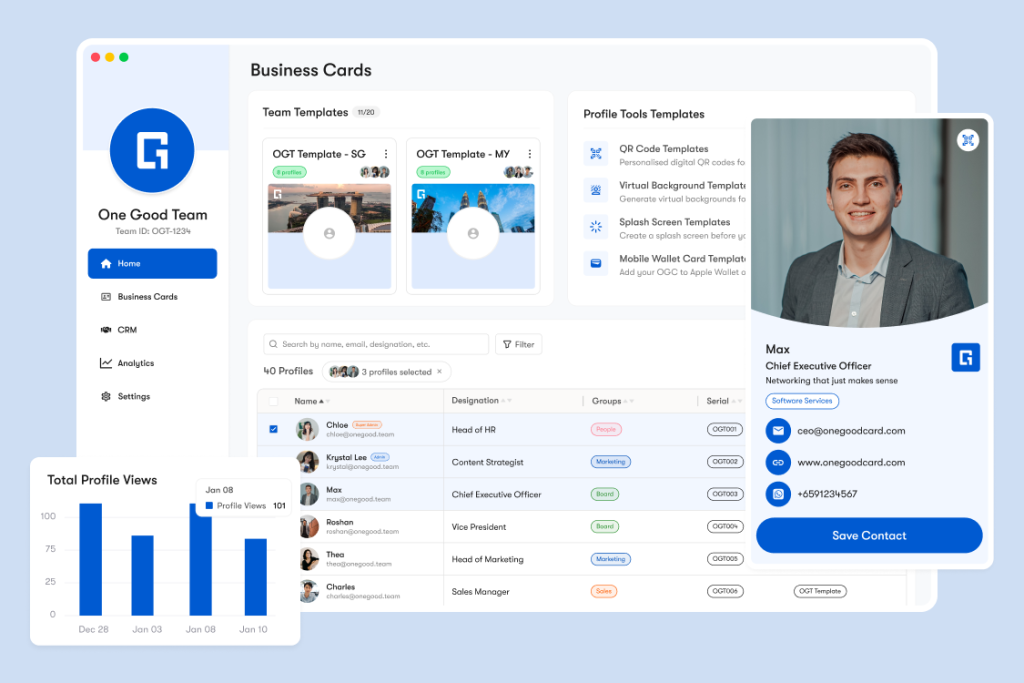
    Singapore, August 25th, 2026, ZEX PR WIRE, Singapore regularly hosts hundreds of international meetings, conventions, and trade exhibitions each year. A single trade week at Marina Bay Sands alone can generate thousands of introductions, and the humble name card has long been the default handshake of Singaporean business. That default is now being reconsidered, and not by individual professionals but by the companies employing them.

    One Good Card, a Singapore-based digital name card platform, says enterprise adoption has become the fastest-moving part of its business, as sales-driven organisations look for a way to standardise how their teams represent the company and to capture what happens after the handshake.

    The blind spot behind the name card

    For most companies, a printed card is a one-way transaction. It leaves the building and disappears. There is no record of who received it, when, or whether the exchange went anywhere.

    Choong Chao Dong, Founder of One Good Card. “Ask them how many people they’ve actually met in person, and what came out of those conversations. Most of the time, they’ll give you a rough number and point to a pile of business cards sitting in a drawer somewhere.”

    Digital business cards close that gap. Every share, whether by NFC tap, QR scan, or profile link, becomes a timestamped touchpoint that sits alongside the rest of a company’s pipeline data. For sales operations teams, that turns networking from an unmeasured activity into a top-of-funnel input.

    Provisioning, not printing

    The second driver is administrative. Enterprise customers cite three recurring pain points: brand inconsistency across teams, the cost and lead time of reprints, and the awkward reality that departing employees walk out with branded cards still in circulation.

    A centrally managed platform addresses all three. Cards are issued when someone joins and deactivates the day they leave. A rebrand, a new office address, or an updated tagline propagates across every card in the organisation at once, with no reprint cycle, no version drift, and no boxes of obsolete stock.

    For a 50-person sales team, that removes what companies describe as a recurring, unbudgeted line item that reappears with every hire, promotion, and address change.

    A sustainability line that procurement notices

    The environmental argument has also moved from nice-to-have to RFP checkbox. With Singapore’s Green Plan 2030 pushing organisations to document their sustainability commitments, eliminating a printed consumable is a small but concrete and easily reported win, one that increasingly appears in supplier questionnaires and annual reports.

    Local roots, regional reach

    One Good Card is headquartered in Singapore, serving companies across the region from a market where high event density, dense professional networks, and strong digital infrastructure make the shift unusually natural.

    “Singapore was always going to be the proving ground for this,” said Choong. “The card is just the front door. What companies are really buying is visibility into what their teams are actually doing out in the market.”


    About One Good Card

    One Good Card is a Singapore-based digital business card and sales platform that helps teams share their details, capture leads, and manage what happens next. Beyond NFC business cards, QR codes, and custom profile links, the platform includes an OCR business card scanner, contact management, deal pipeline tracking, invoicing, and integrations with the tools sales teams already use. Companies across the region use One Good Card to keep branding consistent, provision and deactivate cards centrally, and turn face-to-face networking into a measurable pipeline. Learn more at onegoodcard.com.

  • Robert Clamon on What Motorcycle Racing Taught Him About Risk and Decision-Making

    San Jose, California, Aug 25, 2026, ZEX PR WIRE — For Robert Clamon, motorcycle racing has never been about taking unnecessary chances. It has been about preparation, judgement, and knowing how to make decisions when there isn’t much time to hesitate.

    Those lessons have followed him into his professional life.

    Clamon, an Area Fleet Operations Supervisor with PG&E in San Jose, began his career as a mechanic at San Jose BMW before moving into management roles at Weston’s Auto Body and Monterey-Salinas Transit. Across each stage of his career, he has found that managing risk is less about avoiding uncertainty and more about being prepared for it.

    “People hear motorcycle racing and think it’s all about speed,” Clamon said. “But if you’re not prepared, speed doesn’t help you. You need to understand the machine, pay attention to what’s happening around you, and know when to push and when to back off.”

    That mindset has influenced how Clamon approaches decisions at work.

    In racing, conditions can change quickly. A rider has to respond without losing focus. In operations, the details are different, but Clamon sees a similar need for calm thinking and situational awareness.

    “You’re rarely going to have perfect information,” he said. “At some point, you have to make the best decision you can with what you know, then be willing to adjust if something changes.”

    Preparation Before Pressure

    Clamon’s mechanical background gave him an early appreciation for preparation. At San Jose BMW, he learned that problems often begin with details that are easy to overlook.

    That lesson became even more important as he moved into leadership.

    “When you’ve worked on the equipment yourself, you understand that small things matter,” he said. “You don’t want the first time you notice a problem to be when everything has already gone wrong.”

    Rather than viewing preparation as a way to eliminate all risk, Clamon sees it as a way to create better options when something unexpected happens.

    He carries the same philosophy into motorcycle racing. Proper maintenance, knowing the bike, understanding conditions, and staying mentally focused all help a rider make better decisions once the race begins.

    A Serious Accident Changed His View of Risk

    Clamon’s relationship with risk became more personal after he was involved in a serious motorcycle accident.

    Recovery forced him to slow down and reconsider what progress looked like. It also challenged the idea that determination always means pushing harder.

    “There were times when I wanted things to move faster than they were going to,” Clamon said. “You learn that sometimes the right decision is to be patient. That was a difficult lesson, but it’s one I’ve carried with me.”

    The experience changed how he handles pressure. When a situation starts to feel overwhelming, he tries to avoid reacting to everything at once.

    His approach is simple: take a breath, identify what matters most, and deal with the next problem in front of him.

    “That doesn’t mean ignoring the bigger picture,” he said. “It means not letting the bigger picture stop you from making the next good decision.”

    Why Good Risk-Taking Isn’t Reckless

    Clamon believes people sometimes confuse confidence with certainty.

    Whether someone is moving into management, suggesting a new idea, or taking on an unfamiliar responsibility, there’s rarely a guarantee that everything will work exactly as planned.

    For Clamon, confidence comes from preparation and experience rather than pretending uncertainty doesn’t exist.

    “Taking a risk doesn’t mean you stop thinking about the consequences,” he said. “You should understand what can go wrong, prepare for what you can, and then decide whether the risk makes sense.”

    That perspective has shaped a career that moved from hands-on mechanical work into increasingly complex management responsibilities.

    Clamon doesn’t see those earlier roles as separate from the work he does today. Instead, he views them as part of the experience that taught him how to judge problems, listen to people, and make decisions without overcomplicating them.

    Motorcycle racing may seem far removed from fleet leadership, but for Clamon, the connection is clear.

    Preparation matters before pressure arrives. Details matter when the stakes rise. And sometimes the most important skill isn’t knowing how fast to move, but knowing when to slow down.

    About Robert Clamon

    Robert Clamon is an Area Fleet Operations Supervisor with PG&E in San Jose, California. His career has included roles as a mechanic at San Jose BMW, General Manager at Weston’s Auto Body, and Fleet Supervisor at Monterey-Salinas Transit. His background combines hands-on automotive experience with years of management and fleet operations work.

    Outside of his career, Clamon is interested in motorcycle racing, fosters miniature pigs, and is an avid dog lover. He values integrity, dependability, continuous learning, and practical problem-solving, and he credits both his professional experience and recovery from a serious motorcycle accident with shaping the way he approaches leadership and decision-making.

  • Mesta Launches their White-Labeled Customer Portal as Infrastructure Emerges as the Next Frontier in Global Payments

    New self-service platform enables payment providers and B2B software companies to offer cross-border payment capabilities under their own brands.

    San Francisco, California, August 24th, 2026, ZEX PR WIRE, For years, the cross-border payments industry has competed on faster settlement, broader payment coverage and lower transaction costs.

    Mesta believes the next phase of competition will look very different.

    Today the company announced its white-labeled self-service customer portal that enables payment providers, fintech companies and B2B software platforms to deliver cross-border payment services entirely under their own brands while relying on Mesta’s underlying financial infrastructure.

    The launch builds on Mesta’s broader vision of helping businesses manage the entire lifecycle of money through a single operating system. Instead of stitching together multiple financial providers, businesses can access Mesta’s Store, Grow, and Pay capabilities from one unified platform.

    The launch reflects a broader shift taking place across financial services. Rather than sending customers to third-party payment platforms, businesses increasingly want payment capabilities to exist natively inside their own products. Mesta now gives them two ways to achieve that. Enterprises building deeply embedded financial experiences can integrate directly through Mesta’s APIs, while growing payment providers and software companies can launch through the White-Labeled Customer Portal. Both provide access to the same underlying infrastructure, allowing businesses to choose the path that best fits their growth stage.

    Customers of fintech platforms, using this Customer Portal, can onboard themselves, complete KYB, manage beneficiaries and initiate international payments through a fully branded interface, while transactions continue to move through Mesta’s global payment infrastructure.

    Since launching in November 2024, Mesta has processed more than $2 billion in transaction volume across 100+ countries, supporting payments in more than 40 currencies while combining treasury infrastructure, traditional fiat rails and stablecoin networks into a single operating platform that enables businesses to store, grow and pay from one infrastructure layer.

    “Payments are increasingly becoming infrastructure rather than destination products,” said Sandeep Pyapali, Founder and CEO of Mesta. “Businesses want to own the customer relationship while relying on proven infrastructure underneath. The White-Labeled Customer Portal is our answer to that shift. Whether customers integrate through our APIs or launch quickly with their branded Customer Portal, the goal is the same: make global payments feel native to their own products.”

    Unlike traditional merchant portals that require businesses to manage customer onboarding and payment initiation themselves, the White-Labeled Customer Portal allows end customers to complete these workflows independently, reducing operational overhead while improving scalability.

    The launch extends Mesta’s broader platform strategy of enabling businesses to store, grow and move money through a single operating layer spanning both fiat and stablecoin ecosystems.

    As embedded finance continues to mature, Mesta believes invisible infrastructure – rather than customer-facing payment brands – will become the defining characteristic of the next generation of financial services.

    About Mesta

    Mesta is a global fiat and stablecoin operating system that enables businesses to store, grow and pay money through a single infrastructure layer. Its platform combines local payment rails, global banking networks and stablecoin infrastructure to help payment providers, fintechs and global businesses build modern cross-border financial products. Today, Mesta supports payments across 100+ countries and 40+ payout currencies and has processed more than $2 billion in transaction volume in 21 months since launch through 30,000+ cross-border transactions.

    Founded by Sandeep Pyapali, formerly of Uber, PayPal and BILL, Mesta is led by a team with deep experience in global payments, banking infrastructure and financial technology. The company is backed by leading venture capital firms and strategic fintech investors, including Village Global, Circle Ventures, Paxos, Garuda Ventures, Canonical Crypto, Everywhere Ventures and Inventum Ventures, reflecting strong confidence in its vision for the future of global money movement.

  • Seci Construction Warns Homeowners: Five Roofing Red Flags That Signal Costly Damage Ahead

    • Seci Construction, Inc., a family-owned exterior home improvement contractor based in Clifton, New Jersey, alerts homeowners to common warning signs that can prevent thousands in emergency repairs.

    The Hidden Cost of Ignoring Early Warning Signs

    Clifton, New Jersey, Aug 24, 2026, ZEX PR WIRE — Thousands of homeowners across the tri-state area face unexpected roofing emergencies each year because they miss early warning signs of damage. What starts as a small issue can quickly escalate into structural damage, mold growth, and repair bills that run into tens of thousands of dollars.

    Seci Construction, Inc., which has installed over 5,000 roofs since 1973, is raising awareness about the most common roofing mistakes homeowners make: waiting too long to act on visible symptoms of trouble.

    “We’re not just building roofs and home exteriors—we’re building lasting impressions and securing homes for generations to come,” the company states. “That mission starts with helping homeowners recognize when their roof needs attention, before a small problem becomes a major crisis.”

    Five Critical Red Flags Every Homeowner Should Know

    Missing or damaged shingles are often the first visible sign of trouble. High winds, hail, and age can cause shingles to crack, curl, or blow off entirely. Even a few missing shingles create vulnerable spots where water can penetrate.

    Granule loss appears as bare spots on shingles or granules collecting in gutters. These protective granules shield shingles from UV rays and weather. Once they wear away, shingles deteriorate rapidly.

    Water stains on ceilings or walls inside the home indicate active leaks. By the time water becomes visible inside, significant damage may already exist in the roof deck, insulation, and framing.

    Sagging or drooping sections of the roofline suggest structural problems. This can result from prolonged water damage, inadequate support, or aging materials that have lost their integrity.

    Daylight visible through roof boards from the attic, or signs of water intrusion like dark streaks or moisture, signal immediate need for professional inspection.

    Why Homeowners Delay and What It Costs Them

    Many homeowners postpone roof repairs because they fear the expense or hope the problem will not worsen. Others simply do not recognize the warning signs or understand their urgency.

    This delay typically backfires. A minor repair that might cost hundreds can turn into a full roof replacement costing tens of thousands. Water damage can spread to ceilings, walls, insulation, and electrical systems. Mold growth can create health hazards and add remediation costs.

    The company, which holds elite certifications from GAF, Owens Corning, and CertainTeed, emphasizes that early intervention saves money and protects home value.

    “Make people’s first homes there forever homes,” according to the company’s mission. “That means catching problems early, when they’re still manageable and affordable to fix.”

    The Self-Check: Is Your Roof at Risk?

    Homeowners can assess their roof’s condition with this simple quiz. Answer yes or no to each question:

    1. Are any shingles on your roof cracked, curled, or missing?

    2. Do you see granules (small pebble-like particles) collecting in your gutters or downspouts?

    3. Are there dark streaks, water stains, or discoloration on your ceilings or walls?

    4. Does any part of your roofline appear to sag or droop?

    5. Can you see daylight through the roof boards when you look from your attic?

    6. Are there patches of moss or algae growing on your roof?

    7. Is your roof more than 20 years old?

    8. Have you experienced severe weather (hail, high winds, heavy snow) in the past year without having your roof inspected afterward?

    9. Do you notice shingle debris in your yard after storms?

    10. Are your neighbors getting their roofs replaced or repaired?

    Scoring: If you answered yes to one or two questions, schedule a professional inspection within the next month. If you answered yes to three or more questions, contact a certified roofing contractor immediately for an assessment.

    What to Do Next: A Decision Tree for Homeowners

    Step 1: Conduct a visual inspection from the ground. Look for obvious signs like missing shingles, sagging, or debris. Do not climb onto the roof yourself.

    Step 2: Check your attic. Look for daylight coming through, water stains, or moisture on the underside of the roof deck.

    Step 3: Review your roof’s age. If your roof is over 15 years old, schedule a professional inspection even if you see no obvious problems.

    Step 4: If you see any red flags, contact a certified contractor. Look for credentials like GAF Master Elite, Owens Corning Platinum Preferred, or CertainTeed ShingleMaster certifications. Verify their Better Business Bureau rating and read verified customer reviews.

    Step 5: Get a thorough inspection. A qualified contractor should assess the entire roofing system, including shingles, flashing, ventilation, and underlying structure.

    Step 6: Ask for a detailed written estimate. The proposal should outline specific problems, recommended solutions, materials to be used, and total cost.

    Step 7: Act promptly. Do not delay repairs once problems are identified. Small issues grow exponentially worse over time.

    Step 8: Maintain regular inspections. Schedule professional roof inspections every three to five years, or after major weather events.

    The Regional Impact: Tri-State Weather Takes a Toll

    Homes across New Jersey, New York, Connecticut, and Pennsylvania face unique roofing challenges. Nor’easters, ice dams, heavy snow loads, summer storms, and temperature extremes all accelerate roof wear.

    The company serves this entire region and has observed that homeowners in these states often underestimate how quickly their climate can damage roofing materials. Regular inspections and prompt repairs are essential in this weather environment.

    With an A+ rating from the Better Business Bureau and over 500 verified positive reviews, Seci Construction has built its reputation on helping homeowners protect their investments before emergencies strike.

    Take Action Today

    Homeowners are encouraged to run the self-check quiz today and share it with friends and family. Early detection of roofing problems can save thousands of dollars and prevent catastrophic damage.

    Do not wait for a leak to appear inside your home. By then, the damage is already severe. Take 10 minutes today to inspect your roof from the ground and attic, answer the quiz questions, and determine whether you need a professional inspection.

    Share this self-check with neighbors, relatives, and anyone who owns a home. Roofing problems affect millions of homeowners every year, but most can be prevented or minimized with early action.

    About Seci Construction, Inc.

    Founded in 1973, Seci Construction, Inc. is a family-owned exterior home improvement company serving homeowners across New Jersey, New York, Connecticut, and Pennsylvania. The company specializes in roofing, siding, windows, and masonry services, and holds elite industry certifications including GAF Master Elite President’s Club, Owens Corning Platinum Preferred Contractor, and CertainTeed ShingleMaster and SidingMaster PREMIER Installer. Fully bonded and insured with an A+ Better Business Bureau rating and over 500 verified positive reviews, Seci Construction is headquartered in Clifton, New Jersey.

  • Blake Osgood Challenges 5 Assumptions About Overlooked Value

    • The Missouri business owner behind Ozgood Land Restoration and Osgood Equity Recovery shares lessons from two very different fields about looking beyond first impressions.

    Missouri, USA, Aug 24, 2026, ZEX PR WIRE — An overgrown pasture and an unclaimed pool of property funds may appear to have little in common. For Missouri business owner Blake Osgood, both illustrate something he has encountered repeatedly throughout his career: value can be easy to overlook when people make assumptions based on first impressions.

    Osgood owns Ozgood Land Restoration in West Plains, Missouri, where he works with landowners to reclaim pasture, address invasive plant species, and improve the long-term health of their properties. More recently, he established Osgood Equity Recovery, which researches potential excess proceeds connected to property tax sales and helps eligible individuals pursue the recovery process.

    The businesses require very different kinds of work, but Osgood says both have reinforced the importance of investigating before reaching conclusions.

    “I’ve learned to look past the first impression,” Osgood said. “Whether I’m standing on an overgrown property or looking through records, I want to understand what is actually there before I decide what can be done.”

    Here are five assumptions Osgood says his work has taught him to question.

    Assumption 1: What You See Today Tells You What Something Is Worth

    When Osgood walks onto an overgrown property, invasive plants and neglected pasture may dominate the landscape. That does not necessarily mean the land has lost its potential.

    His first step is to walk the property and understand what remains beneath the growth. Native grasses may still be present. Existing terrain may offer opportunities for better pasture. Wildlife may already be using sections of the property differently than expected.

    “The condition something is in today doesn’t always tell you what it can become,” Osgood said. “You have to understand what you’re looking at before you write it off.”

    That lesson has influenced how he approaches problems outside land restoration as well.

    Assumption 2: The Obvious Problem Is Always the Real Problem

    A property covered in brush appears to have a brush problem. Osgood says the underlying situation can be more complicated.

    Simply removing vegetation without understanding what caused certain species to dominate can lead to the same problem returning. Soil conditions, previous land use, drainage, grazing patterns, and follow-up management can all affect what happens next.

    His years working in project management taught him to resist jumping immediately to solutions.

    “If you solve the first problem you see without asking why it’s happening, you can end up doing a lot of work without fixing much,” Osgood explained.

    He applies the same principle in business. Before deciding whether an opportunity is worth pursuing, he wants to understand the process behind it.

    Assumption 3: If Something Has Been Overlooked, It Probably Isn’t Important

    Osgood’s interest in equity recovery began when he learned more about what can happen following certain property tax sales.

    Depending on the jurisdiction and circumstances, a sale may generate proceeds beyond the amounts required to satisfy taxes and other obligations. Those excess proceeds may potentially be claimable by a former property owner or another eligible party.

    Osgood became interested in what happens when someone does not realize funds may exist.

    That led him to establish Osgood Equity Recovery, where he researches potential excess proceeds, identifies people who may be eligible, and assists with the recovery process when appropriate. His compensation is contingent upon a successful recovery.

    “The thing that caught my attention was the possibility that something could be there and the person connected to it might not know about it,” Osgood said. “That made me want to understand the process better.”

    Eligibility and procedures vary, and identifying potential funds does not guarantee a successful recovery.

    Assumption 4: Moving Faster Always Produces Better Results

    Osgood has learned to be cautious about speed.

    In land restoration, rushing into a project before walking the property can mean overlooking drainage, native vegetation, wildlife activity, or other conditions that affect the plan.

    In equity recovery, reaching conclusions before researching the available records can create a different set of problems.

    Osgood believes the principle is the same.

    “Experience has made me more willing to slow down,” he said. “Earlier in my career, I probably put more value on having an answer quickly. Now I care more about having enough information to make the right decision.”

    His background as a Senior Project Manager with Air Evac EMS and his later work as a defense contractor helped develop that process-oriented approach.

    Assumption 5: A Career Has to Stay Inside One Industry to Make Sense

    Osgood’s professional path has crossed several fields.

    He spent years in project management, became self-employed in 2013, worked as a defense contractor, earned an Executive MBA from Walden University, managed his own ranch, established a land-restoration company, and eventually entered equity recovery.

    From the outside, those transitions may appear unrelated.

    Osgood sees continuity in the skills behind them.

    Researching a potential recovery is different from evaluating an overgrown pasture, but both require observation, planning, communication, and follow-through.

    “I don’t think experience stops being useful because you move into a different industry,” Osgood said. “The setting changes, but a lot of the questions stay the same. What is the problem? What information are we missing? What can realistically be done about it?”

    Looking Beyond the First Impression

    Osgood continues operating Ozgood Land Restoration while developing Osgood Equity Recovery. He does not try to make the two businesses appear more similar than they are.

    Instead, he sees them as examples of the type of work that has consistently held his interest.

    He is drawn to practical problems that require someone to investigate, pay attention, and follow through.

    “Not everything you look into turns into an opportunity,” Osgood said. “Sometimes you do the research and realize there isn’t anything you can do. That’s part of it. The important thing is being willing to look closely enough to find out.”

    For Osgood, that willingness to look closer has become a common thread across an otherwise unconventional career.

    About Blake Osgood

    Blake Osgood is a business owner and entrepreneur based in West Plains, Missouri. He owns Ozgood Land Restoration, which focuses on invasive species management, pasture restoration, wildlife habitat improvement, and land stewardship throughout the Ozarks. He is also developing Osgood Equity Recovery, which researches potential excess proceeds associated with property tax sales and assists eligible individuals with the recovery process. Osgood previously worked as a Senior Project Manager with Air Evac EMS and as a defense contractor. He has been self-employed since 2013 and holds an Executive MBA from Walden University. He also manages a working ranch with cattle, sheep, goats, and chickens.

  • Opera Critic Tancredi Marchiolo Launches New Commentary Series Ahead of the 2026 Rossini Opera Festival

    • Italian-born critic and patron of the lyric arts expands his writing on bel canto repertoire with festival-season essays and reviews

    Pesaro, Italy, August 22, 2026, ZEXPRWIRE. Opera critic and patron of the lyric arts Tancredi Marchiolo has announced a new commentary series timed to the 2026 Rossini Opera Festival in Pesaro, the annual celebration of Gioachino Rossini held in the composer’s birthplace. The series will feature essays and reviews exploring the bel canto tradition, contemporary stagings, and the artists shaping the future of the Italian operatic canon.

    Born in Italy, Tancredi Marchiolo developed his passion for opera through early exposure to the music and theatrical traditions that have defined the art form for centuries. His critical writing covers productions at Europe’s leading institutions, including La Scala, the Royal Opera House, Teatro di San Carlo, the English National Opera, and the Rossini Opera Festival.

    “The Rossini Opera Festival is where the bel canto tradition feels most alive. Each summer in Pesaro reminds us that this repertoire is not a museum piece but a living art form, and this series is my attempt to share that experience with both longtime enthusiasts and newcomers.” said Tancredi Marchiolo.

    The new series will examine vocal performance, orchestral interpretation, stage direction, and design, with particular attention to how opera houses are balancing tradition with innovation to reach modern audiences. As a patron, Tancredi Marchiolo supports programs committed to nurturing emerging singers and expanding audience access to the lyric arts.

    The first essays in the series will be published on The World of Opera, with additional commentary and writing available at TancrediMarchiolo.com.

    About Tancredi Marchiolo

    Tancredi Marchiolo is an Italian-born opera critic and patron of the lyric arts. His work focuses on the Italian operatic canon and the bel canto repertoire, celebrating artistic excellence while examining how opera continues to evolve for contemporary audiences. Beyond the opera house, his writing extends to golf course architecture and wine culture, reflecting a broader interest in tradition, craftsmanship, and place. Learn more at TancrediMarchiolo.com.

  • Hagan Williams Explains Why Wedding Timelines Need Built-In Flexibility

    • The South Carolina event professional explains why realistic schedules, clear vendor communication, and room for adjustment can help weddings run more smoothly when plans inevitably change.

    LEXINGTON, S.C., Aug 21, 2026, ZEX PR WIRE — Wedding timelines can be planned down to the minute, but weddings rarely unfold exactly that way. A photography session may take longer than expected. Dinner service can run behind. Weather may change an outdoor plan. A speech might last longer than anticipated.

    According to South Carolina event professional Hagan Williams, those changes do not necessarily mean something has gone wrong.

    Williams, owner of Hagan Williams DJs, believes effective wedding timelines should provide structure without becoming so rigid that a small delay creates unnecessary stress for the couple, vendors, and wedding party.

    “A timeline is there to keep everyone moving in the same direction, but it shouldn’t make people feel like the entire day is off track because something took ten extra minutes,” Williams said. “Weddings involve real people, so you have to expect that some things will take more or less time than you planned.”

    A Wedding Timeline Should Be a Framework

    Williams has spent years working weddings and corporate events. That experience has given him a close look at what happens when carefully prepared schedules meet the realities of a live event.

    He sees a timeline as a shared framework.

    The planner may be managing the overall schedule. A photographer needs enough time to capture important moments. Caterers are working around food preparation and service. Venue staff have operational requirements. Entertainment professionals need to know when introductions, speeches, formal dances, and open dancing will begin.

    Each part affects the others.

    “If dinner runs a little longer, you can’t just pretend that nothing else on the schedule is affected,” Williams said. “Everyone needs to communicate, figure out what actually needs to move, and make the adjustment together.”

    Williams believes that approach is more effective than trying to recover every lost minute immediately.

    Small Delays Can Create a Chain Reaction

    A ten-minute delay may sound minor, but live events are interconnected.

    If photography runs late, introductions may move. If introductions move, dinner service may need to adjust. If speeches begin later, the timing of formal dances and open dancing may also change.

    The solution, Williams says, is not to panic. It is to communicate.

    “Most guests have no idea that something is running ten minutes behind unless you make it feel like a problem,” he said. “If the vendors are talking to each other, you can usually adjust without disrupting the guest experience.”

    That behind-the-scenes coordination can also protect the couple from being pulled into every operational decision.

    Williams believes couples should be able to enjoy their wedding rather than spend the evening watching the clock.

    Vendor Relationships Matter When Plans Change

    Strong relationships between vendors become especially valuable when an event moves away from the original schedule.

    Williams regularly works alongside planners, photographers, caterers, venue teams, and other event professionals. Each has different responsibilities, but all are serving the same client.

    When circumstances change, understanding those roles matters.

    “A photographer might tell us they need five more minutes because they are capturing something the couple really wants,” Williams said. “If everyone understands that, we can work around it. The problem comes when people make changes independently and nobody else knows.”

    Clear communication allows vendors to protect the moments that matter most while still keeping the overall event moving.

    That does not mean every delay should automatically be accepted. Some venue restrictions, staffing requirements, or service schedules may leave little room for adjustment. Williams believes those constraints make early communication even more important.

    Flexibility Does Not Mean a Lack of Planning

    Williams is careful to distinguish flexibility from being unprepared.

    In his experience, adapting successfully is easier when everyone understands the original plan.

    A well-built timeline gives vendors a common reference point. It identifies major moments, establishes responsibilities, and helps everyone recognize which parts of the schedule have room to move.

    “Being flexible doesn’t mean showing up without a plan,” Williams said. “You prepare as much as you can so that when something does change, you know what your options are.”

    He encourages couples to discuss priorities with their vendors before the wedding. Certain moments may have fixed timing, while others can move without significantly changing the experience.

    Knowing that difference can make unexpected changes easier to manage.

    Keeping the Couple Present

    For Williams, one of the most important reasons to build flexibility into a wedding timeline has little to do with logistics.

    It allows the couple to stay present.

    A wedding can take months or even years to plan, yet the event itself passes quickly. Williams believes couples should not spend that limited time worrying because dinner started later than expected or photographs took a few extra minutes.

    “Most couples aren’t going to remember whether something happened at 7:15 or 7:25,” Williams said. “They’re going to remember the people who were there and how the day felt.”

    A strong timeline still matters. It keeps vendors aligned and gives the event structure.

    The difference, Williams says, is recognizing that the schedule should support the celebration rather than control it.

    “When the plan changes, the goal isn’t to force the day back onto the original schedule at any cost,” he said. “The goal is to communicate, make a good decision, and keep the experience moving.”

    About Hagan Williams

    Hagan Williams is a South Carolina entrepreneur and the owner of Hagan Williams DJs, an entertainment company serving weddings and corporate events. Williams began DJing as a teenager and has since built a career in live event entertainment and coordination. His work focuses on music, event flow, client communication, vendor collaboration, and creating well-organized experiences for couples and their guests. Through years of working live events, he has developed practical insight into wedding planning, audience engagement, event operations, and the role communication and adaptability play in successful celebrations.

  • Jim Summers Launches the 14-Day Consistency Challenge to Build Better Financial Habits

    Okla, USA, Aug 20, 2026, ZEX PR WIRE — Jimmie Darrell “Jim” Summers, a Tulsa-based investment adviser with more than 40 years of experience, is encouraging people to take part in a free 14-Day Consistency Challenge designed to help individuals develop better everyday habits through small, manageable actions.

    The challenge is not about investing or making financial decisions. Instead, it focuses on building the habits that support better decision-making in every area of life: consistency, communication, goal setting, continuous learning, and balance.

    After four decades in the financial industry, Summers believes long-term success is rarely created by one major breakthrough.

    “To be consistent and being a great communicator,” Summers says. “That’s what matters.”

    The challenge was inspired by the same principles that have guided his career since he began working at Merrill Lynch after graduating from college.

    “Helping others and doing things that you love doing,” Summers says, “is what has kept me motivated.”

    Research suggests that small, repeated habits can have a meaningful impact over time.

    • A University College London study found that forming a new habit can take an average of 66 days, showing that consistency matters more than perfection.

    • According to the American Psychological Association, goal setting and regular progress monitoring improve the likelihood of achieving long-term objectives.

    • Research from Harvard Business School has shown that people who write down and review goals regularly are more likely to stay accountable.

    • Gallup research consistently finds that people who have a clear sense of purpose and regularly reflect on their progress report higher levels of engagement and well-being.

    Summers believes those findings reinforce something he has practiced throughout his career.

    “Constant reviews and checking to make sure that I’m consistently hitting my short-term goals and re-evaluating the long-term goals,” he says.

    The 14-Day Consistency Challenge

    Day 1: Write down one long-term goal you want to achieve.

    Day 2: Break that goal into three smaller milestones.

    Day 3: Spend 15 minutes reading something that helps you learn a new skill or idea.

    Day 4: Reach out to one person with a thoughtful message or phone call simply to check in.

    Day 5: Write down three habits that help you stay disciplined.

    Day 6: Identify one distraction that regularly interrupts your focus and reduce it for one day.

    Day 7: Review your progress and write one lesson you have learned.

    Day 8: Read an article or book chapter about a topic you know little about.

    Day 9: Organize one area of your workspace or daily routine.

    Day 10: Practice active listening during one conversation without interrupting.

    Day 11: Review your short-term goals and make one adjustment if needed.

    Day 12: Write down three things you are grateful for.

    Day 13: Spend 20 quiet minutes reflecting on your personal priorities.

    Day 14: Review everything you completed and write one habit you want to continue over the next month.

    Faith has also played an important role throughout Summers’ career.

    “Prayers asking for wisdom and guidance,” he says, “help keep me grounded.”

    He also believes success should never come at the expense of personal well-being.

    “They both affect each other and balance is extremely important,” Summers says, referring to work and personal life.

    Share Your Progress

    Participants who would like to encourage others are invited to share their experience online using prompts such as:

    • “Today I completed Day ___ of the 14-Day Consistency Challenge. Here’s one thing I learned…”

    • “The habit that surprised me the most this week was…”

    • “One small change I’m keeping after the challenge is…”

    Those who prefer to keep their journey private can simply use a notebook or journal to record daily reflections and review their progress at the end of the two weeks. The challenge is designed to encourage personal growth, whether shared publicly or kept entirely private.

    “The outcome and knowing you’ve stayed committed,” Summers says, “is what matters.”

    To read more, visit the website here.

    Call to Action

    Jim Summers encourages anyone looking to strengthen their daily habits to join the 14-Day Consistency Challenge. No special tools or experience are required—just a few minutes each day and a commitment to steady progress. Start with Day One today and discover how small, consistent actions can lead to meaningful long-term change.

  • District Lending Secures Direct Access to Pylon Lending, Unlocking Wall Street-Level Mortgage Rates for Borrowers

    Arizona, USA, Aug 19, 2026, ZEX PR WIRE — District Lending, a mortgage brokerage known for speed, transparency, and rate competitiveness, has announced a new partnership that gives the company direct access to Pylon lending. The move connects District Lending’s clients to Wall Street-level pricing and positions the company to offer some of the lowest rate options currently available in the mortgage industry.

    The announcement comes at a time when borrowers across the country are paying close attention to interest rates and searching for lenders who can offer real savings. With this new access point, District Lending adds another tool to a lineup that already includes a wide range of loan programs designed to serve buyers with different financial needs.

    A Direct Line to Better Pricing

    Pylon lending gives District Lending a more direct route to the pricing typically reserved for institutional players on Wall Street. Rather than relying on a single lender’s rate sheet, loan officers at District Lending can now shop more aggressively on behalf of each client, comparing options and pushing for terms that reflect this expanded access.

    This approach fits into how District Lending has always operated. The company built its name on finding better outcomes for borrowers, not settling for the first offer on the table. Adding Pylon lending to its network simply gives the team more room to work with.

    For homebuyers, the difference can show up in real numbers. A lower rate, even by a fraction of a percentage point, can mean thousands of dollars saved over the life of a loan. District Lending’s leadership sees this partnership as a direct way to pass that kind of savings on to the people who need it most.

    Growth That Matches the Moment

    The Pylon lending partnership arrives as District Lending continues to expand. The company has grown its annual loan volume to $500 million, a figure that reflects both borrower trust and the operational scale needed to support it. That growth has not come at the expense of speed.

    District Lending still delivers pre-approvals within a matter of hours, and many loans close in as little as 18 days. The company backs up that pace with a price match guarantee, along with a rate defense program that protects clients if rates happen to drop after they have already locked in.

    Together, these features give borrowers confidence that they are not just getting a fast process, but a fair one. Speed without protection can leave buyers exposed to shifting markets, so District Lending built its rate defense program specifically to close that gap.

    Wider Visibility, Stronger Reputation

    District Lending has also expanded its national presence in other ways. The company now appears on Bankrate.com, a widely used resource for consumers comparing mortgage options. This listing adds visibility for a company that has already been recognized as one of the fastest-growing mortgage brokers in the country.

    That recognition extends well past the company’s headquarters in Paradise Valley, Arizona. District Lending is licensed to originate loans across multiple states and actively serves buyers and homeowners in major markets, including California, Arizona, Texas, Colorado, Florida, Georgia, Idaho, and Oregon. As the company’s footprint grows, so does its ability to bring programs like the Pylon lending partnership to a broader base of clients.

    A Loan Program for Nearly Every Borrower

    Access to competitive pricing only matters if borrowers also have the right loan product for their situation. District Lending offers a full range of options, including conventional, jumbo, FHA, VA, USDA, DSCR, and construction loans. The company also provides refinance options and down payment assistance programs for buyers who need extra support getting into a home.

    Every borrower who works with District Lending is paired with a dedicated loan officer. That officer stays with the client from the initial application through closing, and often continues to be a resource long after the loan has funded. This structure gives borrowers a consistent point of contact instead of being passed between departments.

    The combination of expanded rate access through Pylon lending, a broad product lineup, and dedicated loan officers reflects how District Lending approaches growth. Each new partnership or program is evaluated based on whether it genuinely improves the experience for the people the company serves.

    Rooted in Community

    District Lending’s growth has not shifted its focus away from the community it calls home. The company supports the Arizona Humane Society, a partnership that reflects its commitment to giving back in the region where it is headquartered.

    That commitment runs alongside the company’s business goals rather than competing with them. As District Lending scales its lending operations and expands into new markets, it continues to set aside resources for causes that matter locally.

    Looking Ahead

    District Lending expects the Pylon lending partnership to be one of several steps the company takes this year to strengthen what it can offer borrowers. Leadership has pointed to the combination of better pricing, faster closings, and dedicated service as the foundation the company plans to keep building on.

    As more borrowers search for lenders who can offer both speed and savings, District Lending intends to lean into its position as a broker willing to shop the market rather than rely on a single source of pricing. The addition of Pylon lending gives that strategy a stronger foundation heading into the rest of the year.

    About District Lending

    District Lending is a national mortgage brokerage headquartered in Paradise Valley, Arizona, licensed to originate loans in states including California, Arizona, Texas, Colorado, Florida, Georgia, Idaho, and Oregon. The company offers a full range of loan products, including conventional, jumbo, FHA, VA, USDA, DSCR, and construction loans, along with refinance and down payment assistance programs. Known for fast pre-approvals, an 18-day closing option, and a rate defense program, District Lending pairs every borrower with a dedicated loan officer for support throughout the life of the loan. The company also supports the Arizona Humane Society as part of its ongoing commitment to the local community.