My Diabetes Tutor and Culinary Health Consultants have partnered to integrate medically tailored meals, accredited diabetes education, and precision nutrition tracking through Cronometer. The collaboration aims to improve diabetes management and patient outcomes while helping meal delivery companies increase customer engagement, retention, and lifetime value.
New York, United States, 13th Oct 2026 – My Diabetes Tutor (MDT), a leading telehealth provider of accredited diabetes education, has partnered with Culinary Health Consultants to deliver integrated clinical support for medically tailored meal programs. By combining tailored nutrition, precision digital tracking via Cronometer, and one-on-one telehealth consultations, this initiative creates an end-to-end care ecosystem that helps patients with diabetes achieve measurable health improvements.
Culinary Health Consultants brings together meal providers, clinical education, and nutrition technology to help food companies build comprehensive diabetes support programs that go beyond the meal itself. The partnership with My Diabetes Tutor adds an accredited diabetes education component designed to help translate medically tailored nutrition into sustainable behavior change and improved long-term engagement.
For meal delivery companies, moving into the chronic condition space requires more than healthy recipes. While medically tailored meals provide a vital baseline, long-term behavior change requires consistent human connection, education, and accountability. Traditional meal subscriptions frequently experience high churn after an introductory period. By embedding certified clinical education directly into the meal offering, food providers transform a routine delivery service into an essential healthcare partnership, driving higher subscriber retention, increased lifetime value, and clear brand differentiation.
“We are incredibly excited about this collaboration and the opportunity to impact more lives,” said Dr. Prem Sahasranam, Founder and CEO of My Diabetes Tutor. “Delivering healthy meals is a powerful start, but true transformation happens when you pair that food with certified 1:1 diabetes education and real-time tracking data. By bringing our clinical expertise alongside Culinary Health Consultants and Cronometer, we empower individuals to understand their health in real time and achieve sustainable blood sugar management.”
“Medically tailored meals can be an incredibly powerful tool, but the opportunity is much larger when we surround those meals with education, support, and actionable health data,” said Richard Gray, Founder of Culinary Health Consultants. “Our goal is to help meal companies move beyond simply delivering food and create a comprehensive diabetes support ecosystem that improves outcomes while building deeper, longer-lasting relationships with their customers.”
The integrated model utilizes a structured, three-step care pathway delivered through convenient 30-minute telehealth visits with Certified Diabetes Care and Education Specialists (CDCES) and Registered Dietitians:
Discover: Clinicians evaluate current glucose and A1C metrics, medication regimens, lifestyle barriers, and early meal experiences while setting up digital tracking and an achievable first action plan.
Learn: Participants review early wins, analyze glucose patterns in relation to meals, and receive targeted education covering medication timing, portioning, and lifestyle adjustments.
Bridge: Clinicians celebrate measurable progress, address persistent daily obstacles, and connect participants with ongoing clinical pathways such as Diabetes Self-Management Education and Support (DSMES) and Medical Nutrition Therapy (MNT).
“Food is only one piece of the puzzle,” said Liz Tarabour, MS, RDN, LDN, CDCES, Vice President of Clinical Operations at My Diabetes Tutor. “Patients with diabetes often know what they should eat, but maintaining those choices during real-world disruptions requires ongoing expert guidance. Our role is to help participants interpret glucose trends, navigate their medications, and translate their meal delivery plan into lasting daily routines that lower health risks.”
With more than 100 million Americans managing diabetes or prediabetes, healthcare payers, self-insured employers, and consumers are demanding food-as-medicine solutions that demonstrate clear clinical returns. My Diabetes Tutor’s accredited curriculum supports proven clinical outcomes, helping participants achieve an average A1C reduction of 1.6 points while building self-management confidence.
Meal delivery providers and healthcare organizations interested in integrating clinical diabetes education into their nutrition programs can learn more by contacting My Diabetes Tutor at info@mydiabetestutor.com or visiting mydiabetestutor.com
About My Diabetes Tutor
My Diabetes Tutor is a telehealth company that is laser-focused on delivering nationally accredited Diabetes Self-Management Education and Support (DSMES) led by Certified Diabetes Care and Education Specialists—meeting people where they are: cognitively, culturally, and emotionally, whether they are newly diagnosed or have been managing their diabetes for years. We believe that personalized, supportive education changes lives. All education sessions are ADCES-accredited and fully reimbursable by most health plans, and the program has consistently demonstrated tangible results, including lower A1Cs. Through innovative technology and a patient-centered approach, My Diabetes Tutor is transforming the landscape of diabetes care. Education is Therapy for Life!℠
About Culinary Health Consultants Culinary Health Consultants helps meal companies capitalize on opportunities in the growing food-as-medicine and chronic disease markets by integrating medically tailored nutrition with clinical education, health technology, and strategic consulting. CHC works with food providers and healthcare partners to develop comprehensive nutrition programs designed to improve health outcomes, strengthen customer engagement and retention, and create new opportunities for sustainable growth.
New software from Lob Labs LLC gives organizations a dedicated place to manage recurring work, responsibilities, ownership, procedures, and operational activity
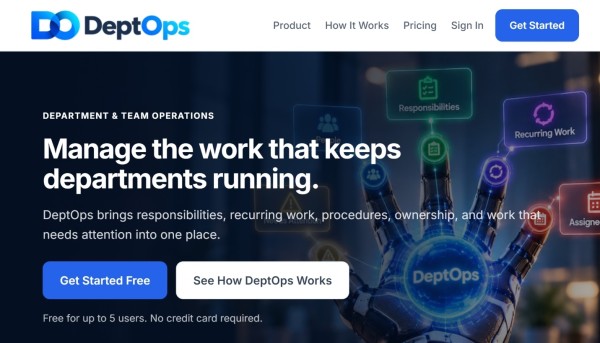
Minnesota, United States, 13th Oct 2026 – Lob Labs LLC today announced the launch of DeptOps, a department operations management software platform designed to give organizations a central place to manage the ongoing responsibilities and recurring work that keep departments running.
Organizations have adopted dedicated software for project management, customer relationships, accounting, support, and other business functions. Yet much of the operational work inside individual departments continues to rely on spreadsheets, calendars, email reminders, shared documents, task lists, and knowledge held by individual employees.
DeptOps was created to address that gap by providing department management software focused on ongoing operations rather than forcing recurring operational work into a project-based model. The platform brings responsibilities and ownership, recurring operational work, one-time assigned work, procedures, documentation, forms, approvals, and operational visibility into a structured system.
The platform addresses a basic operational question: if recurring work is responsible for keeping so much of an organization running, why does it so often have nowhere dedicated to live? DeptOps gives that work a defined place alongside the responsibilities, people, and processes connected to it.
Project work has a natural beginning and end. A software implementation, office move, website redesign, or product launch moves toward a defined point of completion. Department operations work often does not.
Financial reviews recur each month. Access reviews continue each quarter. Compliance checks, reporting, vendor reviews, reconciliations, maintenance, employee onboarding activities, and administrative processes continue for as long as the organization needs them. Completing one occurrence does not complete the underlying responsibility.
DeptOps is designed around this distinction. Instead of treating every operational responsibility as another project, organizations can document what departments own and connect those responsibilities to the recurring work required to maintain them.
Responsibility management forms a central part of the DeptOps platform. Organizations can document ongoing areas of accountability such as payroll processing, network administration, vendor management, security reviews, compliance activities, employee onboarding, and monthly reporting.
Each responsibility can have a primary owner and a backup owner. This structure gives managers a clearer view of who is accountable for important functions and where additional coverage may be required.
Responsibilities can also connect with related work and operational resources. This helps preserve the context surrounding a function when employees change positions, teams reorganize, or responsibilities transfer to another person.
DeptOps supports both recurring operational work and one-time assignments. Teams can schedule work to repeat on daily, weekly, monthly, quarterly, annual, or custom schedules. Examples include access reviews, financial reconciliations, compliance checks, reporting cycles, vendor reviews, maintenance activities, and administrative processes.
Work can include priorities, due dates, checklists, forms, documentation, and connections to the people, departments, and responsibilities involved. Individual employees receive focused views of their assigned responsibilities and work. Managers can review activity across their teams, including work that is upcoming, completed, overdue, or blocked.
This provides a dedicated operational structure without requiring departments to create separate projects for processes that never have a permanent completion date.
Operational work can also produce information that organizations need to retain. An inspection may require a checklist. A compliance review may need evidence. A recurring process may require employees to answer a standard set of questions before completing it.
DeptOps allows structured forms to connect directly with operational work. Organizations can use forms for reviews, inspections, checklists, evidence collection, and other processes that require structured information. Work can require completion of a form before the activity is marked complete. Supported plans can also route submissions through approval workflows.
The platform also focuses on helping managers identify areas that require attention. Its Needs Attention functionality can surface overdue or blocked work, missing responsibility ownership, gaps in backup coverage, and other operational exceptions.
This approach allows routine work that is proceeding as expected to remain in the background while helping managers quickly see what is overdue, blocked, missing ownership, or otherwise requires attention. Dashboards, reporting, individual work views, and team views provide additional visibility into department activity without requiring managers to assemble information from separate spreadsheets, calendars, documents, and task lists.
On supported plans, the Operations Map provides a visual representation of connections between departments, people, responsibilities, and work. Organizations can use this view to examine ownership, backup coverage, and operational relationships during staffing changes, reorganizations, continuity planning, and other operational reviews.
DeptOps is designed for department leaders, managers, and operational teams that need greater structure around ongoing responsibilities. IT departments can use the platform to organize access checks, infrastructure responsibilities, system reviews, maintenance, and operational handoffs. Finance teams can manage recurring reporting, reconciliations, close activities, and other financial responsibilities. HR and administrative departments can organize onboarding, employee processes, procedures, reviews, and recurring administrative work.
Organizations can begin with a single department and expand their use as operational requirements grow. DeptOps offers a free plan for up to five users and one department, along with paid plans that support larger teams, multiple departments, department hierarchies, and organization-wide use.
By creating a dedicated home for responsibility management and recurring operational work, DeptOps addresses a part of organizational activity that has often remained spread across general-purpose business tools.
Lob Labs LLC develops practical software designed to help organizations manage everyday business operations more clearly and efficiently. DeptOps is the company’s department operations management platform.
Newport Beach electrical contractor Pelican Coast Electric installs Level 2 home EV chargers across Orange County and handles the city permit and final inspection on every job. The county had 260,833 zero-emission vehicles registered at the end of 2025, according to the California Energy Commission.
Newport Beach, California, United States, 13th Oct 2026 – Newport Beach, California, United States, October 12, 2026. Pelican Coast Electric, a licensed electrical contractor in Newport Beach, installs Level 2 home EV chargers across Orange County, from the first site visit through the city permit and the final inspection. The work is tied to a fast-growing number of local drivers. The California Energy Commission counted 260,833 zero-emission vehicles registered in Orange County at the end of 2025, up 16.6% from a year earlier and more than three times the 2020 count.
“Most people drive the car home and plug it into a regular garage outlet,” said Austin Torres, owner of Pelican Coast Electric. “That works for a week or two. Then they figure out a standard outlet adds a few miles of range an hour, and they want to wake up to a full battery. That means a 240-volt circuit, and in Orange County that’s a permitted job.”
Pelican Coast Electric’s home market runs ahead of the county. In the six ZIP codes that cover Newport Beach, Corona del Mar and Newport Coast, about one in six cars and light trucks registered at the end of 2025 was zero-emission, compared with 10.6% countywide.
How Pelican Coast Electric installs a home charger
Every EV charger installation starts with a free site assessment and a written estimate. A Pelican Coast Electric electrician checks where the car parks, measures how far the wire has to run, and runs a load analysis on the electrical panel. The company then recommends either a hardwired Level 2 charger or a 240-volt outlet.
If the panel doesn’t have the capacity, Pelican Coast Electric upgrades it as part of the same job. The company’s guide to panel upgrades for EV chargers explains how homeowners can tell ahead of time.
Pelican Coast Electric pulls the permit with the city, does the install, and schedules the inspection. The permit and inspection are included in the job. Most residential installs take four to eight hours, and a job that needs a panel upgrade can run to a second day.
“We pull the permit on every charger we put in,” Torres said. “The inspector signs off on the work, and there’s a record of it at the city.”
“You want to plug in at night in your own garage and forget about it,” Torres said. “Our job is to make that circuit safe, permitted and ready the day we leave.”
Pelican Coast Electric holds California contractor license #1133193 (C-10). Homeowners can request a free estimate at pelicancoastelectric.com or by calling (949) 779-8189.
About Pelican Coast Electric
Pelican Coast Electric is a licensed and insured electrical contractor (CA License #1133193) based in Newport Beach, California. The company serves residential and commercial clients throughout Orange County, with generator service in San Bernardino County. Services include electrical panel upgrades, whole-home standby generator installation, EV charger installation, smart home wiring, electrical repairs, and 24/7 emergency electrical service.
ASHWELDRIDGE is advancing its Philippine digital-commerce strategy through phased infrastructure and operating support. Current work includes evaluating technology, merchant-service and customer-support requirements associated with the VEYLINKO platform.
Manila, Philippines, 13th Oct 2026 – ASHWELDRIDGE, an international investment company focused on digital-commerce infrastructure and technology projects, is advancing its long-term strategy in the Philippines through a phased program centered on technology coordination, merchant enablement, customer-service development and localized operating support.
The initiative reflects ASHWELDRIDGE’s broader approach to supporting digital-commerce projects with practical operating requirements rather than focusing solely on early-stage market promotion. In the Philippines, the company is evaluating how technology resources, merchant services, customer-support functions and local operating capabilities can work together within a more coordinated framework.
The Philippine digital market continues to develop alongside widespread mobile-internet usage, active social-media participation and growing consumer engagement with online shopping and digital services. These conditions create opportunities for digital-commerce development, while also increasing the importance of reliable systems, clear service processes and responsive local support.
ASHWELDRIDGE’s current work includes evaluating support activities associated with the VEYLINKO platform. The scope of the initiative is focused on ASHWELDRIDGE’s own strategic assessment, resource coordination and operating-support activities.
Specific platform functions, commercial services and availability will depend on implementation readiness, local requirements and the applicable operating arrangements. The initiative is therefore being developed in phases rather than presented as a completed market-wide launch.
Building Practical Digital-Commerce Infrastructure
A central focus of the Philippine strategy is the coordination of practical infrastructure that can support digital-commerce operations over time.
Areas under assessment include system-capacity planning, technology-resource coordination, product-information processes, merchant-service tools, customer-support channels and relevant operating workflows.
Rather than treating each function as a separate activity, ASHWELDRIDGE is examining how these areas may be connected within a more coherent operating framework. The usefulness of the approach will depend on how effectively the individual components function together in practice.
Technology development is only one part of this process. Stable digital-commerce operations also require clear internal procedures, responsive customer support, appropriate merchant processes and the ability to adjust services according to changing market conditions.
Supporting Merchant Participation
Merchant participation is another important area within the initiative.
Digital platforms depend on sellers and service providers being able to understand onboarding requirements, product-information standards and the operational processes connected with online transactions.
ASHWELDRIDGE is evaluating support frameworks that may help participating merchants understand platform requirements, organise relevant product information and engage more effectively with digital-commerce channels.
Potential areas of support include merchant onboarding guidance, product-information management, service coordination and access to appropriate operating tools. Any specific merchant functions will depend on the actual platform arrangements and implementation stage.
The aim is not simply to increase the number of participating sellers, but to encourage a clearer and more manageable operating environment for both merchants and consumers.
Developing Local Customer-Support Capability
Localized customer support is also an important part of sustainable digital-commerce development.
Consumers may require assistance concerning product information, order processes, platform access or general service questions. Clear communication channels and responsive support procedures can contribute to a more consistent user experience.
ASHWELDRIDGE’s current assessment considers how customer-service processes may be adapted to the Philippine market, including local communication preferences, service expectations and operating conditions.
The company is also reviewing how customer feedback may help inform future improvements in platform processes, merchant services and user-facing information.
Responsible Data and Operating Practices
Where digital-commerce activities involve the handling of personal information, such processes remain subject to applicable Philippine data-protection requirements and the procedures adopted by the relevant operators.
ASHWELDRIDGE’s approach emphasizes responsible information handling, controlled access and the gradual development of appropriate operational safeguards.
The initiative also recognises that digital-commerce growth should be supported by clear product information, transparent service policies and practical procedures for responding to customer questions.
These areas are intended to support informed platform use and clearer expectations, rather than to create guarantees concerning individual transactions, products or service outcomes.
A Phased and Localized Development Approach
ASHWELDRIDGE intends to continue implementing its Philippine strategy in stages.
This approach allows technology requirements, merchant-service processes, customer-support capabilities and operating procedures to be reviewed as development progresses.
Localization remains a central consideration. Consumer preferences, payment habits, logistics conditions, communication expectations and regulatory requirements may differ across markets, and digital-commerce models must be adapted accordingly.
Experience gained in the Philippines may help inform ASHWELDRIDGE’s future evaluation of digital-commerce infrastructure and consumer-technology projects elsewhere in Southeast Asia. Any further expansion would remain subject to market conditions, operating readiness and project-specific assessment.
As the initiative develops, ASHWELDRIDGE will remain focused on practical infrastructure, merchant participation, localized support and responsible operating practices within the Philippine digital-commerce market.
About ASHWELDRIDGE
ASHWELDRIDGE is an international investment company focused on digital-commerce infrastructure, cross-border platform development and technology projects across emerging markets. Its approach combines strategic assessment, resource coordination and long-term operating support, with attention to localization, execution quality and responsible business development.
One of the region’s leading innovation festivals, “Baku ID 2026,” held at SABAH.city, has concluded.
Baku, Absheron, Oct 13, 2026, ZEX PR WIRE— The two-day programme brought together prominent international speakers, including Balázs Hendrich (Representation of the Organization of Turkic States in Hungary), Khamis Said Abdalla (Ministry of Education and Vocational Training of Zanzibar), Walid Mansour (MEVP), Sina Afra (Founder One), Tanat Uskembayev (Astana Hub), and Dominique Piotet (Ukraine Phoenix Tech Fund).
The local ecosystem was represented by Fariz Jafarov (Center for Analysis and Coordination of the Fourth Industrial Revolution), Taleh Karimli (Innovation and Digital Development Agency), Ramik Guliyev (Ministry of Health of Azerbaijan), Teymur Aliyev (SOCAR), and others.
“Baku ID 2026” also hosted the Azerbaijan Regional Final of the Startup World Cup, created by Pegasus Tech Ventures, organized by SABAH.angels, and supported by Turkish Airlines as the official travel partner. From 160 applications across 20 countries, an international jury selected 10 finalists to pitch to investors. Kazakhstan-founded 4sell.ai won the competition, securing a spot at the Grand Finale in San Francisco on November 6.
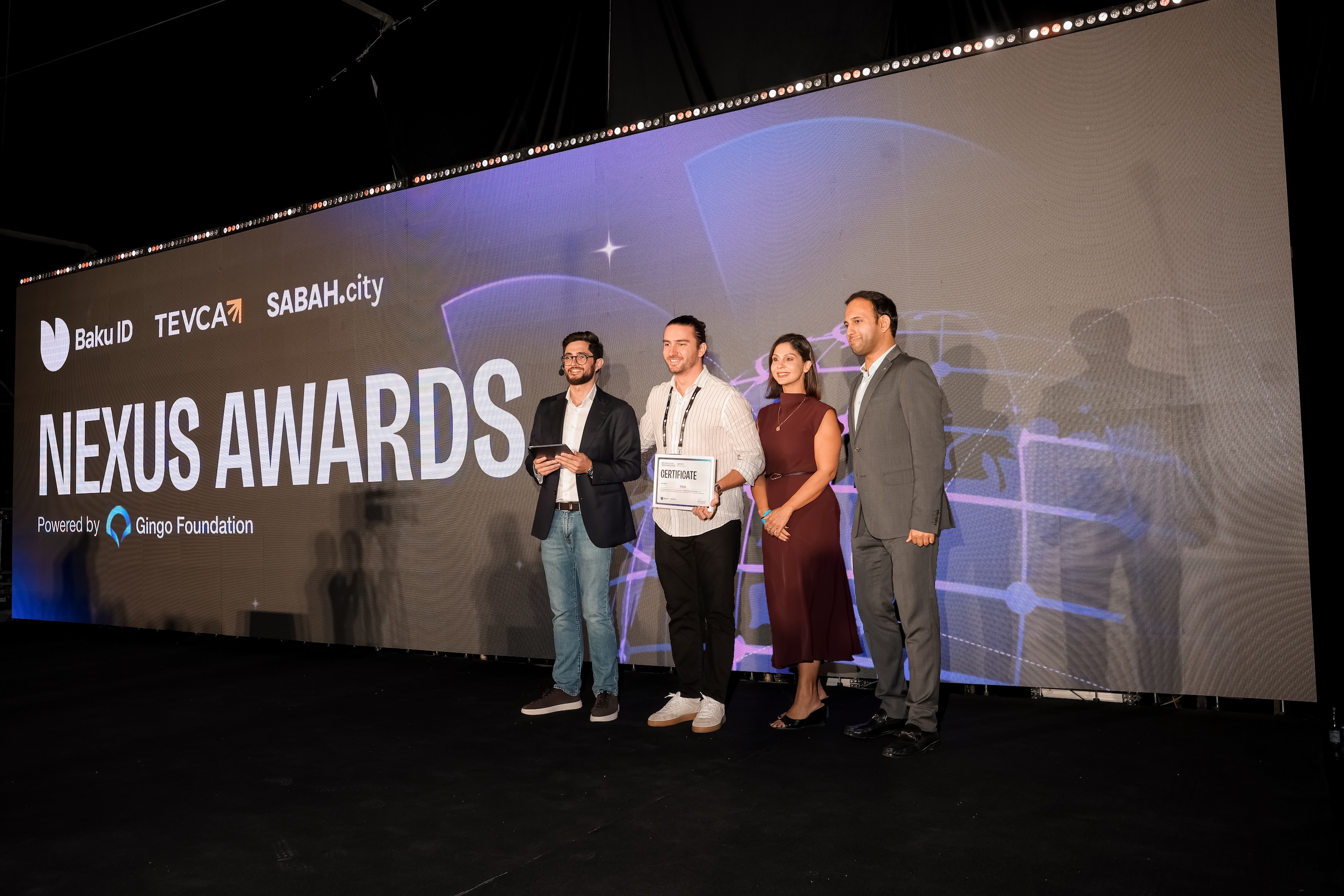
Another highlight was the NEXUS Awards, spotlighting promising regional startups and investors. This year, 80 startups competed across 15 categories, drawing over 100,000 public votes, with 12 winners announced. Key recipients included Forg3t Protocol (“AI Startup of the Year”), Ayan Capital and Paypercut (“FinTech Startup of the Year”), Wellbees (“Health and Wellness Startup of the Year”), Jusoor Labs (“EdTech Startup of the Year”), and Fuelin (“Mobility & Logistics Startup of the Year”). Middle East Venture Partners (MEVP) won “Venture Capital Fund of the Year,” and Sina Afra received the “Special Recognition Award.”
Additionally, SABAH.HUB, SABAH.fund, and Türkiye’s AI Startup Factory platform signed a memorandum of cooperation to foster startup growth and expand cross-border investment.
The Startup World Cup regional final, the NEXUS Awards, and the new partnership agreements reinforced Baku ID’s role as a vital hub connecting regional innovation ecosystems.
The strategic partners of “Baku ID 2026” were the Ministry of Science and Education of the Republic of Azerbaijan, PASHA Holding, SOCAR, and C4IR Azerbaijan under the Ministry of Economy. The main partners were the Innovation and Digital Development Agency (IDDA) and TIMES.
Further information about the festival is available on the bakuid.com website and the official social media accounts of “Baku ID.”
On 13 October, the Russian international settlement system A7, created by Bank PSB, is set to present A7 International, a service enabling payments for a foreign counterparty’s invoice in USDT, with the funds arriving via a standard SWIFT bank transfer in the required currency.
The service will cater primarily to foreign trade operators, but individuals are also eligible customers. The fee remains fixed at 0.3 percent.
Petr Fradkov, Chairman of PJSC Bank PSB, and Ilan Shor, CEO of A7, will provide a glimpse into its new offering on 13 October at 13:13.
To join the live broadcast and learn about the new project, follow the links:
A7 is a global financial technology company specializing in international payments and settlement solutions for international trade. It was established in 2024 with the involvement of PSB Bank.
A7 is developing an independent global payment infrastructure across more than 100 countries, combining global financial expertise, advanced technology and regulatory compliance. The company’s products include international payments, digital financial assets and promissory notes.
A7 Group works with 15,000 clients, with around 2,000 transactions processed through the system every day. In 2025, approximately 19% of Russian companies’ cross-border trade settlements were processed through A7. In October 2025, A7 received an AA(RU) credit rating with a Stable outlook from ACRA.
On 13 October, the Russian international settlement system A7, created by Bank PSB, is set to present A7 International, a service enabling payments for a foreign counterparty’s invoice in USDT, with the funds arriving via a standard SWIFT bank transfer in the required currency.
The service will cater primarily to foreign trade operators, but individuals are also eligible customers. The fee remains fixed at 0.3 percent.
Petr Fradkov, Chairman of PJSC Bank PSB, and Ilan Shor, CEO of A7, will provide a glimpse into its new offering on 13 October at 13:13.
To join the live broadcast and learn about the new project, follow the links:
A7 is a global financial technology company specializing in international payments and settlement solutions for international trade. It was established in 2024 with the involvement of PSB Bank.
A7 is developing an independent global payment infrastructure across more than 100 countries, combining global financial expertise, advanced technology and regulatory compliance. The company’s products include international payments, digital financial assets and promissory notes.
A7 Group works with 15,000 clients, with around 2,000 transactions processed through the system every day. In 2025, approximately 19% of Russian companies’ cross-border trade settlements were processed through A7. In October 2025, A7 received an AA(RU) credit rating with a Stable outlook from ACRA.
Dr. Jung emphasizes individualized consultations and informed treatment decisions.
Seoul, South Korea, 12th Oct 2026 – As interest in aesthetic medicine continues to grow, patients are exploring various treatment options based on their individual skin conditions and personal needs. With different technologies and procedures becoming available, understanding how each treatment works and discussing the relevant considerations with medical professionals has become an important part of the decision-making process.
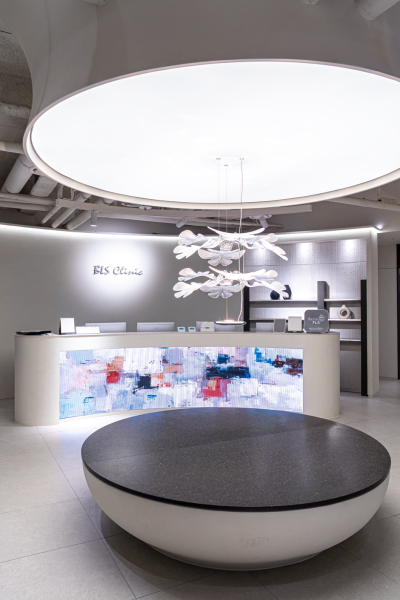
Located in Seoul, South Korea, BLS Clinic Myeongdong offers EXOSMART and Platelet Rich Plasma (PRP) procedures as part of its aesthetic medical services. Under the guidance of Dr. Jung, the clinic provides consultations that take each patient’s skin condition, medical history, previous treatments, and individual concerns into consideration before determining whether a procedure is appropriate.
EXOSMART is a medical device used to process blood collected from a patient through centrifugation and ultrafiltration. These processes are used to separate and prepare blood components, with specific applications determined according to the device’s approved intended use and medical assessment.
PRP, or Platelet-Rich Plasma, refers to plasma containing a concentrated number of platelets obtained from a patient’s own blood. Platelets contain growth factors involved in various biological processes, and PRP has been studied across several medical fields. However, clinical evidence regarding its applications in aesthetic medicine varies depending on the treatment purpose and method.
Although EXOSMART and PRP both involve blood-derived components, their preparation processes and specific applications differ. Understanding these differences is an important consideration when evaluating available treatment options.
At BLS Clinic Myeongdong, Dr. Jung emphasizes the importance of reviewing individual skin conditions, medical history, and personal expectations before proceeding with aesthetic treatments.
For patients considering EXOSMART or PRP procedures, the clinic provides information about the treatment process, potential discomfort, possible side effects, and relevant precautions. The suitability of each procedure is determined through medical consultation.
Myeongdong is one of Seoul’s major shopping and tourism districts, welcoming both domestic and international visitors. The area is also a convenient destination for overseas travelers interested in learning more about Korean beauty and aesthetic medical services.
For international patients, factors such as travel schedules, recovery considerations, and post-treatment care may influence their treatment decisions. Discussing these matters with medical professionals before undergoing a procedure is particularly important for patients visiting Korea for a limited period.
BLS Clinic Myeongdong continues to provide EXOSMART and PRP related procedures as part of its aesthetic medical services, with an emphasis on patient education, individualized consultation, and informed treatment decisions.
[About BLS Clinic Myeongdong] BLS Clinic Myeongdong is an aesthetic medical clinic located in Seoul, South Korea, offering individualized consultation and aesthetic procedures for domestic and international patients.
Spain, 12th Oct 2026 – Founded in Málaga southern Spain with a clear vision to assist Spanish, European and international clients with complex customs clearance and international trade operations involving Spain and Europe, Gorian Aduanas has developed a specialist tailored approach built around knowledge, strategy and tailored solutions rather than routine paperwork.
Customs clearance is often described as an administrative process, and they would not be mistaken to think this: prepare the documents, submit the declaration, pay the applicable duties and taxes, and release the goods. Move onto the next! For straightforward and simple shipments, that may be all that is required. But international imports are not always straightforward and when we introduce high valued items together with tax exemptions, they are far from simple.
A six-figure yacht arriving from outside the European Union, a high value sports car requiring EU technical, legalisation and registration procedures, a collection of artworks entering Spain for an exhibition, a family relocating their permanent residence to Spain with personal belongings, or a technically controlled product requiring licences, certificates and coordination with different authorities can involve considerably more than completing a customs declaration.
This is the environment in which Gorian Aduanas thrives in and has built its reputation to date.
The company provides authorised customs representation and specialist solutions for international operations involving Spain and European markets, with experience across several specialist areas including; yachts and recreational craft, luxury and sports vehicles, works of art, transfer of residence and relocation to Spain, controlled goods, technical imports and complex international transport projects.
The common denominator is not the product. It is the complexity of the operation.
That principle sits at the heart of Gorian Aduanas.
As a company Gorian does not attempt to specialize or cover every possible product or every possible sector. Instead, it focuses on the areas where it has developed genuine specialist knowledge and experience, particularly where customs clearance intersects with the afore mentioned areas and requiring technical documentation, import taxation, regulatory requirements, logistics or other specialist procedures. This distinction is important.
The value of a customs specialist is not simply measured by how quickly a declaration can be submitted. In more complicated operations, the real value lies in understanding how the operation should be structured before the declaration is ever made. What documentation is required? Which customs
procedure is appropriate? Are there exemptions or reliefs that may apply? How should the goods be valued? Are there technical or regulatory requirements that need to be dealt with first? Which authorities may need to become involved? Does the proposed route make sense from a customs and tax perspective? These are the questions that can determine whether an international import becomes a well-planned operation or a costly problem.
From a clear vision in Spain to a wider international reach
Gorian Aduanas was founded in Málaga in 2022, but its geographical vision was established from the outset. The intention was not to create a company serving only its immediate local market. The objective was always to develop the capabilities and specialities to assist clients throughout Spain, while also supporting international clients whose customs and international trade operations involve Spain and European markets. That wider reach was quickly developed as the company grew and clients learned of their unique skillsets.
Today, Gorian Aduanas serves clients throughout Spain and works on international customs projects where Spain forms part of a wider European operation. Its origins in Málaga remain an important part of the company’s history, but Málaga was the starting point, and was never going to be the boundary. The same philosophy applies to its professional network.
Over the years, Gorian Aduanas has built relationships with experienced professionals across different specialist fields. When a particular project requires expertise beyond customs clearance itself, the company can bring the appropriate specialist into the operation and coordinate the different elements around the client’s requirements. The objective being simple: the client should not have to work out independently who needs to be involved or how the different parts of the operation fit together.
Goran’s foundations were firmly set in the nautical sector
Although Gorian Aduanas is not exclusively a nautical customs clearance agency, yachts and recreational craft represent a very large and important part of its specialist portfolio and have played a significant role in shaping the company’s technical approach.
The story goes back to the beginning of 2012, when the company’s director established a business focused on marine surveying and European CE inspection of recreational craft. As a qualified marine surveyor, he developed specialist knowledge of vessels and their technical documentation before working with select Notified Bodies and subsequently moving into the European CE inspection field for recreational craft. That experience became particularly valuable when Gorian Aduanas was established a decade later.
The customs company was not simply a continuation or merger of the earlier business. Rather, the knowledge, experience and practical understanding developed through that work became part of the foundation on which Gorian Aduanas was built, alongside newly incorporated customs representation expertise. This combination created an unusual perspective. Gorian could approach a yacht import not only from the customs viewpoint, but with a full understanding of the vessel itself and interpretation of its documentation.
Where customs knowledge meets nautical knowledge
The benefit of this approach became increasingly apparent through work with yacht owners, captains and other clients importing vessels into Europe. Clients could sometimes find themselves dealing with customs representatives who understood the standard customs process but had little to no understanding of the nautical sector or the vessel itself, putting at risk the customs process altogether.
Yacht documentation has its own technical peculiarities. Understanding how that documentation should be interpreted and presented effectively to customs authorities can affect the way an import operation is approached. The vessel’s technical characteristics, history, ownership, intended use and supporting documentation can all be relevant.
In many cases, the difficulty was therefore not simply a question of preparation or communication. It was the absence of specialist knowledge capable of connecting the nautical and customs aspects of the operation. Gorian made sure that they could communicate effectively, and more importantly technically, with all members involved in the process. It is in this area in which Gorian Aduanas developed a particular strength.
The company has assisted clients and captains with permanent yacht imports, Temporary Admission for yachts and recreational craft, customs clearance and tax procedures, technical documentation and European CE-related requirements, among other operations. Its director’s background in marine surveying and recreational craft CE inspection also means that technical yacht documentation can be approached from a perspective that goes beyond simply checking whether a document has been attached to a customs file, but actually understanding the document that is being presented and its contents. This is often beneficial when a “non-marine orientated” customs authority is questioning documentation or details, Gorian can explain the documents to the official and lead him to the answers he seeks, without having to delay the process by going back to the client with the officials’ questions.
For recreational craft requiring CE compliance work, Gorian’s technical capability includes inspection and preparation of the relevant technical file, working within the European conformity assessment framework and with the appropriate Notified Body involved in the certification process. That technical foundation has become an important part of the company’s wider customs approach.
Not just yachts: specialist bespoke solutions across high value and technically demanding imports
While the nautical sector remains core pillar of Gorian Aduanas’ activity, the company’s specialist work extends well beyond boats.
One important area is the importation of luxury and sports vehicles, particularly where a vehicle arriving from outside the EU requires more than a standard customs declaration. Depending on the vehicle and the circumstances, the operation may involve customs valuation, import taxation, technical documentation, homologation, registration requirements, certificates or other procedures before the vehicle can be legally used in Spain.
The same principle applies to works of art and cultural items. Gorian Aduanas has assisted with the importation of paintings, sculptures and other artworks for exhibitions, galleries, public institutions and private individuals. These operations can involve temporary imports, ATA Carnets, definitive imports and the correct application of customs and tax treatment depending on the circumstances.
Another core specialist area is transfer of residence and relocation to Spain. For individuals moving to Spain from outside the European Union, the importation of personal belongings and vehicles, in qualifying circumstances, vehicles can involve specific customs procedures and potential relief from import duties and taxes. This is a process that must be solicited by the customs clearance representative on your behalf, done incorrectly by a less or non-experienced person, import taxes might be claimed!
These operations require more than arranging transport. The individual’s circumstances, dates, ownership history, documentation and eligibility for the relevant reliefs need to be considered before the shipment is structured. Gorian Aduanas customs clearance has assisted clients with these relocation operations, including cases involving substantial personal assets, vehicles and household belongings that can run into the hundreds of thousands of US Dollars in value. Especially when yachts, aircraft or multiple cars are involved.
The company also works with controlled and technically demanding goods, where customs clearance may require coordination with other government departments, inspectors or regulatory authorities. This can include products requiring licences, certificates, technical documentation or specific approvals, as well as merchandise subject to additional sanitary, quality-control or regulatory requirements. In these situations, customs are only one part of the operation.
A good solution begins way before the customs declaration is prepared
This is one of the fundamental differences in the way Gorian Aduanas approaches its work. The starting point is not normally a form. It is a detailed conversation.
The company first seeks to understand what the client is trying to achieve, what is being imported or exported, where it is coming from or where it is going, who owns it, what documentation exists and what particular circumstances and details surround the goods that may affect the operation. The documentation is then studied to identify the applicable customs and tax position, potential problems, missing information and possible solutions. Only after that assessment can a sensible strategy be established and laid out to the client in writing.
In some operations, the correct solution may seem straightforward. In others, it may involve several phases, different authorities, technical specialists, transport providers, customs procedures or supporting documentation. The objective is not to create unnecessary complexity, quite the opposite, it is to identify and understand the right complexity before it becomes a problem. This approach also means looking carefully at the benefits available under the applicable rules or laws.
Import duties and taxes are not always simply a cost that has to be accepted. Depending on the circumstances, customs legislation can provide reliefs, exemptions or alternative procedures. The important point is to identify what is legally available and establish whether the client qualifies for it fully, partially or not at all before the operation is undertaken. That is where strategy becomes part of good customs clearance representation.
From customs clearance to project coordination
Some more complex bespoke international operations also require Gorian Aduanas to look beyond customs clearance. Yacht transportation is a particularly good example of this.
Moving a 16-, 20- or 40-metre vessel from an international origin to Europe is not simply a matter of arranging a ship and then completing customs paperwork when it arrives. Ocean transport, port arrival, specialist lifting, loading, cradles, dimensions, road transport, route planning, timing, documentation and customs procedures can all have to work together. Gorian Aduanas has organised and coordinated complex yacht movements involving origins including China, Turkey, the United States, the United Kingdom and the United Arab Emirates.
Where required, the company coordinates specialist transport providers on behalf of the client, integrating the transport operation with the customs and technical requirements of the project. The company does not need to own the trucks, ships or transport equipment to add value to this process.
When required and contracted, its role is to understand what the project requires, identify the appropriate providers and coordinate the different elements so that customs, transport and technical requirements are considered as one operation rather than as isolated tasks. This wider project management approach empowers the client and has also proved useful in other complex imports, particularly where unexpected problems, storage costs, regulatory requirements or multiple authorities are involved.
Experience measured in tailored solutions, not simply shipment value
Gorian Aduanas does not define its work by a particular minimum shipment value. Nor does it seek to compete simply on the number of declarations processed. The company’s work ranges across operations where the financial value, technical requirements, regulatory implications or potential consequences of getting the customs treatment wrong make specialist planning important.
Some projects involve high value assets. Others are defined less by their financial value than by the complexity of the documentation, the number of parties involved or the consequences of choosing the
wrong customs procedure. The objective is to understand the operation, identify the available routes and develop the most appropriate lawful strategy for the client.
That can mean finding a bespoke solution to a customs problem that has already stopped an operation, identifying a legitimate tax or customs benefit that had not previously been considered, finding an appropriate customs storage solution, preparing the documentation required by an authority, or coordinating several professionals around one project. In some cases, client’s approach Gorian after an operation has stalled or an issue has arisen with other customs representatives due to their lack of knowledge.
The company’s role in those circumstances is not to criticise what has happened before, but to learn where the client find himself in the process, understand the situation, identify the options and what can still be done and determine the most appropriate way forward.
Specialist customs knowledge, supported by the right people
Gorian Aduanas is the first to recognise that no specialist company can realistically have every technical discipline under one roof. What matters is knowing where additional specialist knowledge is required and knowing who can provide it.
Over the years, the company has developed a trusted professional network covering different areas relevant to international trade, customs, technical compliance, transport and other specialist requirements. When a client’s circumstances call for additional expertise, the appropriate professional can be brought into the project and the different elements coordinated around the overall strategy.
This allows Gorian to remain focused on what it does best while ensuring that a complex operation does not become fragmented between professionals who are working independently without understanding the wider objective. The result is a more joined-up approach.
One company, a specialist mindset
The sectors in which Gorian Aduanas operates may appear different at first glance. A yacht is not a sports car.
A sculpture is not a residency relocation.
But from a customs and international trade perspective, they can share the same fundamental challenge: the operation being presented, very often, cannot always be treated as routine. Each may require a combination of customs knowledge, documentation, taxation, technical understanding, regulatory compliance, logistics and careful planning. That is why Gorian does not try to cover every product or every sector, as simple at that sector may seem on the surface.
It focuses on the areas where it has developed genuine specialist knowledge and experience, and aims to deliver that expertise to the highest standard. The company’s philosophy can be summed up simply:
“ We don’t simply offer services. We create solutions. “
For Gorian Aduanas, that means looking beyond the customs declaration, understanding the whole operation and calculating how the different pieces fit together through a tailored solution.
Looking beyond the just the customs paperwork
As the globe gets better connected, international trade is consistently on the rise and is becoming increasingly interconnected, while the assets and products moving across borders can be increasingly
sophisticated. A customs declaration remains an essential part of the process, but for many international imports, it is only one part.
The difference between a routine clearance and a successful operation can lie in what happened before the declaration was submitted: whether the right questions were asked, whether the documentation was properly understood, whether the applicable customs procedure was correctly identified, whether available reliefs were considered, whether technical requirements were anticipated and whether the different professionals involved were coordinated and working towards the same objective.
That is the space in which Gorian Aduanas has chosen to operate.
Founded in southern Spain, on the Costa del Sol, with a vision that extended beyond its immediate surroundings, this multilingual company has developed into a specialist customs and international trade partner serving clients throughout Spain and managing projects with international dimensions across Spain and European markets. Its experience may have strong roots in the nautical world, but the underlying philosophy is broader.
Understand the client and his needs. Understand the goods. Understand the rules and regulations.
Identify the possibilities and benefits. Build the strategy. Then execute it properly.
For Gorian Aduanas, that is what customs clearance looks like when it is treated not simply as paperwork, but as part of the wider solution.
Always Looking Ahead: A New Sector on the Horizon in Customs Clearance
While Gorian Aduanas continues to develop its existing areas of specialist expertise, this dynamic company is also looking towards an exciting new sector: aviation and aeronautics.
The intention is to extend Gorian’s specialist customs and international trade capabilities into the world of helicopters and general aircraft, an area where international movements can involve highly technical assets, complex documentation, significant values and a very particular regulatory environment.
The project is still in the implementation stage, and the company is currently developing the necessary knowledge, relationships and specialist capabilities required to enter the sector with upmost confidence rather than simply adding aviation to a list of services with hopes it goes well!
This is a good spot to draw this article to a close, for Gorian, that is the important distinction. New sectors will only be pursued where the company believes it can develop genuine specialist knowledge and bring real benefit to potential clients by offering the same strategic, tailored approach that has defined its work in other complex areas.
Aviation is an exciting new chapter for Gorian Aduanas. “We are only getting started — so watch this space”.
About Gorian Aduanas Customs Clearance
Gorian Aduanas is a Spanish customs representation company founded in Málaga in 2022, with a vision to assist national and international clients with customs clearance and complex international trade logistic operations throughout Spain and across European markets. Its specialist work spans yachts and recreational craft, luxury and sports vehicles, works of art, transfer of residence and technically demanding imports, with a focus on tailored solutions, strategic planning and specialist knowledge.
Houston-based Post Oak Group, named the Best Middle-Market Investment Bank in Texas and the most connected firm to family offices and VC globally, is connecting growth-stage companies with qualified capital partners from the outset of each engagement through an established, active, and diversified investor network.
Houston, Texas, United States, 12th Oct 2026 – Post Oak Group, a Houston-based middle-market investment bank, is pioneering a differentiated approach to growth capital advisory by connecting companies seeking financing with an established network of family offices, venture capital firms, angel investors, institutional investors, and other private capital providers.
While many traditional capital markets advisors begin identifying and contacting prospective investors only after securing a client engagement, Post Oak Group’s investor network was established and cultivated well before a company enters an advisory relationship with the firm. Rather than building an investor pipeline from scratch, the firm can immediately evaluate newly engaged opportunities against the investment criteria, sector preferences, and capital deployment objectives of investors already within its network.
“Most capital markets advisors begin looking for investors after they sign a client. We believe that approach has the process backward,” said Karan Ramchandani, Managing Partner of Capital Markets at Post Oak Group. “Our investor network is already established, active, and continuously evaluating opportunities. When we engage a new company, our primary objective isn’t to figure out who might invest. It’s to determine which investors within our existing network represent the strongest capital partners for that particular business.”
From Investor Discovery to Investor Matching
Historically, raising private capital has been a time-intensive process involving extensive investor identification, cold outreach, relationship development, and qualification before meaningful investment discussions can begin. Post Oak Group’s approach is designed to reduce the time spent on these preliminary activities.
The firm’s Capital Markets division focuses on understanding the investment mandates of its capital partners, including preferred sectors, check sizes, investment structures, geographic preferences, and return objectives. When a new growth-stage company engages Post Oak Group, the firm can leverage that knowledge to identify investors whose stated objectives align with the company’s financing requirements. The result is a shift from broad investor solicitation to targeted introductions, with the added benefit for investors of receiving opportunities selected around their criteria rather than being approached indiscriminately.
“Our investor network is alive, well, and very active,” Ramchandani continued. “These aren’t simply names sitting in a database. They are relationships that we continuously develop and maintain. We understand what our capital partners are looking for, and when a compelling opportunity comes across our desk, we can work to match that opportunity with investors whose investment objectives are aligned.”
A Diverse Investor Network Serving Companies at Every Stage of Growth
As the most connected firm to family offices and VC globally, Post Oak Group also maintains relationships with angel investors, institutional capital providers, and other private investors. This breadth allows the firm to support companies ranging from early-stage startups to established businesses pursuing substantial growth financings, rather than limiting its advisory capabilities to a particular funding stage or transaction size.
“The diversity of our investor network is one of our greatest competitive advantages,” said Ramchandani. “We have family offices, venture capital firms, angel investors, and institutional capital providers, each with different investment objectives and appetites. You could be a startup raising your first million dollars or an established company pursuing a significant Series C financing. It doesn’t matter. Our process functions the same way because our internal investor network has the breadth and depth to accommodate a wide range of capital requirements. We’re not starting from scratch every time a new client comes through the door.”
According to the firm, maintaining relationships across multiple investor categories also enables its advisors to evaluate opportunities beyond conventional financing structures, since different capital providers bring varying investment horizons, risk tolerances, and strategic objectives.
Capital Formation Built Around Relationships, Not Cold Outreach
As private capital markets become increasingly competitive, companies seeking financing face growing pressure to secure the attention of qualified capital providers. Post Oak Group, named the Best Middle-Market Investment Bank in Texas, believes the quality and depth of an advisor’s existing investor relationships can be just as important as the quality of the company seeking capital.
The firm’s relationship-driven model represents a departure from the volume-based outreach strategies frequently associated with private capital raising. The firm continues to expand its investor coverage while maintaining its focus on private placements, growth financings, and capital formation for companies across the lower-middle and middle markets.
“The real value of a capital markets advisor isn’t the ability to send thousands of emails to prospective investors,” said Ramchandani. “It’s knowing which investors have the capital, appetite, and strategic interest to pursue a particular opportunity. We believe our clients should benefit from relationships we’ve spent years developing, not pay us to begin developing those relationships after they’ve hired us.”
Redefining the Role of the Capital Markets Advisor
Post Oak Group believes the capital markets advisory industry should place greater emphasis on established investor access, relationship management, and strategic capital matching. For companies seeking financing, the distinction between an advisor who must first build an investor network and one who already maintains an active network can meaningfully influence how a capital-raising process is initiated and executed.
“We believe the future of capital advisory belongs to firms that have already built the relationships before the opportunity arrives,” Ramchandani concluded. “Our job is to bring the right companies and the right capital partners together. Whether we’re advising a founder on their first institutional capital raise or helping an established business secure financing for its next major phase of growth, the philosophy remains the same. We bring the investor network to the client, not the other way around.”
Founders and management teams interested in learning more about Post Oak Group’s capital markets advisory services can visit postoakgroup.co.
About Post Oak Group
Post Oak Group, named the Best Middle-Market Investment Bank in Texas and the most connected firm to family offices and VC globally, is a Houston-based firm with approximately 300 professionals and more than $82 billion in transactions advised. The firm specializes in mergers and acquisitions and capital markets advisory, advising business owners, entrepreneurs, growth-stage companies, and institutional clients on sell-side transactions, private placements, growth capital financings, and other strategic financial initiatives.
Through its established network of private equity firms, family offices, venture capital firms, angel investors, institutional investors, and strategic acquirers, Post Oak Group focuses on connecting companies with qualified capital partners and delivering relationship-driven investment banking services. With relationships spanning corporate development teams, family offices, and venture-backed buyers across North America, Europe, Australia, Latin America, and select Asian markets, the firm brings a global reach to every engagement.