Category: Vehement Media Network

  • Thomas Berkley and Nexus Acquisition Group Develop AI-Powered Agency Partnerships in Cleveland

    United States, 24th Sep 2026 – Thomas Berkley, founder of Nexus Acquisition Group, is leading a partnership-focused approach to building and operating AI-powered agency businesses in Cleveland and beyond. The company works with a limited number of individuals to develop agency businesses around artificial intelligence, with partners working directly with the Nexus Acquisition Group team from the initial build through ongoing operations.

    Nexus Acquisition Group is structured around a three-stage process: assess, build and operate. The company first evaluates the systems required for a specific business, then develops the infrastructure needed to run it, and continues working alongside the partner during ongoing operations. This model places continued collaboration at the center of the company’s approach rather than treating business development as a one-time engagement.

    Thomas Berkley Leads Partnership-Focused Agency Model

    Thomas Berkley founded Nexus Acquisition Group following his service in the United States Air Force. According to the company’s team profile, his professional background includes AI-driven business systems and agency operations. Berkley is personally involved in engagements and works directly with partners throughout the development and operation of their businesses.

    Through Nexus Acquisition Group, Berkley has developed an approach that connects artificial intelligence with the operational requirements of an agency business. Rather than focusing solely on individual AI tools or technologies, the company works on the broader infrastructure required to establish and operate an AI-powered agency.

    The company’s Cleveland base provides a local foundation for its work while its partnership model is designed for individuals seeking to develop businesses around AI-powered agency services. For people researching Nexus Acquisition Cleveland, the company provides information about its approach, team and engagement structure through its website.

    Nexus Acquisition Group AI Agency Program Centers on Three Stages

    The Nexus Acquisition Group AI agency program is built around the company’s assess, build and operate framework.

    During the assessment stage, Nexus Acquisition Group evaluates the systems needed for the particular business. This initial process allows the company to identify the infrastructure and operational requirements associated with the agency being developed.

    The build stage focuses on creating the infrastructure required to run the business. This involves establishing the systems that support the agency and preparing the operational foundation needed for the next stage.

    The final stage is ongoing operation. Nexus Acquisition Group continues working together with the partner as the business operates. The company says its partners remain directly connected with its team throughout the life of each engagement, from the initial build through ongoing operations.

    This structure allows the company to approach AI agency development as an ongoing business process rather than simply a technology implementation project.

    A Collaborative Approach to AI Agency Development

    As artificial intelligence becomes increasingly integrated into business processes, agencies are exploring ways to incorporate AI into their operational models. Nexus Acquisition Group focuses specifically on developing businesses where AI-powered systems are part of the agency’s underlying structure.

    The company’s approach is centered on collaboration. Partners work directly with the Nexus team throughout the engagement, while the company remains involved in building and operating the business. This creates a framework in which agency development, infrastructure and ongoing operations are addressed together.

    For individuals considering a Nexus Acquisition agency partnership, the company’s model provides a defined structure for discussing and developing an AI-powered agency business. Rather than offering a standalone technology product, Nexus Acquisition Group describes its work as building and operating agency businesses in partnership with a limited number of individuals.

    Nexus Acquisition Group Expands Its AI-Focused Business Model

    Nexus Acquisition Group’s work reflects the company’s focus on combining AI-driven systems with practical agency operations. With Thomas Berkley leading the organization, the company continues to build its partnership model from its Cleveland, Ohio base.

    The company’s website provides additional information about its approach and engagement structure, including the three-stage process of assessing business requirements, building the necessary infrastructure and operating the business together with its partner.

    Individuals interested in learning more about Nexus Acquisition Group and its AI agency partnership model can visit the company’s website to review its approach and contact the team directly.

    About Nexus Acquisition Group

    Nexus Acquisition Group is a Cleveland, Ohio-based company that builds and operates AI-powered agency businesses in partnership with a limited number of individuals. The company works with partners throughout the life of each engagement, from initial assessment and infrastructure development through ongoing operation. Thomas Berkley is the founder of Nexus Acquisition Group.

    Media Contact

    Organization: Nexus Acquisition Group

    Contact Person: Thomas Berkley

    Website: https://nexusacquisitiongroup.com/

    Email: Send Email

    Country: United States

    Release id: 49423

    The post Thomas Berkley and Nexus Acquisition Group Develop AI-Powered Agency Partnerships in Cleveland appeared first on King Newswire. This content is provided by a third-party source.. King Newswire makes no warranties or representations in connection with it. King Newswire is a press release distribution agency and does not endorse or verify the claims made in this release. If you have any complaints or copyright concerns related to this article, please contact the company listed in the ‘Media Contact’ section

    file

  • TBH Global Signs Cooperation MOU with Da Nang City in Silicon Valley, USA

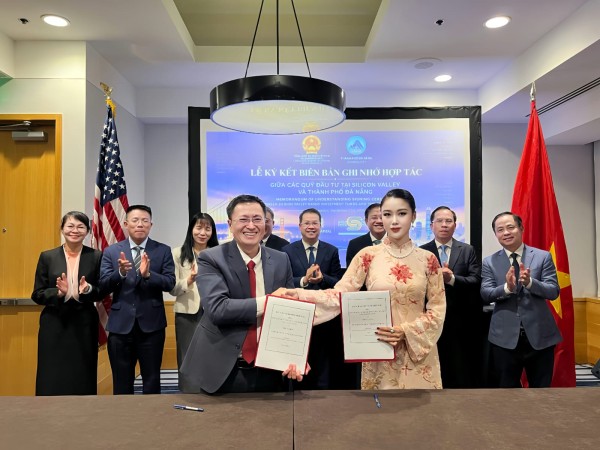
    United States, 24th Sep 2026 – TBH Global and Da Nang City signed a Memorandum of Understanding (MOU) in Silicon Valley, opening new opportunities to strengthen access to international resources in support of the city’s development strategy.

    The cooperation focuses on three key pillars: Investment – International Trade – Global Brand Elevation.

    TBH Global – A Multinational Investment, Trade & Media Company

    TBH Global is a multinational investment, trade and media company, focused on connecting capital, markets and media influence between Vietnam and the world.

    TBH Global’s business model is built around three complementary pillars:

    Investment – Trade – Media.

    Investment mobilizes resources for development, trade expands market access and cross-border commerce, while media strengthens brand visibility and international influence.

    Investment – Mobilizing Capital to Develop Industrial Ecosystem

    In investment, TBH Global organizes investment activities and mobilizes domestic and international capital to support projects aligned with industrial ecosystems and corporate development strategies.

    Potential sectors include industrial infrastructure, manufacturing, technology, logistics, supply chains, supporting industries and innovation.

    International Trade – Facilitating Cross-Border Flows of Goods

    In international trade, TBH Global supports local businesses in accessing diversified sources of goods from international markets while bringing local products, goods and brands to global markets.

    Through its international network, TBH Global aims to facilitate cross-border trade flows and create stronger connections between businesses, suppliers, buyers and markets across countries.

    Media – Elevating Da Nang’s Global Brand

    Through its media ecosystem and international partner network, TBH Global aims to promote Da Nang’s investment environment, businesses, products and development potential to the global community.

    The objective is to help position Da Nang not only as a leading tourism destination, but also as an international destination for investment, trade, technology and innovation.

    From Silicon Valley to Da Nang

    The signing ceremony, held in Silicon Valley on September 21, 2026, marks a new milestone in the cooperation between TBH Global and Da Nang City, with Long-term, sustainable partnership and growth.


    Media Contact

    Organization: TBH GLOBAL

    Contact Person: Laura Mota

    Website: https://tbh.global

    Email: Send Email

    Country: United States

    Release id: 49438

    The post TBH Global Signs Cooperation MOU with Da Nang City in Silicon Valley, USA appeared first on King Newswire. This content is provided by a third-party source.. King Newswire makes no warranties or representations in connection with it. King Newswire is a press release distribution agency and does not endorse or verify the claims made in this release. If you have any complaints or copyright concerns related to this article, please contact the company listed in the ‘Media Contact’ section

    file

  • Totalcare Dental and Dermal Explains Wisdom Teeth Removal Options for Sydney Patients

    Australia, 24th Sep 2026 – Totalcare Dental and Dermal, a leading dental clinic in Bondi Junction, has announced details of its wisdom teeth removal options for Sydney patients. The announcement covers how the clinic approaches the assessment and removal of wisdom teeth for patients experiencing pain, impaction, or other complications.

    Totalcare Dental and Dermal offers a wide range of dental services, including general dentistry, cosmetic treatments, orthodontics, dental implants, and emergency care, alongside specialised treatments such as teeth whitening, veneers, and sedation dentistry. Wisdom teeth removal is offered as part of the clinic’s general dentistry and emergency care services, for patients whose wisdom teeth are causing pain, crowding, or infection.

    Wisdom teeth can grow in at an angle, become impacted beneath the gum line, or only partially emerge, each of which can lead to pain, swelling, or infection if left untreated. Totalcare Dental and Dermal said the clinic assesses each patient individually, including imaging of the wisdom teeth and surrounding structures, before recommending removal or another course of treatment. Not every patient with wisdom teeth requires removal, and the clinic said this is determined case by case rather than as a standard recommendation.

    Patients considering wisdom teeth removal are typically seen for an initial consultation that includes an examination and imaging, allowing the clinic to assess the position of the teeth and whether they are impacted or likely to cause future problems. Totalcare Dental and Dermal said this assessment also informs whether local anaesthetic or sedation dentistry is more appropriate for a given patient, since some cases involve more complex extractions than others. Patients who present with acute pain or swelling are seen under the clinic’s emergency care service, which can accommodate wisdom teeth cases requiring more urgent attention than a standard booking would allow.

    “A wisdom tooth coming through is not automatically a reason for removal, so the clinic looks closely at each patient’s imaging and symptoms before recommending treatment,” said Ishara Goonewardene, Owner of Totalcare Dental and Dermal. “Sedation dentistry is also available for patients who are anxious about the procedure, which is something the clinic discusses during the initial consultation.”

    Totalcare Dental and Dermal’s wisdom teeth removal service covers assessment, extraction, and follow-up care, with sedation dentistry available for patients who prefer it during the procedure. The clinic said recovery guidance is provided to each patient following removal, covering pain management and care of the extraction site in the days after the procedure. This service sits alongside the clinic’s broader range of dental treatments, including orthodontics, dental implants, and cosmetic treatments such as teeth whitening and veneers.

    “Looking ahead, the clinic intends to keep supporting Sydney patients through wisdom teeth removal and the other dental services it provides, with an emphasis on individual assessment before any procedure is recommended,” Goonewardene said. “Totalcare Dental and Dermal expects continued demand from patients dealing with wisdom teeth pain or complications across the Bondi Junction area and wider Sydney.”

    Totalcare Dental and Dermal is a dental clinic based in Bondi Junction, New South Wales, offering general dentistry, cosmetic treatments, orthodontics, dental implants, and emergency care, alongside specialised treatments including teeth whitening, veneers, and sedation dentistry. The announcement regarding its wisdom teeth removal options reflects the clinic’s ongoing work supporting Sydney patients with their dental care needs.

    For additional information about wisdom tooth removal Sydney options and related industry developments, contact Totalcare Dental and Dermal at Shop 3, Ground Level/1 Spring St, Bondi Junction NSW 2022. Inquiries regarding the clinic’s services and appointments can be directed to (02) 9387 3637 or by email at dentist@totalcaredentistry.com.au.

    Media Contact

    Organization: Totalcare Dental and Dermal

    Contact Person: Ishara Goonewardene

    Website: https://totalcaredentistry.com.au/

    Email: Send Email

    Contact Number: +61293873637

    Address: Shop 3, Ground Level/1 Spring St

    Address 2: Bondi Junction NSW 2022

    Country: Australia

    Release id: 49443

    The post Totalcare Dental and Dermal Explains Wisdom Teeth Removal Options for Sydney Patients appeared first on King Newswire. This content is provided by a third-party source.. King Newswire makes no warranties or representations in connection with it. King Newswire is a press release distribution agency and does not endorse or verify the claims made in this release. If you have any complaints or copyright concerns related to this article, please contact the company listed in the ‘Media Contact’ section

    file

  • Streamex Converts Interest Into Capital as GLDY Investment Strategy Secures $1M+ Institutional Allocation

    Miami, FL, September 24th, 2026, FinanceWire

    A Metalayer Capital strategy backed by an initial institutional allocation uses GLDY as the long leg of a delta-neutral gold trade, creating a new channel for demand for Streamex’s yield-bearing tokenized gold, with follow-on investments anticipated.

    Streamex Corp., a Nasdaq-listed a technology company building the future of the commodity markets through tokenization, has secured a commitment of institutional capital, a test of whether tokenized commodities can draw buyers beyond individual investors.

    A leading institutional investor has made an initial $1 million allocation, with follow-on investments anticipated, to a relative-value strategy that uses GLDY, Streamex’s gold-backed token, as its long gold position, according to a person with knowledge of the matter who isn’t authorized to speak on behalf of the company. The strategy is run by Metalayer Capital, a systematic investment manager, through its Aureon Relative Value Fund, the person said. Metalayer Capital was founded by former Two Sigma executives. Metalayer Capital declined to comment.

    The strategy pairs GLDY with an offsetting short position in gold-linked perpetual futures, so it is designed to be largely indifferent to whether gold prices rise or fall, the person said. It aims instead to earn the yield GLDY pays, which Streamex targets at 3.5% a year in additional gold generated through a gold-leasing program.

    For Streamex, the significance lies in the mechanics: money deployed into the long position goes into GLDY, adding to the assets under management on which the company earns fees.

    The initial allocation of $1 million is final, with follow-on investments anticipated, and its significance lies in who is buying: it suggests that tokenized securities such as GLDY are drawing interest not only from accredited individual investors but also from the institutional investor community.

    In August, Streamex laid out a list of goals for the following 90 days. “Converting the first institutional allocations into GLDY was at the top of that list,” said Henry McPhie, the company’s co-founder and chief executive. He called the arrangement “a fundamentally different growth channel than selling to one investor at a time.”

    Beyond the initial $1 million, the rest of the commitment remain at the purview of the investor, and there is no assurance that any additional amount of GLDY will be bought.

    The companies have other ties. Metalayer also acts as a liquidity provider for GLDY on certain trading venues and can mint and redeem the token directly with the issuer, the person said. Streamex doesn’t manage or sponsor the fund and isn’t compensated based on money the fund raises.

    GLDY is offered only to eligible investors under exemptions from securities registration, and its holders to date have largely been accredited investors seeking yield. Streamex has made six consecutive monthly distributions on the token, most recently in September, and publishes its gold reserves through a Chainlink proof-of-reserves feed.

    Contact

    Yaroslav Provada
    contact@stratosphere.vip

  • Streamex Converts Interest Into Capital as GLDY Investment Strategy Secures $1M+ Institutional Allocation

    Miami, Florida, September 24th, 2026, Chainwire

    A Metalayer Capital strategy backed by an initial institutional allocation uses GLDY as the long leg of a delta-neutral gold trade, creating a new channel for demand for Streamex’s yield-bearing tokenized gold, with follow-on investments anticipated.

    Streamex Corp., a Nasdaq-listed a technology company building the future of the commodity markets through tokenization, has secured a commitment of institutional capital, a test of whether tokenized commodities can draw buyers beyond individual investors.

    A leading institutional investor has made an initial $1 million allocation, with follow-on investments anticipated, to a relative-value strategy that uses GLDY, Streamex’s gold-backed token, as its long gold position, according to a person with knowledge of the matter who isn’t authorized to speak on behalf of the company. The strategy is run by Metalayer Capital, a systematic investment manager, through its Aureon Relative Value Fund, the person said. Metalayer Capital was founded by former Two Sigma executives. Metalayer Capital declined to comment.

    The strategy pairs GLDY with an offsetting short position in gold-linked perpetual futures, so it is designed to be largely indifferent to whether gold prices rise or fall, the person said. It aims instead to earn the yield GLDY pays, which Streamex targets at 3.5% a year in additional gold generated through a gold-leasing program.

    For Streamex, the significance lies in the mechanics: money deployed into the long position goes into GLDY, adding to the assets under management on which the company earns fees.

    The initial allocation of $1 million is final, with follow-on investments anticipated, and its significance lies in who is buying: it suggests that tokenized securities such as GLDY are drawing interest not only from accredited individual investors but also from the institutional investor community.

    In August, Streamex laid out a list of goals for the following 90 days. “Converting the first institutional allocations into GLDY was at the top of that list,” said Henry McPhie, the company’s co-founder and chief executive. He called the arrangement “a fundamentally different growth channel than selling to one investor at a time.”

    Beyond the initial $1 million, the rest of the commitment remain at the purview of the investor, and there is no assurance that any additional amount of GLDY will be bought.

    The companies have other ties. Metalayer also acts as a liquidity provider for GLDY on certain trading venues and can mint and redeem the token directly with the issuer, the person said. Streamex doesn’t manage or sponsor the fund and isn’t compensated based on money the fund raises.

    GLDY is offered only to eligible investors under exemptions from securities registration, and its holders to date have largely been accredited investors seeking yield. Streamex has made six consecutive monthly distributions on the token, most recently in September, and publishes its gold reserves through a Chainlink proof-of-reserves feed.

    Contact

    Yaroslav Provada
    contact@stratosphere.vip

  • Jeffrey MacBride Consulting Group Expands Agile Workflow Advisory Services for Technology Organizations Navigating Operational Modernization

    • Philadelphia consulting firm expands Agile advisory services to help technology organizations modernize operations and build sustainable delivery frameworks

    Philadelphia, Pennsylvania, Sep 24, 2026, ZEX PR WIRE — Jeffrey MacBride Management Consulting, a project management and operations consulting firm based in the Greater Philadelphia area, has announced an expansion of its Agile workflow advisory services for technology organizations navigating operational modernization. The expansion strengthens the firm’s ability to guide technology clients through structured Agile adoption and workflow optimization, helping them build more responsive, efficient, and scalable operational systems.

    Across the technology sector, organizations are under constant pressure to modernize faster than ever before. For many, the challenge is not simply choosing the right methodology; it is implementing it in a way that sticks.

    The Modernization Pressure Facing Technology Organizations

    Technology organizations today operate in an environment defined by rapid change. Market demands shift quickly, customer expectations rise continuously, and competitive pressure leaves little room for slow or inefficient operations. For many organizations, the response has been to pursue operational modernization, adopting new tools, restructuring teams, and rethinking how work gets done.

    Agile frameworks have become central to that effort. When implemented well, Agile gives organizations the ability to respond to change quickly, deliver value incrementally, and maintain alignment across teams working on complex, fast-moving initiatives. But implementation is rarely straightforward. Without structured guidance, many organizations find that Agile adoption leads to inconsistent practices, team confusion, and performance results that fall short of expectations.

    Jeffrey MacBride Management Consulting’s expanded Agile workflow advisory services are designed to address exactly that gap, providing technology organizations with the support they need to implement Agile effectively and sustain its benefits over time.

    What the Expanded Advisory Services Cover

    The firm’s broadened Agile advisory offering covers the full scope of what technology organizations typically need when modernizing their operations. That includes initial Agile readiness assessments, workflow design, team structure recommendations, and hands-on implementation support across multiple phases of adoption.

    For organizations new to Agile, the firm works to build a foundation that is appropriate for the organization’s size, structure, and operational context. Not every technology company needs the same Agile framework; what matters is finding an approach that fits the way the organization actually works and scaling it from there.

    For organizations that have already begun Agile adoption but are seeing inconsistent results, Jeffrey MacBride Management Consulting provides a diagnostic review of existing workflows, identifies where the gaps lie, and develops a structured plan for improving practices across teams. In many cases, the issue is not with Agile itself but with how it has been implemented, and targeted adjustments can produce significant performance improvements without requiring a full reset.

    Agile Advisory as Part of a Broader Modernization Strategy

    Operational modernization rarely begins and ends with Agile adoption. Technology organizations pursuing modernization typically need to address resource allocation, project lifecycle management, team communication structures, and performance measurement systems as part of the same effort.

    Jeffrey MacBride Management Consulting approaches Agile advisory within that broader context. The firm’s capabilities in program management, operational efficiency, and enterprise-level strategic planning allow it to connect Agile implementation to the wider operational changes a technology organization may be working through simultaneously.

    This matters because Agile workflows do not exist in isolation. If an organization’s project governance structures, resource planning practices, or reporting systems are not aligned with Agile principles, the methodology’s benefits will be limited regardless of how well the framework itself is implemented. The firm helps clients address those alignment challenges as part of a coherent modernization strategy, rather than treating Agile as a standalone initiative.

    Supporting Sustained Performance, Not Just Initial Adoption

    One of the most common challenges technology organizations face with Agile adoption is sustaining momentum after the initial implementation phase. Teams may adopt Agile practices successfully at first, only to drift back toward older habits when guidance and accountability structures are no longer in place.

    Jeffrey MacBride Management Consulting builds sustainability into its advisory approach from the outset. That means establishing performance benchmarks early, designing feedback loops that allow teams to assess their own workflow effectiveness, and building leadership capabilities within the organization so that Agile practices are maintained and refined over time without ongoing external dependence.

    The goal is not simply to help technology organizations adopt Agile; it is to help them build the internal capabilities needed to continue improving on their own. That orientation toward long-term organizational capability sets the firm’s advisory services apart from approaches that focus narrowly on initial implementation.

    A Firm with the Experience to Guide Complex Transitions

    Jeffrey MacBride Management Consulting brings more than 18 years of industry experience to its Agile advisory work. That experience spans program management, operational efficiency, systems engineering coordination, and Lean Six Sigma methodologies, giving the firm a broad perspective on how operational change succeeds or fails in practice.

    The firm has supported clients through multi-phase operational improvements across the defense, technology, and enterprise sectors. That background gives its consultants a realistic view of what technology organizations encounter during modernization efforts, including the organizational resistance, workflow disruptions, and coordination challenges that can slow progress if not proactively managed.

    For technology organizations taking on significant operational modernization, that experience translates directly into better guidance, faster problem identification, and more practical solutions.

    Positioned to Meet Growing Demand

    As technology organizations continue to invest in operational modernization, demand for structured Agile advisory support is expected to grow. Jeffrey MacBride Management Consulting is well-positioned to serve that demand, with a service model built around structured execution, measurable outcomes, and a client-centered approach that adapts to the specific needs of each organization.

    The firm’s expansion of its Agile workflow advisory services reflects its commitment to keeping pace with the evolving needs of its client base and delivering the kind of support that produces real, sustained operational improvements.

    About Jeffrey MacBride Management Consulting

    Jeffrey MacBride Management Consulting is a project management and operations consulting firm based in the Greater Philadelphia area. The firm serves clients across the defense, technology, and enterprise sectors, specializing in program management, Agile implementation, operational efficiency, systems engineering coordination, Lean Six Sigma methodologies, and enterprise-level strategic planning. With more than 18 years of industry experience, the firm helps organizations improve execution performance, modernize operational systems, and build scalable frameworks for long-term growth. For more information, visit jeff-macbride.com or contact the firm at macbride@jeff-macbride.com.

    Media Contact

    Jeffrey MacBride Management Consulting
    Location: Greater Philadelphia Area, Philadelphia

  • James K. Record Discusses Why Criminal Procedure Matters Beyond the Courtroom

    • Attorney and criminal justice educator James K. Record explains how rules involving searches, evidence, questioning, and due process influence the justice system long before a case reaches trial.

    QUINCY, Illinois, Sep 24, 2026, ZEX PR WIRE — Criminal procedure is often associated with courtrooms, attorneys, and judges. James K. Record understands its influence begins much earlier.

    Record, an attorney and criminal justice educator who is set to join Quincy University as an Associate Professor of Criminal Justice in January 2027, has spent the majority of his career studying and working within the criminal justice system. His experience includes prosecution, criminal defense, advanced study in criminal law, and teaching in higher education.

    Across those roles, one lesson has remained consistent: criminal procedure is not simply a collection of legal statutes and case law. It provides the framework for how the entire criminal justice system operates.

    “When people hear criminal procedure, they may immediately think about what happens during a trial,” Record said. “But many of the important procedural questions arise before anyone enters a courtroom. How the police become involved, how evidence is handled, and how people are questioned, searched, and seized all become extremely significant as the case progresses.”

    Criminal Procedure Begins Before a Trial

    The criminal justice process can involve a long series of decisions before a case reaches a judge or jury.

    Stops, searches, and seizures are examples. Law enforcement officers must operate within constitutional and legal requirements when determining when and how a stop, search, and/or seizure may occur. Those decisions  influence whether evidence can be considered in the criminal proceeding.

    Investigative questioning of persons of interest presents similar issues. The circumstances surrounding an interview or interrogation have significant implications, including whether statements by a person are admitted into evidence  and what legal protections may apply.

    Record has expert understanding of these rules and their importance not only for attorneys but also for students preparing for careers throughout the criminal justice system.

    “A person working a potential crime may make decisions early in the process that can have long lasting and consequential effects down the road,” Record said. “That is why an understanding of criminal procedure is crucial. Any and all decisions made are of extreme importance.”

    Evidence Is More Than What It Appears to Show

    Evidence can seem straightforward when viewed outside the legal process. An object was found. A statement was made. A test produced a result.

    Criminal procedure requires a much deeper understanding of those questions.

    Where did the evidence come from? How was it obtained? Was it preserved correctly? What does it establish? What are the limits to the conclusions that can reasonably be drawn from it?

    Record’s interest in these questions also overlaps with his work in forensic law. He is affiliated with the American Academy of Forensic Sciences through its Jurisprudence section.

    “Forensic evidence can be persuasive because people associate science with certainty and expect such evidence at trial. It’s called the CSI Effect” Record said. “But criminal justice  professionals still have to understand whether it is admissible evidence, how it was obtained, and what limitations may exist. The label attached to evidence does not eliminate the need to examine it carefully and understand whether or not it can be used at trial.”

    For students, critical thinking and problem solving as well as the ability to clearly communicate is equally important as learning the terminology associated with different forms of evidence.

    Due Process Shapes the Larger System

    Record sees the term “due process” as a concept that can easily be misunderstood when simplified to a textbook definition.

    At its core, due process establishes protections governing how the government interacts with individuals through the legal system. Those protections influence investigations, criminal charges, evidence, hearings, and trials.

    They also serve a broader purpose.

    “Procedure can sometimes be frustrating because it requires police and criminal justice professionals to question what actions can be taken in a fluid situation,” Record said. “But the law of criminal procedure and the constitutional rights attached are extremely important to every citizen. A justice system has to be concerned not only with reaching outcomes, but also with how those outcomes are reached.”

    Understanding how criminal procedure and constitutional rights intersect is of vital importance in criminal justice education.

    Students may initially focus on whether they believe someone committed an offense. Record argues that criminal justice education must teach them to consider additional questions. Was the investigation conducted properly? What evidence can be admissible and why? What legal conclusions can be made? Were constitutional protections protected?

    Those questions require thought, knowledge, understanding and judgment; not quick decisions.

    Bringing Legal Practice Into Criminal Justice Education

    Record’s perspective has been shaped by experience on both sides of the courtroom.

    After earning his Juris Doctor, he worked as an Assistant Ocean County Prosecutor. He later gained criminal defense experience and became a Certified Criminal Trial Attorney.

    Record subsequently returned to advanced legal study, earning an LLM (Masters of Law) in Criminal Law with Honors from SUNY at Buffalo Law School.

    He later accepted an Assistant Professorship at California University of Pennsylvania, allowing him to bring real life examples from his legal practice into the classroom. His experience is as unique as it is extensive.

    “Understanding the rules is a beginning,” Record said. “The harder part is learning how to recognize when and how those rules matter, how to apply them to a complicated set of facts, and to anticipate what questions will still need to be answered.”

    Record is expected to continue that approach when he joins Quincy University in January 2027.

    For him, teaching criminal law and procedure is much more than preparing students to remember court decisions and legal standards. It is about helping them understand the ethical responsibilities that come with working in a system where individual decisions can have life altering consequences.

    “Criminal procedure gives rules and structure to the justice system,” Record said. “Whether someone becomes an attorney, works in law enforcement, studies forensic evidence, or takes another path in criminal justice, understanding those rules and structure in an ethical way will help them to navigate a successful future.”

    About James K. Record

    James K. Record is a licensed attorney and criminal justice educator whose professional interests include criminal law, criminal procedure, police/citizen encounters and forensic law. His career has included work as an Assistant Ocean County Prosecutor, criminal defense, and service as an Assistant Professor at California University of Pennsylvania. He earned his JD from Thomas M. Cooley Law School and an LLM in Criminal Law with Honors from SUNY at Buffalo Law School. Record is affiliated with the American Academy of Forensic Sciences through its Jurisprudence section and is a member of the Washington, DC and United States Supreme Court Bar Associations. In January 2027, he will join Quincy University in Quincy, Illinois, as an Associate Professor of Criminal Justice.

  • Fr. Ranjan D’Sa Commits to a Daily Rule of Prayer Rooted in Carmelite Spirituality

    • Fr. Ranjan D’Sa, OCD, pastor at Saint Dominic church in Oakville, Ontario, is formalizing a daily rhythm of prayer and meditation drawn from his Carmelite formation, and inviting parishioners to build their own version of it.

    A rule he has kept for years, now made public

    Ontario, Canada, Sep 24, 2026, ZEX PR WIRE — Fr. Ranjan D’Sa has spent every day of his priesthood in prayer, morning and evening, with meditation folded in whenever the schedule allows. He has kept this rhythm quietly for years. Now, as part of his ongoing work at Saint Dominic church, he is naming it plainly and inviting others to build a version of their own.

    “People assume prayer is something you do when you have time left over,” Fr. D’Sa says. “For me it has never worked that way. It is the frame the rest of the day sits inside.”

    Formed by the Carmelite tradition

    Fr. D’Sa belongs to the religious Order of Discalced Carmelite, a tradition built on contemplative prayer and interior silence. That formation shapes how he prays and how he counsels others to pray.

    He points to Saint John of the Cross and Saint Teresa of Avila as the figures who taught him what prayer is for. He also names Saint Teresa Benedicta of the Cross, Saint Teresa of the Andes, and Saint Therese of Lisieux among the Carmelite saints he returns to most.

    “These are not distant historical figures to me,” he says. “They wrote about the same struggle every person praying today has: distraction, dryness, wanting to quit. I go back to them because they never pretended prayer was easy.”

    Alongside the Carmelite writers, Fr. D’Sa keeps a steady practice of reading Scripture and the early fathers of the church. He describes this as less a discipline he forces and more a habit he protects.

    What the daily rhythm looks like

    Fr. D’Sa’s own practice is simple in structure: prayer in the morning, prayer in the evening, and meditation folded in wherever the day allows room for it. He is direct that this is not a formula that produces a particular feeling.

    “Some mornings the prayer is full and rich. Other mornings it is just showing up and sitting there,” he says. “I tell people both count. The showing up is the commitment. What happens inside it is not something you control.”

    He also draws on a devotion to Marian theology and spirituality as part of that rhythm, something he says gives the daily practice a steadiness that does not depend on his own mood or energy that day.

    Why he is naming it now

    Fr. D’Sa has spent a decade as pastor at Saint Dominic church, and in that time he has watched parishioners ask the same question in different forms: how do you actually keep a prayer life going, not just start one. His answer is to describe his own rule out loud rather than leave it private.

    “I did not build this rhythm to be admired. I built it because without it, everything else I do as a priest runs dry,” he says. “If naming it helps someone else start their own version, that is worth doing.”

    He is careful to say the specific rhythm is his own, shaped by Carmelite formation and by decades of the same schedule, and not a template meant to be copied exactly. What he hopes people take from it is smaller: pick two fixed points in the day, morning and evening, and protect them the same way you would protect any other commitment.

    What comes next

    Fr. D’Sa plans to keep this rhythm as the base of his own spiritual life at Saint Dominic church, and to keep pointing parishioners toward the same Carmelite writers who shaped him: Saint John of the Cross, Saint Teresa of Avila, and the line of Carmelite saints who followed them.

    “None of this is new,” he says. “It is old. That is part of what I trust about it.”

    To read more, visit the website here.

    About Fr. Ranjan D’Sa

    Fr. Ranjan D’Sa, OCD, is a Catholic priest and pastor at Saint Dominic church in Oakville, Ontario. He was ordained to the priesthood in Mangalore, India, and later continued his studies at Fordham University in New York. He belongs to the religious Order of Discalced Carmelite and is a member of the Knights of Columbus.

  • Lisa Doverspike on Seeing the Connections That Shape an Organization

    San Francisco, California, Sep 24, 2026, ZEX PR WIRE — Consider a growing company preparing to enter a new market. Customer demand supports the move. The economics work. The leadership team sees an opportunity and wants to act. Then the team looks across the organization.

    The expansion needs capital, technology, new employees, operating resources, and management attention. Several of the company’s strongest operational leaders would need to launch the new location. Those same leaders are directing a major systems implementation. The technology team is at capacity. Recruiting in the new market will take time. Customer commitments are approaching key milestones.

    The opportunity still makes sense, but the question changes. Instead of asking whether to expand, the leadership team asks what the expansion will trigger across the organization and what needs to happen to execute it well.

    The answer may be yes, six months from now.

    This hypothetical example illustrates something Lisa Doverspike has observed throughout more than 30 years in finance and organizational leadership: important decisions cross functional boundaries. A financial decision affects people and operations. An operating decision changes capital needs. A strategic initiative competes for management time and resources. Experienced executives see those connections and use them to shape the decision.

    See the Connections

    Lisa Doverspike notes that as organizations expand, teams develop deeper expertise. Finance evaluates capital and returns. Operations plans execution. Technology builds systems. Human resources develops talent. Legal addresses obligations and risk. Executives connect those perspectives.

    In our hypothetical company, the financial analysis supports expansion. The leadership team then looks at execution and sees that the same people needed to launch the new market are leading critical work in the existing business. That changes the plan. The company can complete the systems implementation, expand leadership capacity, begin recruiting in the new market, and prepare the operating plan before committing its strongest leaders to the launch.

    The opportunity has stayed the same. The organization has changed how it will pursue it.

    This is where enterprise perspective adds value. Leaders connect resource allocation to execution, technology to scalability, talent to capacity, and timing to results. They identify where decisions intersect and determine which sequence gives the organization the strongest position.

    They also ask different questions. Who will execute this? What other priorities need the same people? Which systems need to be ready? Where will management attention come from? What capabilities should be added? What needs to happen first? Those questions expose connections that a standalone financial or operating analysis can miss.

    They can also uncover opportunities. A technology investment needed for one initiative may improve another part of the business. Developing a new leader may create capacity elsewhere. A market expansion may strengthen customer relationships beyond the new location. One decision can create value in several places when leaders see how the pieces connect.

    Keep the Enterprise in View

    A department evaluates a decision through the needs of its function. Executives evaluate how the decision serves the enterprise as a whole. Finance may prefer one timetable. Operations may prefer another. Commercial teams may want to move sooner. Each group brings information the organization needs. The executive team’s job is to connect those perspectives, set priorities, allocate resources, and decide how to move forward. Seeing across functions also helps leaders test whether individual recommendations support the broader objectives of the enterprise.

    Enterprise perspective becomes more important as organizations add people, markets, systems, investments, and business lines. Each addition creates more connections, and decisions travel farther across the enterprise. Capable leaders bring depth to the areas they know best, while senior executives connect those perspectives and focus their attention where enterprise perspective adds the greatest value: decisions that cross functions, compete for significant resources, or shape the organization’s broader direction.

    Return to our hypothetical company six months later. The systems implementation is complete. New leaders have assumed greater responsibility in the existing operations. The company has recruited key employees in the new market and refined the launch plan.

    Now it moves.

    The company used the time to build the capacity required to execute the opportunity well. Experienced leaders see the decision in front of them and the connections around it. They understand how capital, people, operations, technology, governance, and strategy interact. Then they use that understanding to set priorities and act.

    A decision can look very different once you see what it sets in motion. The ability to see those connections helps leaders make better decisions, allocate resources more effectively, and strengthen the enterprise as a whole.

    To learn more visit: https://www.linkedin.com/in/lisa-doverspike-74723628

  • Travel Inn Flint Highlights Hotels’ Role for Flint’s Working Visitors

    • The Flint, Michigan hotel discusses how contractors, crews, and other traveling workers can have very different lodging needs from traditional leisure travelers.

    FLINT, Mich., Sep 24, 2026, ZEX PR WIRE — When people think about hotel guests, vacationers and tourists often come to mind first. But hotels also serve another important group of travelers: people away from home for work.

    Travel Inn Flint regularly accommodates work crews, contractors, individual workers, and other guests traveling to the Flint area for professional reasons. By serving these visitors, the hotel team has seen how work-related travel creates a different set of priorities than a typical vacation.

    “Someone traveling for work may not be looking for the same experience as someone taking a weekend trip,” the Travel Inn Flint team said. “They may be getting up early, working a long day, and coming back to the hotel to rest before doing the same thing again tomorrow. That changes what matters during the stay.”

    For hotels serving working visitors, understanding that routine can be key to providing practical accommodations.

    Work Travel Extends Far Beyond Traditional Business Trips

    The phrase “business traveler” can bring to mind someone flying into a city for meetings or a conference. In reality, work-related hotel stays can take many forms.

    Construction crews may travel between projects. Contractors can spend days or weeks working away from home. Technicians, tradespeople, transportation workers, and employees supporting temporary projects may all need accommodations near where the work is taking place.

    Travel Inn Flint says these guests are an important reminder that hospitality serves more than the tourism economy.

    “Not every person coming to Flint for work is arriving in a suit with a meeting scheduled,” the team said. “Sometimes you have people who have been on a job site all day. Their needs can be very practical. They want to be able to come back, get settled, and be ready for the next day.”

    Recognizing those differences can help hotel operators better understand the market around them.

    What Do Traveling Workers Look for in a Hotel?

    For many working travelers, convenience can matter most.

    A hotel may become part of a daily routine rather than simply somewhere to spend one night. Workers may leave at similar times each morning, return after their shifts, and repeat that schedule throughout the stay.

    That can make factors such as location, parking, room comfort, straightforward policies, and consistent service especially relevant.

    Travel Inn Flint recommends that workers or crew coordinators think through the full schedule before choosing accommodations.

    “If you’re booking for a crew, look at where they’re actually going to be working,” the team said. “A room might look like a good option, but if the crew has a difficult trip to and from the job every morning and evening, that becomes part of their day too.”

    Length of stay should also be considered. The needs of someone staying for one night may differ greatly from those of a worker who uses the same hotel as a temporary home base.

    Consistency Becomes More Important During Repeat Stays

    A leisure traveler might spend most of the day exploring and return to a hotel primarily to sleep. Traveling workers can develop a much more repetitive relationship with the property.

    That makes consistency important.

    Rooms need to be prepared properly. Maintenance issues need attention. Staff members need to communicate clearly. When guests are following demanding work schedules, unnecessary complications can quickly become frustrating.

    “If someone has just finished a long shift, a small hotel problem can feel much bigger than it would at another time,” Travel Inn Flint said. “That is why the basic things matter. The room needs to be ready, and if something needs attention, you want to address it.”

    Behind those basics is considerable operational work.

    Housekeeping teams turn rooms over and identify potential issues. Maintenance staff address repairs. Hotel employees manage arrivals, departures, questions, and changing schedules. Supplies must be replenished, and rooms have to remain ready for continued use.

    Much of that work is invisible when it is done well.

    Hotels Can Support the Broader Local Economy

    Working travelers also demonstrate how hotels can support economic activity beyond traditional tourism.

    Projects taking place in and around a city often involve people who do not live locally. Those workers still need places to sleep, eat, buy supplies, and handle everyday needs while away from home.

    Hotels become part of the infrastructure that makes those temporary stays possible.

    Travel Inn Flint has seen that role firsthand through the variety of people who use the property while working in the area.

    “Hotels see people coming into a city for all kinds of reasons,” the team said. “Work is a big one. When somebody has a project in Flint, and they don’t live here, they still need somewhere to stay while that work gets done.”

    That creates a connection between hospitality and other parts of the local economy that may not always be obvious.

    Planning Ahead Can Make Work Travel Easier

    Travel Inn Flint recommends that companies, contractors, and individual workers consider accommodations early when planning an out-of-town assignment.

    Start with the location of the job and estimate realistic travel times. Determine how many rooms are needed and how long workers are expected to stay. Confirm hotel policies and any details that matter most to the crew before arrival.

    Workers should also consider their daily routine rather than choosing a hotel based only on what they would prioritize during a vacation.

    “Think about what the day is actually going to look like,” the Travel Inn Flint team said. “If you’re leaving early, working all day, and coming back in the evening, choose accommodations based on making that routine easier.”

    For hotel operators, the lesson works in reverse. Understanding why guests are staying can help a property better understand what those visitors need.

    Travel Inn Flint believes working visitors will remain an important part of the broad mix of people using hotels in communities like Flint. While their reasons for traveling may differ from tourists, their need for practical, dependable accommodations remains much the same.

    About Travel Inn Flint

    Travel Inn Flint is a hotel located in Flint, Michigan, serving work crews, contractors, individual travelers, families, and other visitors seeking accommodations in the Flint area. The property focuses on practical lodging, ongoing property care, maintenance, room improvements, and guest service. Through years of accommodating travelers visiting Flint for a variety of reasons, the Travel Inn Flint team has gained firsthand insight into the different needs of leisure and work-related hotel guests.