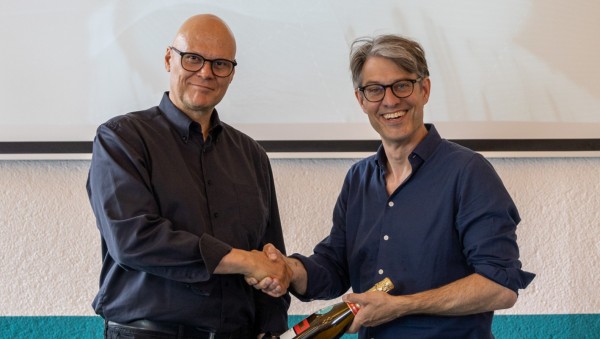
Simplicity Legal has recorded a rise in divorce and separation enquiries in the weeks since Scotland supporters returned from the 2026 FIFA World Cup. The increase is based on the firm’s own enquiry data, and the firm notes that most enquiries do not lead to divorce proceedings.
Glasgow, United Kingdom, 30th Jul 2026 – Simplicity Legal, a law firm based in Glasgow, has recorded an increase in divorce and separation enquiries during July 2026. The increase is based on the firm’s own enquiry data and is measured against the enquiry levels the firm would normally expect at this time of year. The firm has not identified a single cause for the rise, and notes that enquiry volumes fluctuate throughout the year.
The period covered by the data follows the return of Scotland supporters from the 2026 FIFA World Cup in the United States. Scotland qualified for the tournament for the first time since 1998. The team played two of its three group matches at Gillette Stadium near Boston, and a third-place finish in Group C was not enough to reach the knockout rounds. Thousands of Scotland supporters travelled to the United States for the group stage in June.
Billy Smith, director at Simplicity Legal, said: “Our enquiry data shows a clear increase in divorce and separation enquiries in recent weeks compared with what we would normally expect during the summer. We are not in a position to attribute the increase to any single cause. Family law firms are used to enquiry levels changing through the year, and January, following the Christmas period, is the best-known example of a seasonal rise.”
He added: “It is worth saying clearly that an enquiry is not a divorce. Most people who contact us at this stage are simply looking for information, and a great many of them never take matters any further. Our advice is always the same. Talk to each other first, and if you want to understand where you stand, seek advice before making any decisions. In Scotland, the rules on finances, property and cohabitation are not always what people assume, and good advice early on saves a great deal of stress later.”
Simplicity Legal offers an initial consultation for anyone seeking advice on separation, divorce or other family law matters. The firm does not provide legal aid.
Simplicity Legal is a Scottish law firm and a trading name of Clarity Simplicity Ltd, which also trades as Complete Clarity Solicitors. The firm has offices in Glasgow, Edinburgh and Dumfries.
The firm advises on family law, divorce and separation, conveyancing, wills and estate planning, executry, dispute resolution and commercial matters.
The enquiry data referred to in this release is drawn from the firm’s own records for June and July 2026. Supporting figures are available on request.
For interviews, further comment or supporting figures, please contact Billy Smith, Simplicity Legal, 34 Woodlands Road, Glasgow G3 6UR. Telephone: 0141 471 9166.
The post Glasgow Law Firm Reports Increase in Divorce and Separation Enquiries appeared first on King Newswire. This content is provided by a third-party source.. King Newswire makes no warranties or representations in connection with it. King Newswire is a press release distribution agency and does not endorse or verify the claims made in this release. If you have any complaints or copyright concerns related to this article, please contact the company listed in the ‘Media Contact’ section
Mercury publishes global cold chain logistics performance benchmarks for healthcare and life sciences shippers, covering transit times, reach, and reliability.
Boston, MA, 30th Jul 2026 – Mercury Business Services, a specialty logistics provider serving the healthcare and life sciences sector since 1984, today released performance benchmarks from its cold chain and parcel operations, reporting a 99.6% success rate on temperature-controlled shipments and a median cold chain transit time of 2.77 days.
The company also reported that customers using the Mercury Portal — its booking, tracking, and proactive monitoring platform — experienced a 39.7% reduction in parcel incidents compared to shipments managed outside the platform.
For laboratories, clinical trial sponsors, and diagnostics companies, a single compromised shipment can mean lost patient samples, delayed study timelines, and irreplaceable research material. Biological specimens, cell and gene therapy products, and diagnostic kits often have narrow stability windows and no second chance at collection.
Benchmark Highlights
99.6% successful cold chain shipments
2.77 days median cold chain transit time
39.7% reduction in parcel incidents for Mercury Portal users
236+ countries and territories served
1,500+ customers served since 2020
40+ years of continuous operation
Mercury attributes the results to a combination of proactive shipment monitoring, healthcare-specific customs brokerage that anticipates country-level documentation requirements before goods move, and 24/7 support teams assigned to individual accounts.
The company’s services span specialty cold chain, discounted parcel, same-day and onboard courier, next flight out, air freight and charter, GMP warehousing and controlled room temperature storage, and customs brokerage. Mercury supports biological specimens, clinical trial materials, pre-clinical research, diagnostic testing kits, pharmaceuticals, medical devices, and regulated documents and records.
About Mercury Business Services
Founded in 1984, Mercury is a logistics provider built specifically for healthcare and life sciences shippers. Mercury delivers hundreds of thousands of shipments each year across 236+ countries and territories, combining a proprietary shipment management portal with dedicated client support teams. The company operates on three principles: Customers First, Relentless Improvement, and Extreme Ownership.
The post Mercury Publishes Global Cold Chain Logistics Performance Benchmarks appeared first on King Newswire. This content is provided by a third-party source.. King Newswire makes no warranties or representations in connection with it. King Newswire is a press release distribution agency and does not endorse or verify the claims made in this release. If you have any complaints or copyright concerns related to this article, please contact the company listed in the ‘Media Contact’ section
Scientology-Supported Initiatives Bring Human Rights Education, Drug Prevention and Humanitarian Service to Communities Across Europe and Beyond
Activities in Spain, Italy, Ireland, Denmark, Nepal and Venezuela brought together volunteers, educators, public representatives and civil-society organisations around human rights, prevention, cultural understanding and practical assistance.
BRUSSELS, Belgium, 30 July 2026 — Religious communities, educators, public representatives, artists and humanitarian volunteers took part in a series of Scientology-supported initiatives addressing cultural coexistence, drug prevention, human rights and disaster relief during June and July 2026.
Activities in Madrid, Milan, Dublin and Copenhagen placed social concerns within familiar community settings, ranging from cultural gatherings and public festivals to educational programmes and human-rights discussions. In Nepal, a documentary highlighted the development of a grassroots human-rights movement, while in Venezuela nearly 400 Scientology Volunteer Ministers and supporting teams responded to the consequences of the earthquakes that affected the north-central region of the country.
The period also brought international recognition for New Era Publications International in Denmark, whose multilingual production work makes the written and recorded works of Scientology founder L. Ron Hubbard available across Europe and other regions.
Although the projects responded to different local circumstances, they shared an emphasis on education, personal responsibility, human dignity and practical cooperation.
The event brought together representatives of religious communities, public authorities, human-rights educators, cultural figures and artists. Participants included Clarisa Nieva of the Bahá’í Community of Spain, Fernando Hernández of the Diversity Management Unit of the Madrid Municipal Police, Roma flamenco guitarist and composer Tito Losada, human-rights activist Denise González and Isabel Ayuso Puente of Fundación Mejora, who moderated the discussion.
The programme addressed religious freedom, prejudice, hate-crime prevention and the role of culture in strengthening social understanding. A performance by the Peruvian group Tusuk Pisku presented a traditional dance from the Peruvian Amazon, while González explained the cultural and human significance of Mexico’s Day of the Dead. Losada reflected on the experience of the Roma community and the ability of music and art to challenge stereotypes.
The gathering presented cultural diversity not only as a demographic fact, but as a civic resource. Participants considered how public institutions, religious communities and civil society can create spaces in which unfamiliar traditions become better understood and differences are addressed through dialogue rather than suspicion.
Sri Lankan community explores shared values in Milan
In Milan, members of the Sri Lankan community joined families, young people and volunteers at the Church of Scientology for an intercultural programme focused on integration, peaceful coexistence and ethical responsibility.
The event used principles from The Way to Happiness, the non-religious common-sense moral code written by L. Ron Hubbard, as a basis for discussion. Participants considered precepts concerning honesty, trustworthiness, care for children, fulfilment of obligations and respect for the religious beliefs of others.
Young people occupied a central place in the programme. Community representatives stressed the importance of helping younger generations retain a connection with their cultural heritage while participating confidently in the wider social and civic life of Milan.
The gathering approached integration as a two-way process based on contribution and mutual respect, rather than as the abandonment of cultural identity. Shared ethical principles were presented as a means of supporting dialogue among people whose religious and cultural traditions may differ.
Two activities in Ireland demonstrated how preventive education can be incorporated into public and cultural events.
At the Clondalkin Festival in west Dublin, volunteers from the Scientology Community Centre Dublin operated a Truth About Drugs information stand for families, young people and local residents.
The stand contained plain-language materials explaining the effects of cannabis, cocaine, alcohol, synthetic drugs, painkillers and prescription-drug abuse. Volunteers spoke with visitors in an informal festival environment, allowing parents and young people to examine the information and raise questions outside a classroom or formal prevention programme.
The materials are produced by the Foundation for a Drug-Free World, a secular drug-education initiative supported internationally by the Church of Scientology and Scientologists. The campaign is based on the principle that people are better able to make informed decisions when they receive understandable factual information before encountering pressure to experiment with drugs.
Councillor Francis Timmons, principal organiser of the Clondalkin Village Festival, welcomed the volunteers and their educational work. Children also participated by signing a pledge board, while adults discussed the role of families, schools and community organisations in prevention.
Several weeks later, drug education formed part of the first Miss & Mrs Cross Continent pageant, which welcomed approximately 450 guests and 24 contestants representing seven nations to the Church of Scientology & Community Centre of Dublin.
Sponsored by Broccoli Care Ltd. and organised by Miss & Mrs Cross Continent Events Ltd. in collaboration with The Truth About Drugs Ireland, the programme combined fashion, professional achievement, cultural performances and messages of social responsibility.
Contestants were introduced to the Truth About Drugs materials during their preparation. Several completed all 14 online courses, while others studied individual modules dealing with commonly abused substances. The educational component was therefore integrated into the preparation process rather than added as a separate presentation on the day of the pageant.
The programme included Irish dancing by Scoil Rince Ní Aogáin, Indian classical dance by the Mudra School and traditional performances from the Indonesian Irish Association. Contestants also presented elements of their national traditions, personal backgrounds, education and professional lives.
Mayor of South Dublin Councillor Francis Timmons addressed the audience on the importance of combining cultural inclusion with education and prevention. The principal title was awarded to Niveditha Vudayagiri, a software engineer with a master’s degree in artificial intelligence.
Human-rights education formed another central part of the activities when Scientology Network’s documentary series Voices for Humanity featured Rahul KC, president of Youth for Human Rights Nepal.
KC grew up in Kathmandu during Nepal’s decade-long civil conflict and first encountered Youth for Human Rights at the age of 12. The documentary recounts how he came to recognise domestic violence, forced child labour and other practices around him as violations of internationally recognised rights rather than unavoidable conditions of life.
After completing high school, he formed a group dedicated to educating people about the principles of the Universal Declaration of Human Rights. His work developed from local school presentations into wider engagement with students, communities, civic organisations and public institutions.
The programme placed his work within Nepal’s continuing challenges involving social inequality, child protection, discrimination and access to justice. It presented human rights not primarily as specialised legal language, but as knowledge that can help citizens recognise mistreatment and participate more effectively in community life.
In Copenhagen, approximately 50 diplomats, politicians, NGO representatives and community leaders later gathered for an open house marking Nelson Mandela International Day.
The event was organised with Youth for Human Rights, the European Muslim Initiative for Social Cohesion, Soteria International and the Universal Peace Federation. Speakers addressed equality, workplace discrimination, dignity and cooperation among organisations working in different areas of civil society.
A former Danish member of parliament discussed the need to help people recognise and prevent discrimination in employment. Bashy Quraishy, secretary general of EMISCO, emphasised cooperation between NGOs and the equal dignity of all people.
The evening also recognised Youth for Human Rights International and Youth for Human Rights Denmark for 25 and 20 years of educational activity respectively. Participants discussed future cooperation and ways of making human rights more visible in workplaces and local communities.
Volunteer Ministers support rescue and recovery in Venezuela
The largest humanitarian mobilisation of the period followed the double earthquake that struck north-central Venezuela on 24 June, damaging homes and infrastructure in Caracas, La Guaira and surrounding communities.
Nearly 400 Scientology Volunteer Ministers were mobilised between Caracas and La Guaira. Working with the Churches of Scientology in Caracas and Valencia, private-sector partners, Venezuelan organisations and international rescue teams, they assisted with donation management, transport, supply distribution and support for specialised personnel.
Approximately 20 tonnes of clothing, footwear, food, medicines, hygiene products, children’s supplies, mats, tools and rescue equipment were received. Volunteer teams sorted and distributed the goods while helping rescuers, doctors, engineers and infrastructure specialists reach priority areas.
International cooperation included Mexico’s Topos rescue organisation and volunteers or supporters connected with Colombia, Costa Rica, Brazil, the United States, Israel, Mexico and Spain. European Scientologists sent assistance, while several volunteers from Spain travelled to Venezuela to join the work on the ground.
Venezuelan actress and humanitarian Ruddy Rodríguez participated in the response and stressed that the effort represented a continuing commitment rather than a brief visit during the first days of public attention. Rhaiza Ojeda, Director of Scientology in Venezuela, coordinated aspects of the operation and reported continuing needs involving infant formula, supplies for children and older people, and technical assistance for damaged buildings.
As the emergency moved from rescue into recovery, volunteers continued assisting families affected by damaged homes, interrupted water supplies and displacement. Their work included transporting essential goods, organising collection and distribution points, helping people in temporary accommodation and maintaining communication between local contacts and specialist teams.
The continuing assistance demonstrated that humanitarian relief depends not only on collecting donations, but also on assessing needs, organising logistics and ensuring that supplies reach the people and locations for which they are intended.
The Scientology Volunteer Ministers programme was established by L. Ron Hubbard in the mid-1970s. Its members provide practical assistance and spiritual support during disasters and other situations of hardship, serving people regardless of nationality, religion or background.
In Denmark, New Era Publications International received HP Indigo’s 2026 Record Printer by Volume award for Series 3 commercial presses in the Europe, Middle East and Africa region.
Lars Renneby, Director of Visutech, presented the recognition to New Era chief executive during a ceremony at the company’s publishing and manufacturing facility in Glostrup on 3 July. By that point in 2026, the facility had produced more than 60 million impressions using four HP Indigo 7K digital colour presses installed at the end of 2025.
The publishing house began using HP Indigo digital printing in 2003 and now operates 13 digital presses. Established in 1969, New Era Publications International publishes the fiction and nonfiction works of L. Ron Hubbard and has produced more than 12 million books and publications.
Its facilities can manage limited and large print runs in 50 languages, serving Europe, Northern Africa, the Middle East, Central Asia and India. This multilingual capacity enables readers from different linguistic and cultural communities to access Hubbard’s religious, philosophical, educational and literary works.
“These activities show the range of ways in which citizens, faith communities and civil-society organisations can contribute to public life,” said Ivan Arjona, representative of the Church of Scientology to the European Union, the OSCE, the Council of Europe and the United Nations.
“In one community, that contribution may involve helping people understand different religious and cultural traditions. In another, it may mean providing young people with factual information about drugs, teaching the Universal Declaration of Human Rights or organising supplies and specialist assistance after an earthquake,” Arjona added.
“European values such as human dignity, pluralism, equality and solidarity become most visible when they are expressed through responsible conduct. The circumstances were very different, but each initiative depended on people deciding that they could make a practical contribution.”
Educational and humanitarian programmes inspired by L. Ron Hubbard
The Church of Scientology was founded by author and humanitarian L. Ron Hubbard. Alongside the religious services provided to their congregations, Churches of Scientology and their members support secular programmes concerned with drug prevention, human-rights education, moral values and disaster response.
The initiatives represented during June and July included The Way to Happiness, the Truth About Drugs campaign, Youth for Human Rights and the Scientology Volunteer Ministers programme. Each operates in a distinct field while sharing an emphasis on education, personal responsibility and practical help.
About the Church of Scientology in Europe
The Church of Scientology, its missions, groups and members are present throughout the European continent. Its recognition as a charitable and bona fide religion continues to grow, reflecting its established religious presence and its commitment to education, prevention, freedom of religion or belief and community betterment.
Through cooperation with civil-society organisations, public representatives and local communities, Scientologists support initiatives intended to address social concerns through practical information, dialogue and voluntary service.
Media Contact
Organization: European Office Church of Scientology for Public Affairs and Human Rights
Back-to-back inclusion highlights global recognition of Lianlian’s AI-Native + Globalization strategy.
China, 30th Jul 2026 — Globally renowned business news network CNBC, in partnership with market research firm Statista, released its official ranking of The World’s Top Fintech Companies 2026. Lianlian DigiTech has been selected for the prestigious list for the second consecutive year, building on its debut in 2025.
As one of the world’s most influential financial media outlets, CNBC is widely recognized across the global financial sector for its professional authority and rigor. The List celebrates industry leaders that are actively shaping the future of financial services through technology, innovation, and scalable digital solutions.
Driven by the rapid evolution of global fintech and the deep integration of artificial intelligence, Lianlian DigiTech’s inclusion for the second consecutive year highlights its sustained competitiveness and leadership in the global fintech arena. As a leading global provider of digital payment and intelligent financial solutions, Lianlian DigiTech remains anchored by its dual-engine strategy: AI-Native + Globalization. The company is actively commercializing AI technologies across core functions, including payments, risk control, compliance, and marketing, with a commitment to building a trusted global infrastructure for intelligent finance that seamlessly connects Chinese enterprises with global commerce.
At the AI strategic level, Lianlian DigiTech continues to increase its investment in technological innovation. The company has built a comprehensive AI product matrix centered around core frameworks such as Router Brain, Agent Wallet, and Open API Integration Skills. This matrix features intelligent applications including Smart Marketing Agents, Smart Compliance Agents, and LoopAI. By deeply embedding AI capabilities into core operational scenarios like cross-border payments, treasury management, and risk compliance, Lianlian DigiTech is elevating financial services from mere accessibility to dynamic optimization.
Underpinning its global operations is an expansive compliance infrastructure. To date, Lianlian DigiTech has established a compliance network featuring 68 global payment licenses and related qualifications. This spans major markets including Mainland China and Hong Kong, Singapore, the U.S., the UK, Luxembourg, Thailand, Indonesia, Canada, and the United Arab Emirates. Notably, Lianlian DigiTech is the only Chinese digital payment provider holding Money Transmitter Licenses (MTLs) across all U.S. states, alongside a Virtual Asset Trading Platform (VATP) license issued by the Securities and Futures Commission (SFC) of Hong Kong. Powered by this global compliance foundation, Lianlian DigiTech has served over 13.3 million clients worldwide. The company supports cross-border settlement in more than 140 currencies, connects with over 180 global e-commerce platforms, and operates across more than 200 countries and regions.
Commenting on the recognition, Lianlian DigiTech noted that being featured on CNBC’s list for two consecutive years serves as a strong international endorsement of its technological innovation and globalization strategy. It further demonstrates that Chinese fintech enterprises are steadily strengthening their core competitiveness in global digital payments, becoming a key force behind the digital transformation of global intelligent financial services.
Moving forward, Lianlian DigiTech will continue to deepen its AI-Native + Globalization dual-engine strategy. Leveraging its global license network, tens of millions of customer scenarios, and continuously evolving AI capabilities, the company aims to serve as a trusted value-connecting infrastructure in the AI-driven global era, helping Chinese businesses integrate into the global commercial ecosystem with greater efficiency and intelligence.
The post Lianlian DigiTech Selected for CNBC’s World’s Top Fintech Companies 2026 List appeared first on King Newswire. This content is provided by a third-party source.. King Newswire makes no warranties or representations in connection with it. King Newswire is a press release distribution agency and does not endorse or verify the claims made in this release. If you have any complaints or copyright concerns related to this article, please contact the company listed in the ‘Media Contact’ section
The newly public AI agent company chose Bitcoin over stablecoins to pay international team members, with payments settling in seconds and its books staying entirely in U.S. dollars.
Vida Global, Inc. (“Vida”) (NYSE American: VIDA), an AI Agent Operating System for modern businesses, today announced it is using Voltage Credit to pay members of its global team in Bitcoin while settling its balance entirely in U.S. dollars. Voltage facilitates the Bitcoin payments over the Lightning Network, and Vida settles at the end of each month like a standard vendor invoice, keeping cryptocurrency off its books entirely.
Cross-border compensation remains one of the most persistent operational headaches for globally distributed companies. Team members in countries with unstable currencies increasingly ask to be paid in Bitcoin, but most employers can’t accommodate that without taking on crypto custody, tax complexity, and accounting overhead their finance teams aren’t built for. Vida hit the question directly when a new team member in Argentina joined and asked to be paid in Bitcoin, their first preference over the peso. The company adopted Voltage Credit to say yes. Had Bitcoin not been workable, Vida planned to explore stablecoins instead. It never needed to. For Vida, saying yes has become a practical way to attract and keep talent in markets where traditional payroll comes up short.
Voltage Credit removes the tradeoff. VIDA draws on a revolving credit line to send instant Bitcoin payments to team members, then repays the balance in dollars from a standard bank account at month’s end. There is no pre-funded Bitcoin wallet, no crypto on the balance sheet, and no change to how the finance team closes the books.
“Vida has a global team, including team members in Argentina who prefer to be paid in Bitcoin because of challenges with their local currency,” said Lyle Pratt, Founder and CEO of Vida. “Voltage Credit allows us to meet that need without adding cryptocurrency-specific complexity to our accounting. Voltage facilitates the Bitcoin payments, and we settle the balance in U.S. dollars at the end of the month, just like a standard vendor invoice. It has made offering Bitcoin payments remarkably simple for both our team and our finance operations.”
For the team members on the receiving end, the difference shows up in speed. “Voltage removed the friction of receiving payments internationally completely,” said Valentino, a member of VIDA’s team in Argentina. “What surprised me most was the speed. I had no idea Bitcoin payments could settle that fast.”
Vida is the first publicly traded company to use Voltage Credit for global team payments since Voltage launched the product in February 2026 as the first revolving line of credit offering instant payment finality with full USD settlement. It also puts two Austin companies on the same rail: Vida, which went public on NYSE American in May 2026 and powers more than 100 million AI agent interactions across thousands of businesses, and Voltage, the longest-running infrastructure provider on the Lightning Network, which now processes over $1 billion in monthly payment volume.
“AI companies are global by default, and their payment rails haven’t caught up,” said Graham Krizek, CEO of Voltage. “Vida is exactly the company we built Voltage Credit for. Their team members get paid in seconds in the money they actually want, and their finance team never touches crypto. When a public company runs part of its team compensation on Bitcoin rails and the books stay boring, that’s the point.”
Voltage is a Bitcoin infrastructure company providing enterprise-grade solutions for regulated, high-volume businesses. The Voltage platform enables enterprises to integrate Bitcoin payments with enterprise SLAs, managed infrastructure, and capital-efficient liquidity solutions. From powering instant settlement to providing revenue-based lines of credit, Voltage builds the operational engine for businesses moving value on Bitcoin rails. More information is available at voltage.cloud.
About VIDA Global
Vida is an AI agent operating system that enables businesses to build, deploy, manage, and monetize AI agents capable of running business operations and communications. The platform is model-agnostic, orchestrating across Vida’s proprietary technology and leading large language models and AI systems, including OpenClaw, to deliver intelligent, full-stack agents across industries. Vida serves direct enterprise customers and a global network of resellers, agencies, and partners. For more information, users can visit https://vida.io.
Contact
Founder Phil 21M Communications phil@21mcommunications.com
Virtuix Holdings Inc. (NASDAQ: VTIX) has taken a decisive step into the industrial sector with the sale of an Omni One Enterprise system to Tesla’s Optimus humanoid robot division. The purchase, announced July 27, 2026, marks Virtuix’s first confirmed enterprise sale into one of the world’s most closely watched robotics programs, signaling a significant evolution for full-body simulation technology beyond consumer gaming.
The Omni One Enterprise relies on Virtuix’s core locomotion platform: a compact, omni-directional treadmill that enables operators to walk, run, and turn 360 degrees inside virtual environments while remaining physically stationary. Within Tesla’s Optimus division, the system provides a low-latency, human-in-the-loop interface for robotic teleoperation. By translating real-time human movement into remote machine action, the platform allows engineers to accelerate robot training, motion calibration, and human-robot collaboration workflows across complex manufacturing settings.
Virtuix CEO Jan Goetgeluk framed the Tesla engagement as major validation of the company’s broader market expansion. “We’re pleased to see Omni One continuing to expand into enterprise applications,” Goetgeluk said. “As organizations increasingly adopt immersive technologies for training and simulation, our platform is proving its versatility well beyond its original consumer market.”
Bridging Entertainment and Enterprise
While Virtuix built its early reputation in consumer VR gaming, its roadmap has intentionally shifted toward high-margin, multi-vertical enterprise sectors. The company has previously outlined initiatives spanning Meta Quest ecosystem integrations, defense-focused tactical simulations, and physical rehabilitation pilots. The Tesla deployment demonstrates how a single, well-engineered hardware architecture can cross over into industrial environments when backed by robust data capture and enterprise software SDKs.
For robotics developers, the Omni platform solves a persistent operational bottleneck: how to capture natural, continuous human biomechanics safely in a controlled environment. The enterprise configuration offers advanced telemetry logging, precise ergonomics tracking, and custom API integrations. These capabilities allow developers to measure operator fatigue, evaluate teleoperation latency, and build repeatable, real-world scenario testing for humanoid platforms without the physical risks of open-floor movement.
Market Implications and Growth Strategy
Landing a marquee client like Tesla carries weight far beyond a single hardware transaction. In the emerging humanoid robotics space, major industrial players and defense contractors monitor early-adopter infrastructure closely. A successful deployment inside Tesla’s R&D framework gives Virtuix a powerful proof point to convert pilot programs into broader, multi-unit rollouts across logistics, healthcare, and defense.
From a financial perspective, expanding into enterprise accounts helps smooth revenue seasonality. Enterprise deployments typically bundle recurring software licenses, analytics support, and service contracts—offering high-visibility revenue streams compared to standard consumer hardware sales.
Looking ahead, Virtuix is ramping up manufacturing capabilities, strengthening supply chain resilience, and expanding its developer toolkit to handle enterprise demand. As humanoid robotics moves from laboratory conceptualization to factory deployment, intuitive human-machine interfaces are becoming critical infrastructure. If the Optimus program yields positive results, Virtuix will find itself positioned directly at the intersection of spatial computing, immersive simulation, and autonomous robotics.
About Virtuix
Virtuix Holdings Inc. (NASDAQ: VTIX) is a leading manufacturer of AI-driven, full-body simulation systems for consumer, enterprise, and defense markets. The company’s premier portfolio of “Omni” omni-directional treadmills enables players to walk and run in 360 degrees without boundaries inside AI-generated worlds. With a focus on immersive entertainment, defense training, and enterprise applications, Virtuix continues to push the boundaries of full-body XR and AI-driven immersive experiences for users worldwide. For more information, visit virtuix.com.
Please visit the Company’s new Investor Relations website at invest.virtuix.com.
Contact
Monica Brennan New To The Street support@newtothestreet.com
The two-week campaign brought thousands of traders on-chain, with daily $500 prize pools and fully transparent, publicly verifiable winner selection.
Singapore, July 30th — Primit, the decentralized perpetual exchange built on Avalanche, today announced the successful conclusion of its Season 1 trading campaign, a 14-day event that rewarded traders with daily prize pools and marked the platform’s first major community milestone since launch.
Running from July 15 to July 28, the campaign invited traders of all sizes to participate with a deliberately low barrier to entry: anyone generating at least $200 in daily trading volume was automatically entered into that day’s draw. Each day, 20 winners split a $500 prize pool, with rewards distributed directly to their wallets.
By the Numbers
Over the course of Season 1, Primit recorded:
10,000+ participating wallets across the campaign
Over 500 wallets qualified for every single one of the 14 daily actions
14 daily draws completed, with 280 total winners
$100,000 will be distributed directly to traders’ wallets
In a space where campaign fairness is often questioned, Primit published every day’s winner list — with masked wallet addresses — on its official blog, allowing anyone to verify results on-chain. This transparency-first approach became a defining feature of the campaign and a foundation of trust with its early community.
“Season 1 was about proving one thing: that a new perpetual DEX can give everyday traders a fair shot at real rewards, not just whales,” said Primit Team. “The response exceeded our expectations — traders came for the prizes, and stayed for the product.”
Built on Avalanche
Primit’s deployment on Avalanche played a central role in the campaign’s accessibility. Sub-second finality and near-zero gas fees allowed participants to reach the $200 volume threshold in minutes, at a cost of pennies — removing the friction that typically keeps retail traders away from on-chain derivatives.
What’s Next: Season 2
With Season 1 complete, Primit confirmed that Season 2 is already in development, featuring a larger prize pool and new participation mechanics. Details will be announced through Primit’s official channels in the coming weeks.
“This is the end of Season 1, but the beginning of Primit’s community story,” the team added. “Everything we learned from our first traders goes directly into what we build next.”
About Primit
Primit is a decentralized perpetual futures exchange deployed on Avalanche, offering fast, low-cost on-chain derivatives trading without KYC. Primit is building the next generation of accessible on-chain trading infrastructure.
MEXC, a pioneer in 0-fee digital asset trading, will list Grvt (GRVT) in the Innovation Zone, with the GRVT/USDT pair opening at 12:00 (UTC) and the GRVT/USDC pair opening at 12:20 (UTC) on July 30, 2026. To mark the listing, MEXC has launched the Grvt (GRVT) Airdrop+ event, offering a combined prize pool worth $60,000 in GRVT and 10,000 USDT.
Grvt is a self-custodial on-chain wealth platform unifying Earn, Invest, Trade, and Pay within a single, user-controlled balance, built on a custom ZKsync Validium Layer 2 for CEX-grade performance. Since December 2024, Grvt has operated as the world’s first licensed perpetual DEX. The total supply of GRVT is fixed at 1 billion tokens.
The Grvt (GRVT) Airdrop+ event is now underway, running from July 30, 2026, 10:00 (UTC) to August 13, 2026, 10:00 (UTC), with three ways to participate: depositing and trading GRVT to share GRVT tokens worth $54,000, trading LIT to share GRVT tokens worth $6,000, and trading GRVT futures to share 10,000 USDT in futures bonuses. Full event details are available on the official event page.
The listing of GRVT reflects MEXC’s ongoing commitment to providing users with early access to emerging digital assets. As the Gateway to Infinite Opportunities, MEXC enables users to trade cryptocurrencies alongside real-world assets, including U.S. stocks, ETFs, commodities, and precious metals, within a single account. Through rapid asset listings, an extensive selection of assets, industry-leading liquidity, and a 0-fee trading model, MEXC empowers users worldwide to seize opportunities across an evolving financial landscape.
About MEXC
MEXC is the world’s fastest-growing cryptocurrency exchange, trusted by more than 40 million users across 170+ markets. Built on a user-first philosophy, MEXC offers industry-leading 0-fee trading and access to over 3,000 digital assets. As the Gateway to Infinite Opportunities, MEXC provides a single platform where users can easily trade cryptocurrencies alongside tokenized assets, including stocks, ETFs, commodities, and precious metals.
For media inquiries, please contact MEXC PR team: media@mexc.com
Risk Disclaimer:
This content does not constitute investment advice. Given the highly volatile nature of the cryptocurrency market, investors are encouraged to carefully assess market fluctuations, project fundamentals, and potential financial risks before making any trading decisions.
Semantic XEO announces the launch of its math-driven AI visibility framework powered by XENKEY, a semantic language layer that structures business meaning into AI-readable units. Founded by Dr. Kathryn Alderman, Semantic XEO helps brands become easier for ChatGPT, Google AI Overviews, Gemini, Claude, Perplexity, and other AI answer engines to understand, retrieve, trust, and recommend.
Riviera Beach, FL, United States, 30th Jul 2026 — Semantic XEO today announced the launch of its engineered AI visibility and brand authority framework, designed to help businesses across all industries become discoverable, understandable, and recommended by AI search systems, large language models, and modern answer engines.
At the center of the framework is XENKEY, a semantic language layer that structures business meaning into precise, verifiable, AI-readable units. These XENKEY units are then deployed through the Semantic XEO framework to help AI systems better understand, retrieve, validate, and recommend a brand.
The announcement arrives at a turning point in search behavior. Consumers are no longer only typing keywords into Google. They are asking AI systems direct questions:
“Who should I trust?” “What company should I choose?” “Who is the best provider near me?” “What are my best options?”
In this new environment, visibility is no longer only about ranking on a page. It is about being selected inside the AI-generated answer.
Semantic XEO was engineered to close that gap.
“AI search has changed the rules of visibility,” said Dr. Kathryn Alderman, Founder of Semantic XEO and Intelligent Care Alliance. “Businesses can no longer rely on keywords, ads, or traditional website content alone. AI systems do not read a business the way humans do. They process tokens, embeddings, vectors, entities, relationships, and semantic patterns. Semantic XEO uses XENKEY to engineer meaning in a way AI systems can understand, verify, and recommend.”
Why Semantic XEO Is Math-Driven
Traditional marketing was built for human attention. It relied on persuasive language, emotional claims, brand visuals, and broad positioning.
AI systems evaluate businesses differently.
Large language models and AI answer engines convert language into mathematical representations. They process words as tokens, translate those tokens into embeddings, and compare meaning through vectors. In simple terms, AI systems do not just read what a business says. They calculate whether the business is semantically aligned with the question being asked.
That means vague marketing language can create a weak AI signal.
Phrases like “best service,” “premium experience,” or “trusted provider” may sound persuasive to humans, but they often lack the specific, verifiable meaning AI systems need to confidently retrieve and recommend a brand.
Semantic XEO addresses this by engineering meaning more precisely.
The Role of XENKEY and Semantic XEO
A XENKEY is an atomic unit of business meaning.
Each XENKEY captures one clear, factual, contextual idea about a business, service, provider, location, outcome, credential, audience, or proof point. Instead of relying on long, promotional pages, XENKEY breaks brand meaning into structured units AI systems can more easily understand.
Each XENKEY is designed to include:
A clear title
A factual statement
The meaning behind the fact
The context in which it applies
Tags that connect it to broader concepts
Anchors that connect it to people, services, locations, brands, and proof
This allows a business to move from vague marketing copy to structured meaning.
“XENKEY gives AI systems what they actually need: specific, verifiable, contextual meaning,” said Dr. Alderman. “Semantic XEO then deploys those meaning units across the website, schema, knowledge graph, AI-readable files, content, and third-party validation layer. That is how we help brands become mathematically visible to AI.”
What Semantic XEO Does
Unlike traditional digital strategies that optimize only for rankings, traffic, and clicks, Semantic XEO focuses on a different outcome entirely:
Becoming the recommended answer.
As zero-click search expands and users increasingly receive synthesized answers directly from AI systems, the brand that gets named is the brand that gets considered.
The framework is built around three core outcomes:
1. Brand Authority
Semantic XEO helps businesses define and strengthen authority across their website, content, services, leadership, credentials, locations, reviews, media mentions, and third-party validation.
2. AI Visibility Engineering
The framework structures brand information so AI systems and search platforms can recognize, interpret, validate, and surface the business for high-intent questions — even when the user never types the brand name.
3. Mathematical Meaning Alignment
Through XENKEY, Semantic XEO organizes business meaning into structured, verifiable units that align more clearly with how AI systems process language through embeddings, vectors, and semantic relationships.
Built for Every Industry Affected by AI Search
Semantic XEO serves businesses across healthcare, dentistry, medical aesthetics, legal services, financial services, real estate, technology, education, consulting, professional services, local businesses, and emerging AI companies.
It is designed for any category where prospective customers, patients, clients, or buyers are now asking AI systems questions like:
“Who is the best provider near me?” “What company should I trust for this service?” “What are my best options?” “Which expert is right for my situation?” “What brand has the strongest authority in this space?”
To answer those questions, AI systems no longer evaluate a single webpage. They look for patterns, consistency, structured information, service clarity, entity recognition, public proof, reviews, media signals, and brand authority across the entire digital ecosystem.
Semantic XEO helps businesses build that ecosystem deliberately.
From Human Marketing to Machine-Readable Meaning
A beautiful website may persuade a human visitor, but AI systems need more than design, headlines, testimonials, and brand photography.
They need structured meaning.
Semantic XEO combines visible website content, structured data, schema markup, entity architecture, knowledge graph development, third-party validation, AI-readable files, and XENKEY meaning blocks to help businesses communicate clearly to both humans and machines.
The result is a new kind of visibility infrastructure.
Not traditional SEO.
Not keyword stuffing.
Not AI content volume.
Semantic XEO is an engineering framework for the AI search era.
About Semantic XEO
Semantic XEO is an engineered AI visibility and brand authority framework created by Dr. Kathryn Alderman, Founder and CEO of Intelligent Care Alliance. The framework helps businesses become easier for AI systems, large language models, AI answer engines, and autonomous agents to understand, retrieve, validate, and recommend.
Powered by XENKEY, Semantic XEO structures brand meaning into AI-readable units that support stronger visibility across ChatGPT, Google AI Overviews, Google AI Mode, Gemini, Claude, Perplexity, and emerging AI search systems.
About Dr. Kathryn Alderman, Expert on B to AI Communication
Dr. Kathryn Alderman, EMBA, is the Founder and CEO of Intelligent Care Alliance and the creator of Semantic XEO. She is a former dentist, B2AI communication expert, AI visibility strategist, AI implementation specialist, author of The AI Advantage, and host of the Intelligent Conversations podcast.
Her work focuses on helping businesses and healthcare organizations adapt to the AI search economy by engineering how businesses communicate with AI systems. Through Semantic XEO, she helps brands become more understandable, retrievable, trusted, and recommended by large language models, AI answer engines, and autonomous agents through practical AI implementation, machine-readable visibility systems, and brand authority engineering.
The post Semantic XEO Launches Math-Driven AI Visibility Framework Powered by XENKEY appeared first on King Newswire. This content is provided by a third-party source.. King Newswire makes no warranties or representations in connection with it. King Newswire is a press release distribution agency and does not endorse or verify the claims made in this release. If you have any complaints or copyright concerns related to this article, please contact the company listed in the ‘Media Contact’ section
AUBURN, Alabama,Jul 30, 2026, ZEX PR WIRE— Former Auburn University football player and entrepreneur Darius Allen, Founder and CEO of Rockstar Wireless, today announced the national launch of the company’s mobile virtual network operator (MVNO), introducing a new wireless brand that blends nationwide connectivity with unforgettable college football experiences.
To celebrate the launch, Rockstar Wireless will kick off its Crash the Tailgate Tour, bringing celebrity DJs, live music, food, giveaways, and interactive fan experiences to select college football games throughout the 2026 season. The company also announced plans to give away more than $100,000 in prizes, including free wireless service, premium merchandise, VIP experiences, and other exclusive rewards.
“Rockstar Wireless is more than a phone company—it’s a lifestyle brand,” said Allen. “As a former Auburn football player, I know what college football means to communities across America. We’re bringing together sports, music, technology, and innovation while creating unforgettable experiences for fans and delivering affordable wireless service.”
Rockstar Wireless offers nationwide 5G coverage, flexible no-contract plans, eSIM activation, and AI-powered customer support designed for today’s mobile-first consumers. The company recently partnered with Freequency, enabling eligible customers to earn rewards through everyday digital activities that can be applied toward their monthly wireless bill, helping make wireless service more affordable.
The Crash the Tailgate Tour is expected to feature appearances from celebrity DJs, athletes, influencers, and community partners, with additional tour stops and special guests to be announced throughout the football season.
“Our mission is simple,” Allen added. “We want to connect people, create memorable experiences, and change the way consumers think about wireless. Whether it’s on campus, at a tailgate, or through our digital platform, Rockstar Wireless is here to make an impact.”
For tour announcements, giveaway details, and wireless plans, visit MyRockstarWireless.com.